Understanding communities Normal Worksheets for Ages 4-9
6 filtered results
-
From - To
Explore our "Understanding Communities" worksheets, specially designed for kids aged 4-9. These engaging resources help young learners connect with their neighborhoods, recognizing different community roles, places, and relationships. Through fun activities and colorful illustrations, children will enhance their understanding of essential community concepts while developing critical thinking skills. Perfect for both in-class and homeschool environments, these printable worksheets encourage curiosity and spark conversation about the world around them. Help your child build a sense of belonging and responsibility within their community, paving the way for lifelong social awareness and engagement. Start your learning journey today with our interactive worksheets!
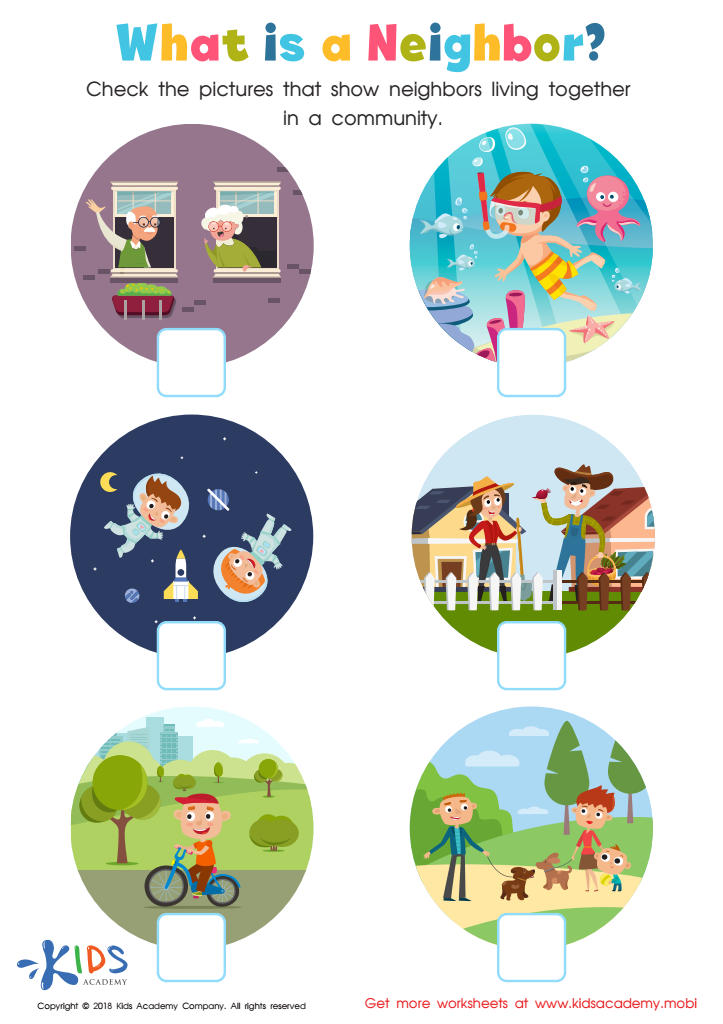
What is a neighbor Worksheet
 Assign to My Students
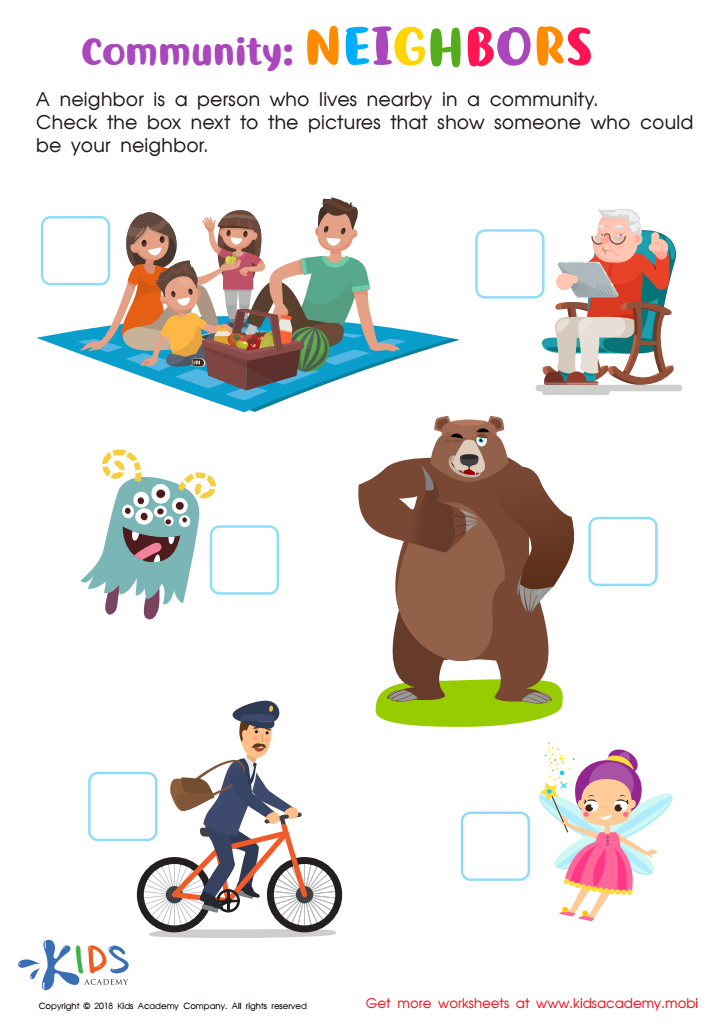
Community: Neighbors Worksheet
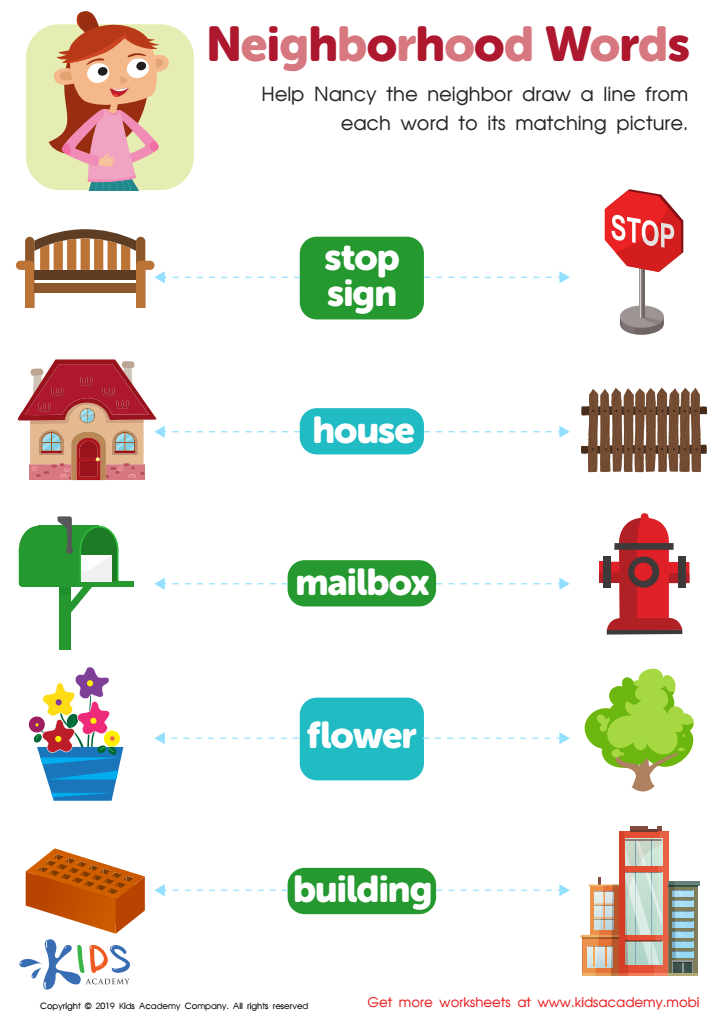
Neighborhood Words Worksheet
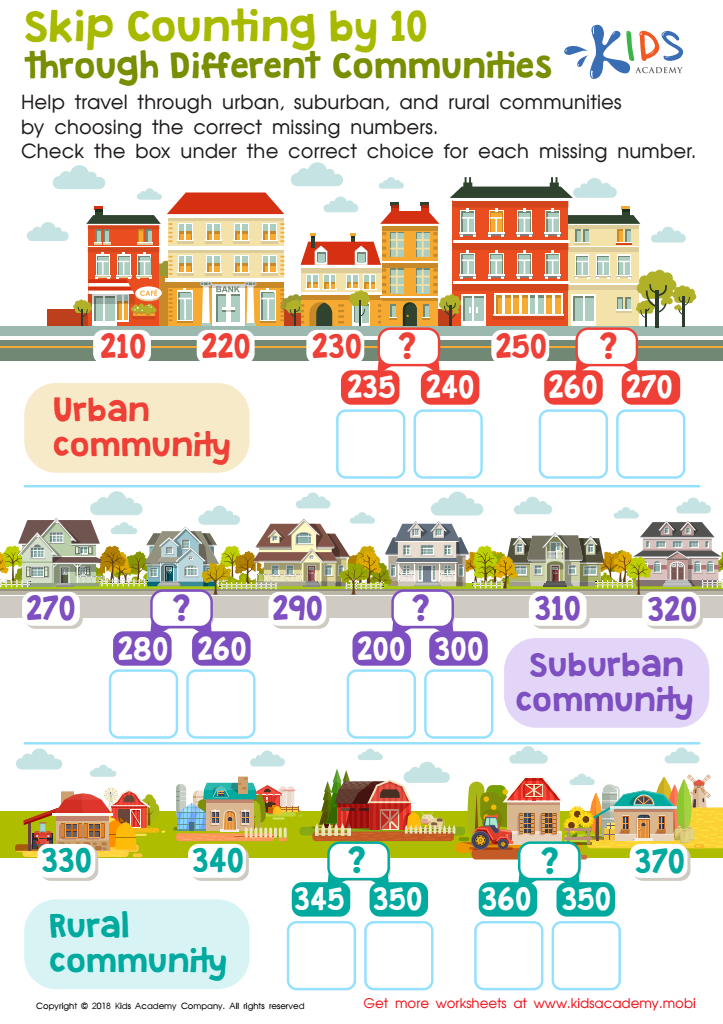
Skip Counting by 10 through Different Communities Worksheet
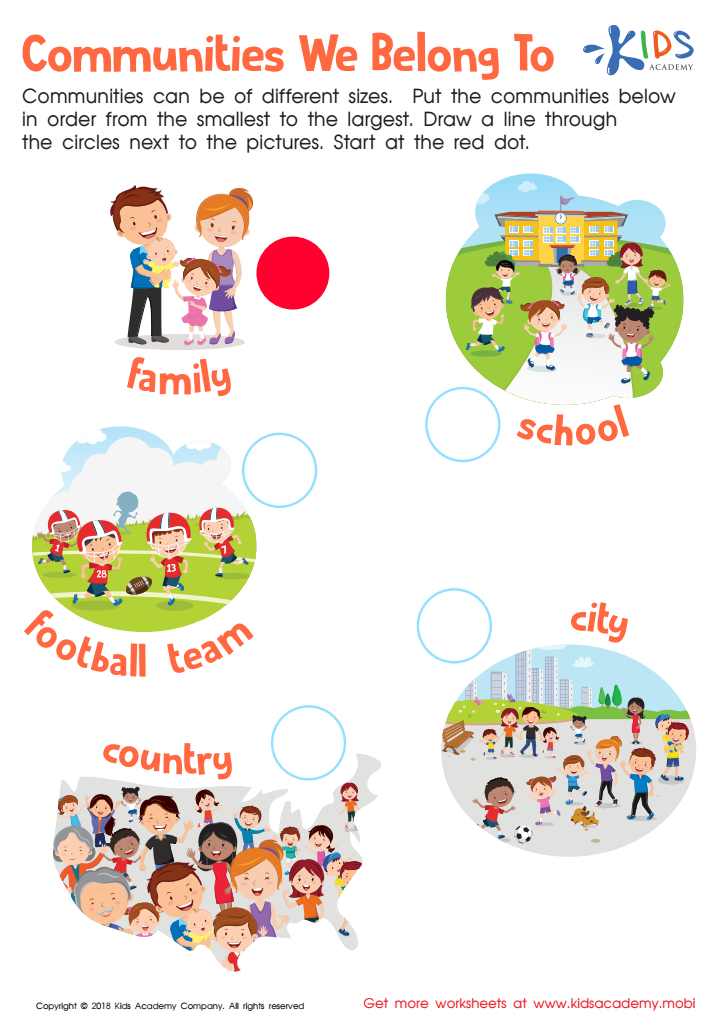
Communities We Belong to Worksheet
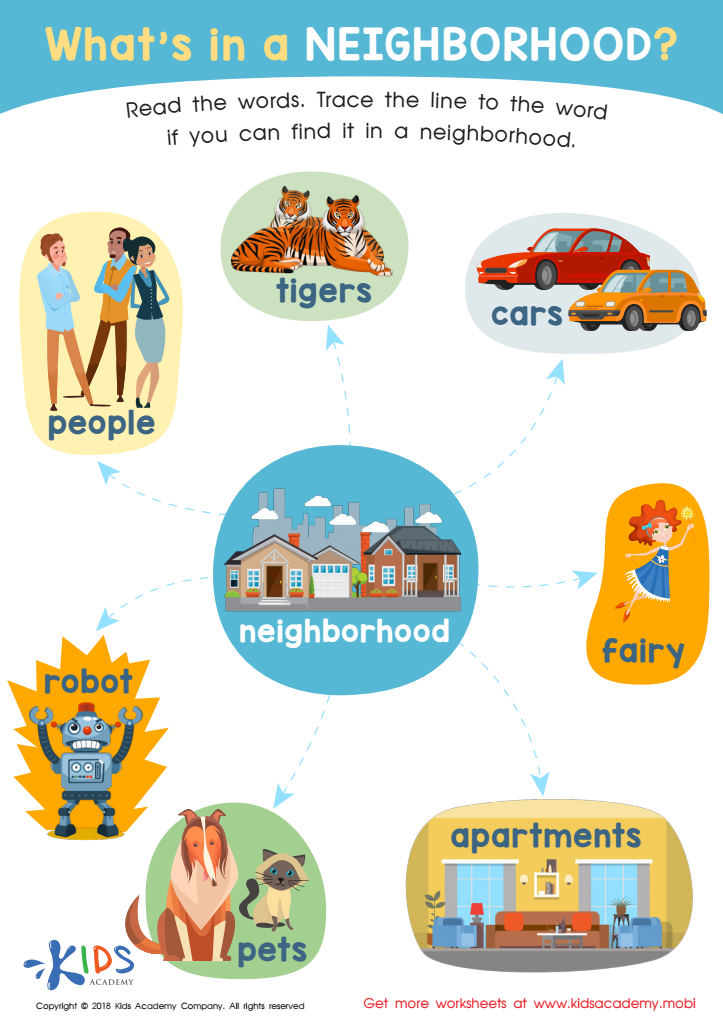
What's in a Neighborhood? Worksheet








Understanding communities is crucial for children aged 4-9, as it lays the foundation for their social awareness and interpersonal skills. Parents and teachers should prioritize this understanding because it helps children develop a sense of belonging and identity. By exploring various community elements—from families and schools to cultural diversity—they learn to appreciate differences, fostering empathy and respect for others.
Moreover, understanding communities encourages children to recognize their roles within larger social networks. It nurtures collaboration and communication skills, as they often engage in group activities that highlight teamwork and shared responsibilities. In addition, awareness of community resources empowers children to seek help and support, reinforcing problem-solving skills and resilience.
Teaching children about their communities sparks curiosity and engagement with the world around them. By participating in projects or local events, they gain experiential knowledge that aids cognitive growth and emotional development. Ultimately, fostering an understanding of communities encourages responsible citizenship and active participation in society, shaping compassionate individuals who can contribute positively as they grow. For these reasons, investing in community awareness is essential for parents and teachers in cultivating well-rounded, socially conscious citizens of the future.








