Understanding number relationships Normal Worksheets for Ages 4-9
3 filtered results
-
From - To
Explore our "Understanding Number Relationships" normal worksheets designed for children ages 4-9. These engaging worksheets focus on essential math concepts such as comparing quantities, recognizing patterns, and mastering number bonds. Tailored to various skill levels, each worksheet promotes interactive learning, allowing young learners to build a strong foundation in numeracy. With colorful visuals and fun activities, your child will develop critical thinking and problem-solving skills while working at their own pace. Perfect for home or classroom use, our worksheets make math enjoyable and accessible, ensuring a positive learning experience. Start building your child’s math confidence today!
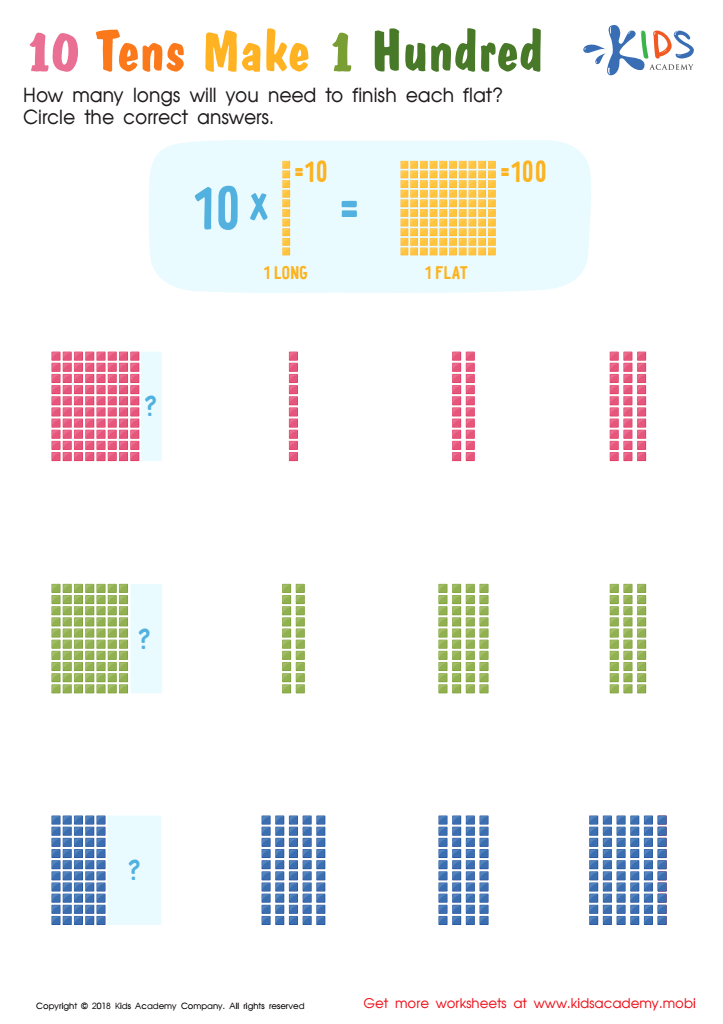
10 Tens Make 1 Hundred Worksheet
 Assign to My Students
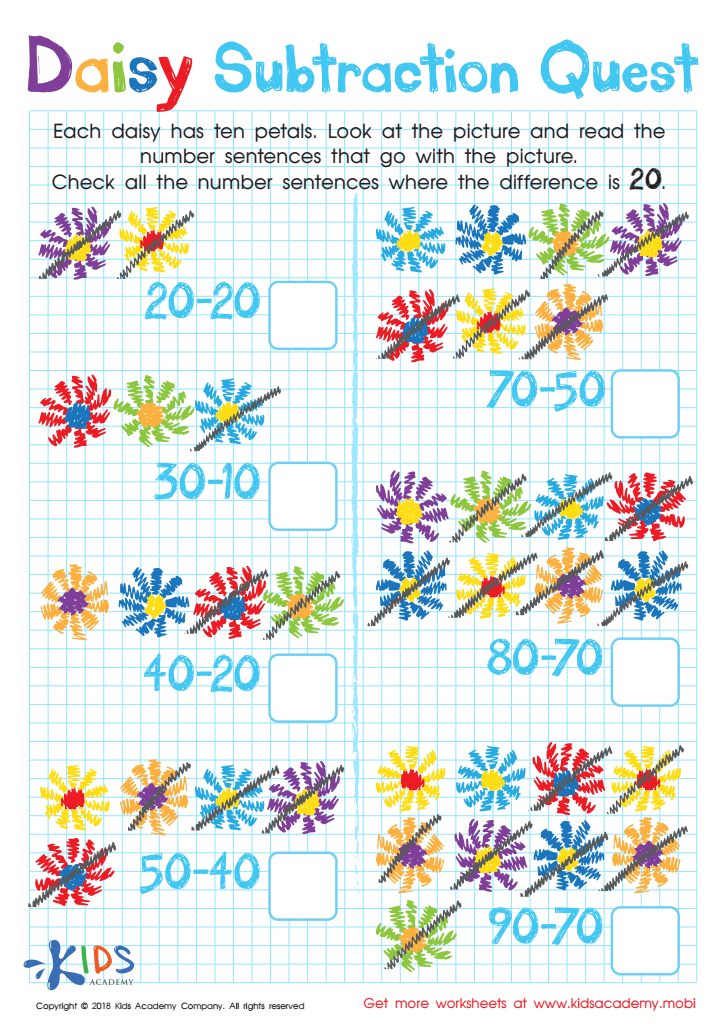
Daisy Subtraction Quest Worksheet
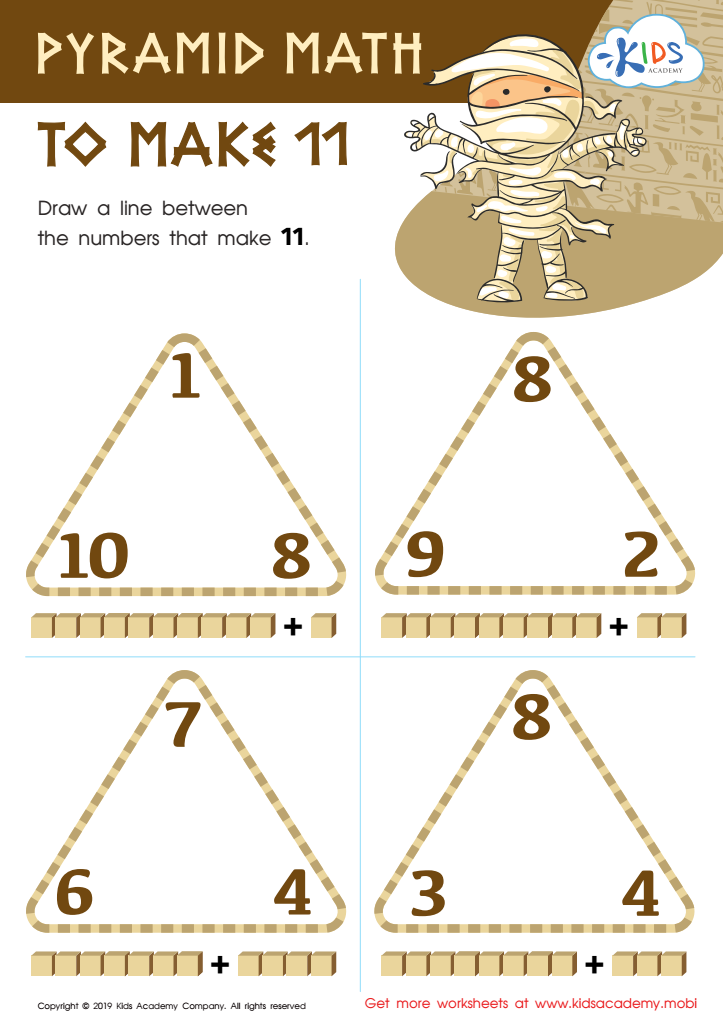
Pyramid Math to Make 11 Worksheet







Understanding number relationships is fundamental for children's mathematical development, especially for ages 4-9. During these formative years, children build their foundational skills and perceptions of mathematics. Recognizing number relationships—such as how numbers relate to each other through addition, subtraction, or positioning on a number line—enables them to develop critical problem-solving skills.
Parents and teachers should care because a strong grasp of number relationships fosters confidence in young learners. It prepares them for more complex mathematical concepts in later grades while encouraging curiosity and a positive attitude toward math. Early identification of number relationships helps children make connections between mathematical ideas, enhancing their ability to understand and manipulate numbers in varied contexts.
Moreover, proficiency in these concepts can significantly impact a child’s academic trajectory. Research has shown that early math skills correlate with later academic success, making intervention and support during these ages crucial. By nurturing an understanding of number relationships, parents and teachers help children become adept problem solvers, equipping them for academic challenges and everyday situations involving math. In turn, instilling this key insight early on lays the groundwork for lifelong learning in mathematics and beyond.








