Uppercase identification Normal Worksheets for Ages 4-9
5 filtered results
-
From - To
Discover the perfect resource for enhancing uppercase letter recognition in your preschool or early elementary classroom! Our Uppercase Identification Normal Worksheets for ages 4-9 are specially designed to engage young learners through fun and interactive activities. Each worksheet features vibrant illustrations and a variety of exercises aimed at helping children identify and differentiate between uppercase letters. These worksheets not only support literacy development but also promote fine motor skills through tracing and writing tasks. Ideal for both classroom use and at-home practice, our worksheets provide a solid foundation for reading readiness. Start your child’s journey to literacy with these engaging resources!
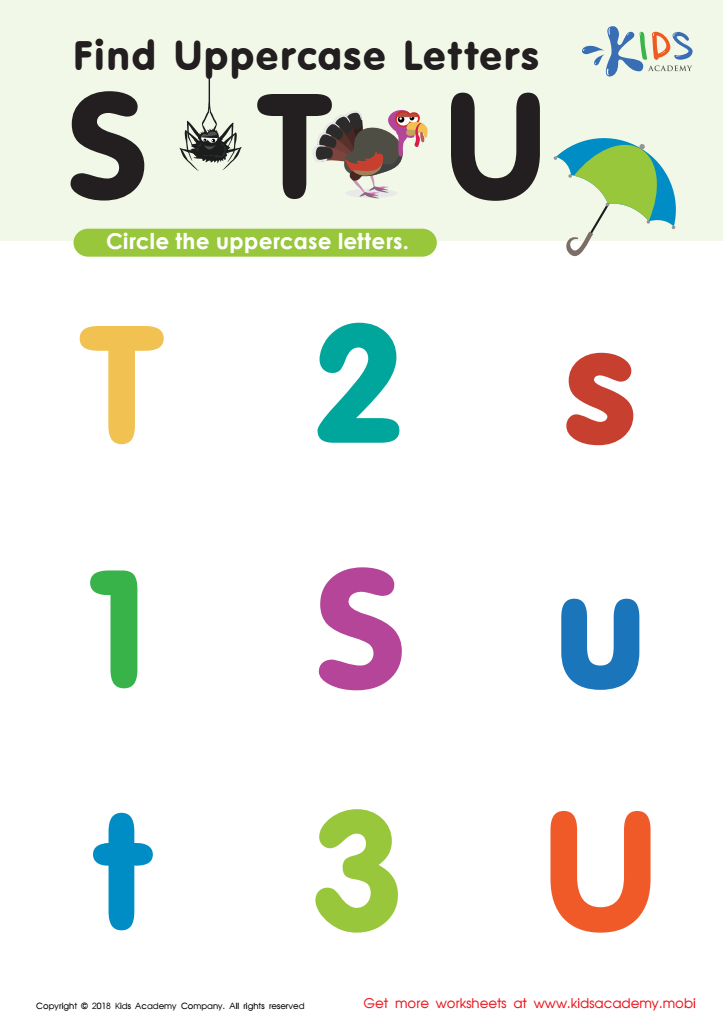
Find Uppercase Letters Worksheet
 Assign to My Students
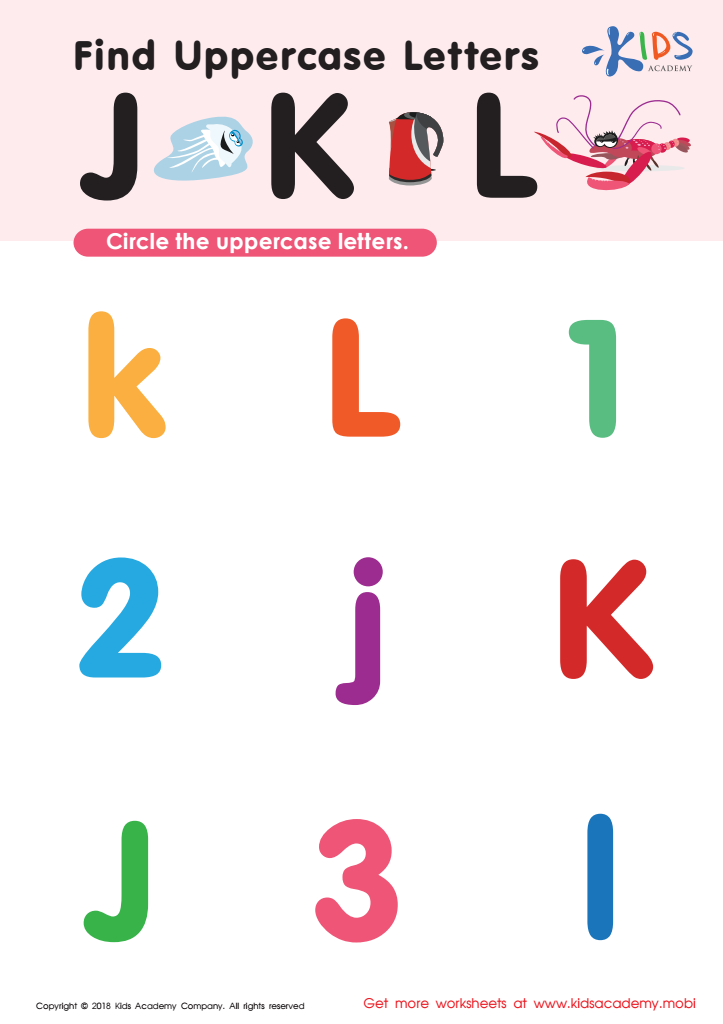
Find Uppercase Letters J, K, and L Worksheet
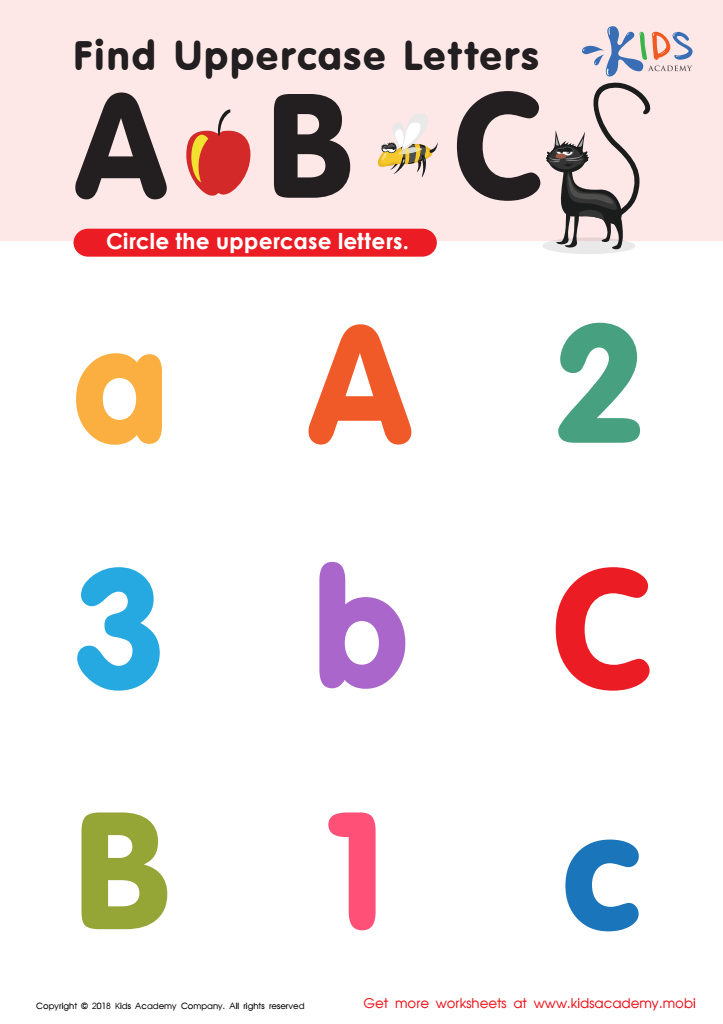
Find Uppercase Letters A, B, and C Worksheet
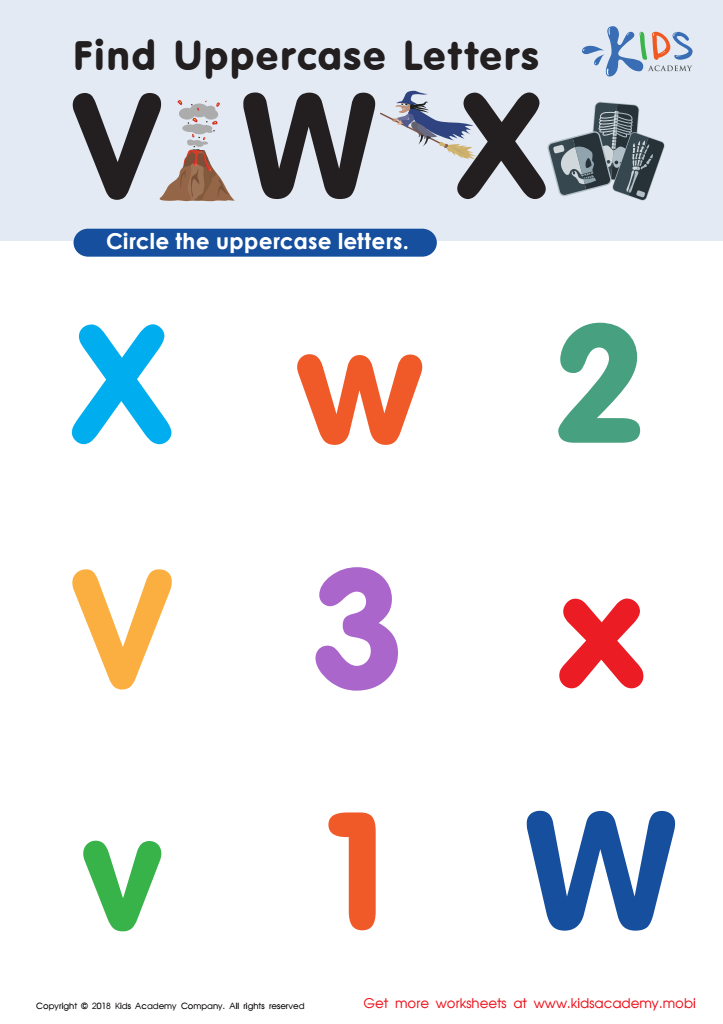
Find Uppercase Letters V, W, X Worksheet
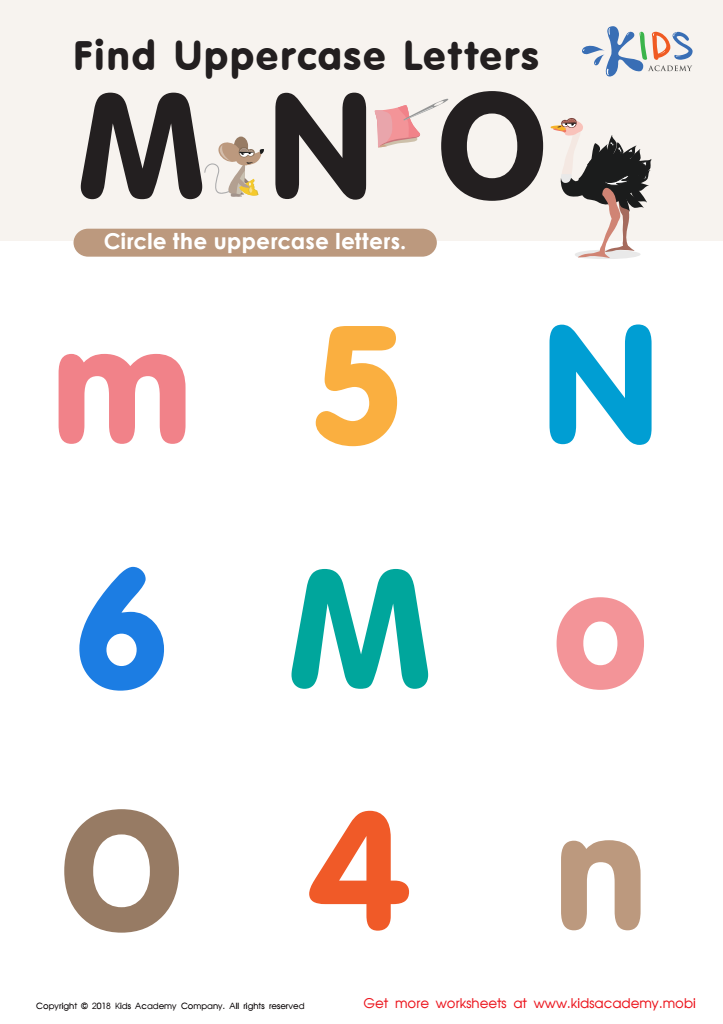
Find Uppercase Letters M, N, and O Worksheet







Uppercase letter identification is a foundational skill critical for children aged 4-9. At this stage, children transition from pre-reading strategies to more formal reading skills, making the recognition of uppercase letters essential. These letters play a vital role in easing the reading process because they often signal proper nouns, the beginning of sentences, and are frequently used in signage, advertising, and other visual texts found in daily life.
Understanding uppercase letters enhances children's phonemic awareness, leading to improved decoding skills. It also supports their ability to differentiate between letter shapes and sounds, which is crucial when learning to read and write. Moreover, this skill sets the groundwork for further literacy development, including reading fluency and comprehension as they progress in their education.
Teachers and parents are key players in nurturing this skill through engaging and enjoyable activities, integrating uppercase letter games, creative arts, and everyday sightings of text. By fostering an environment where uppercase letter recognition is prioritized, we set children up for greater academic success and boost their confidence in literacy. Early investment in teaching these skills encourages lifelong reading habits and appreciation for language, key components of overall educational achievement.








