Vocabulary Building Normal Worksheets for Ages 4-9 - Page 3
51 filtered results
-
From - To
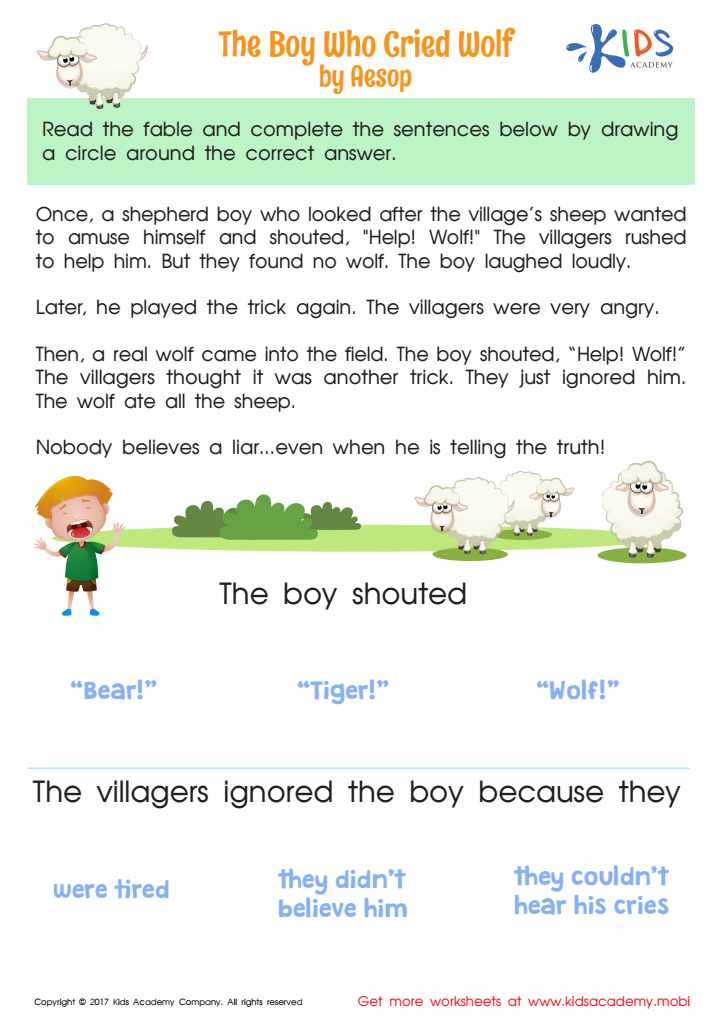
The Boy Who Cried Wolf Worksheet
 Assign to My Students
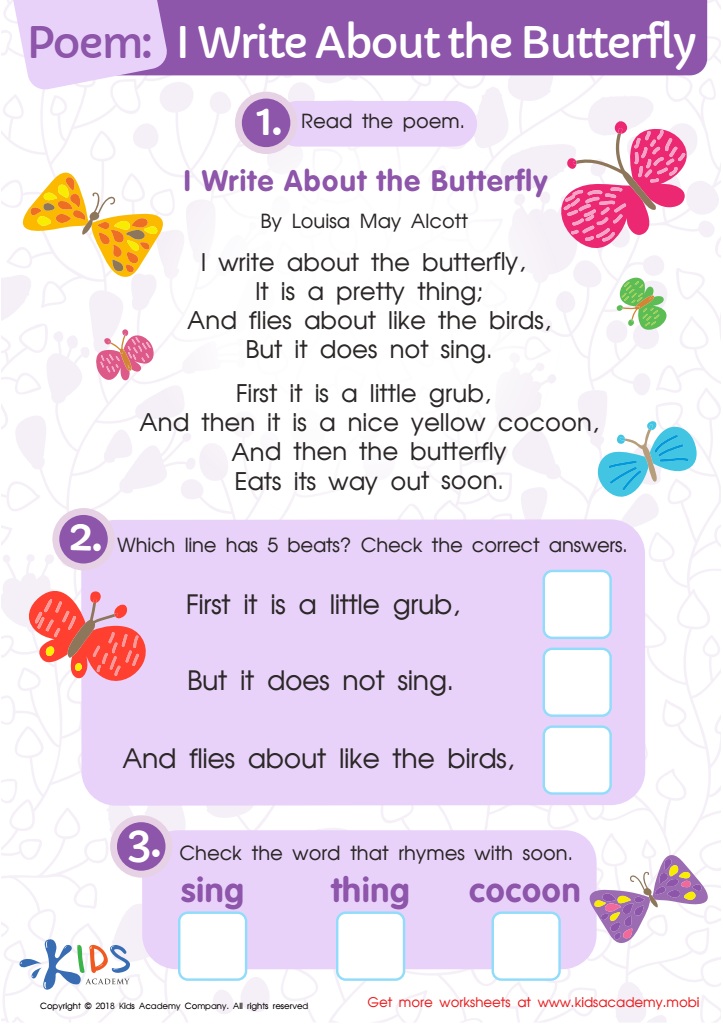
Poem: I Write About The Butterfly Worksheet
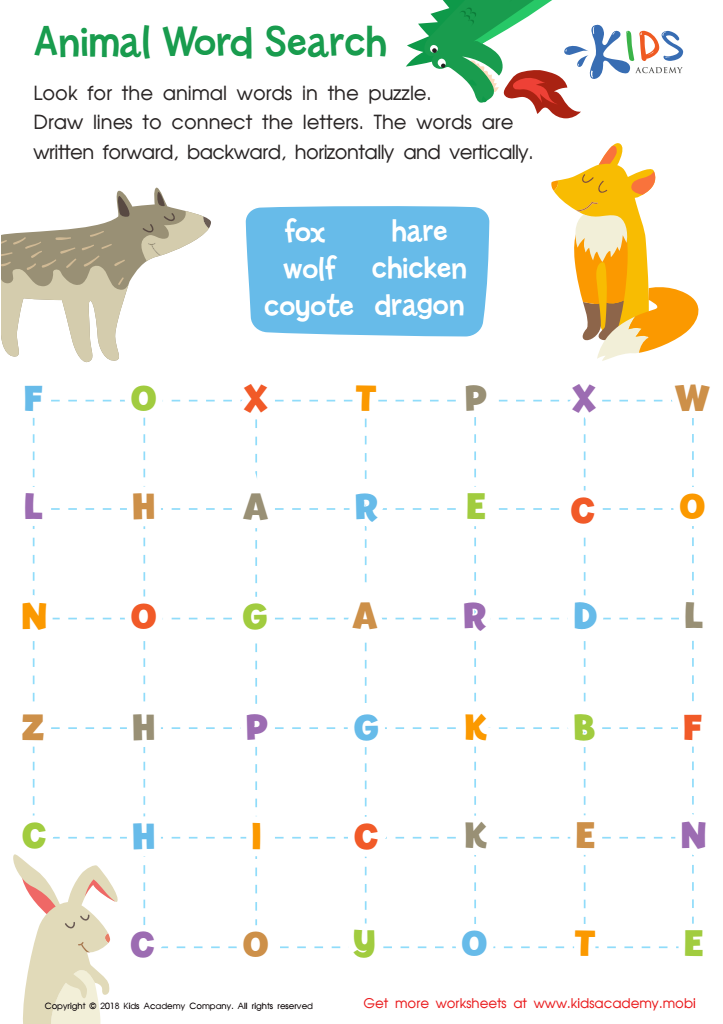
Animal Word Search Worksheet







Vocabulary building for children ages 4-9 plays a pivotal role in setting the foundation for their academic success and future communication skills. During these formative years, children's brains are exceptionally receptive to learning new words, which supports their ability to express thoughts, feelings, and ideas more precisely. A robust vocabulary enhances reading comprehension, allowing children to understand stories, instructions, and informational texts better. This comprehension is fundamental for academic performance across all subjects.
Moreover, a rich vocabulary boosts children's confidence in social interactions, enabling them to articulate themselves clearly in various situations. It also fosters cognitive development, aiding critical thinking and problem-solving skills. For instance, understanding nuanced words and their meanings can help children distinguish between similar concepts and make connections between ideas.
Parents and teachers are crucial facilitators in this process. They can introduce new words through engaging activities such as reading books, having conversations, and playing word games. Encouraging curiosity and repeated exposure to language helps reinforce learning. Investing time and effort in vocabulary building during early childhood sets the stage for a lifelong love of reading and learning, fostering well-rounded individuals who are prepared for future challenges and opportunities.








