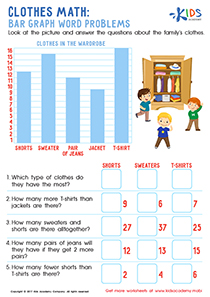
Division practice Normal Multiplication and Division Word Problems Worksheets for Ages 4-9
3 filtered results
-
From - To
Enhance your child's division skills with our "Division Practice" worksheets, perfect for ages 4-9. These engaging and educational resources combine normal multiplication and division word problems to build a strong mathematical foundation. Designed to make learning fun and effective, our worksheets help young learners understand key concepts while boosting their confidence in problem-solving. Ideal for both classrooms and home practice, Kids Academy offers activities that align with essential learning standards. Start developing your child's math abilities today with our expertly crafted worksheets, bridging the gap between understanding and application in a simple and enjoyable manner.
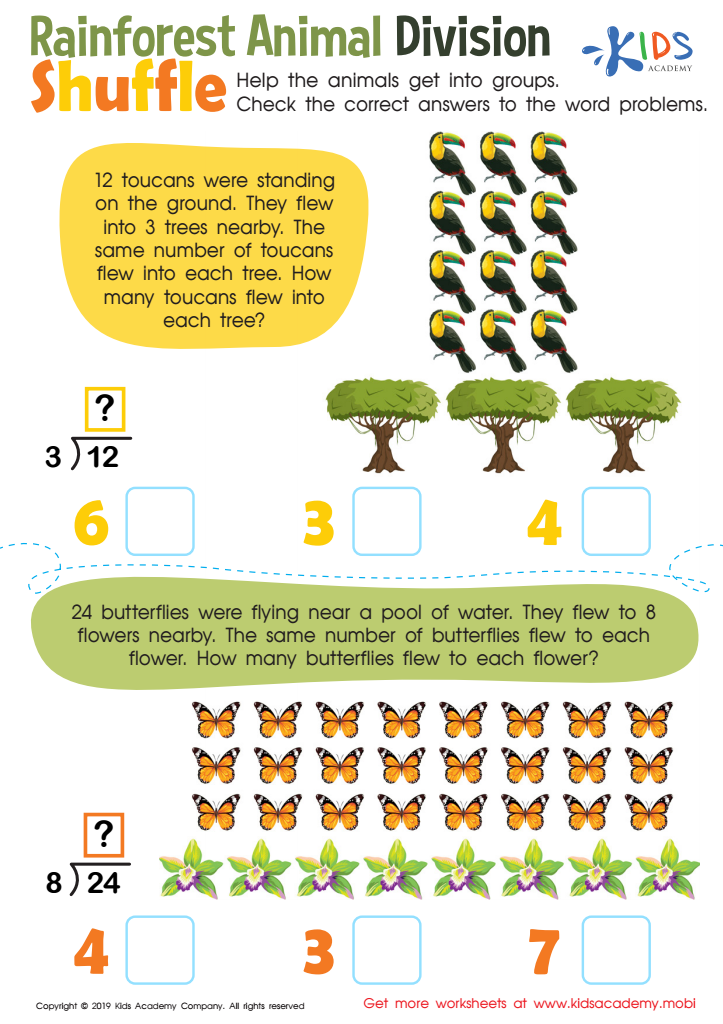
Rainforest Animal Division Worksheet
 Assign to My Students
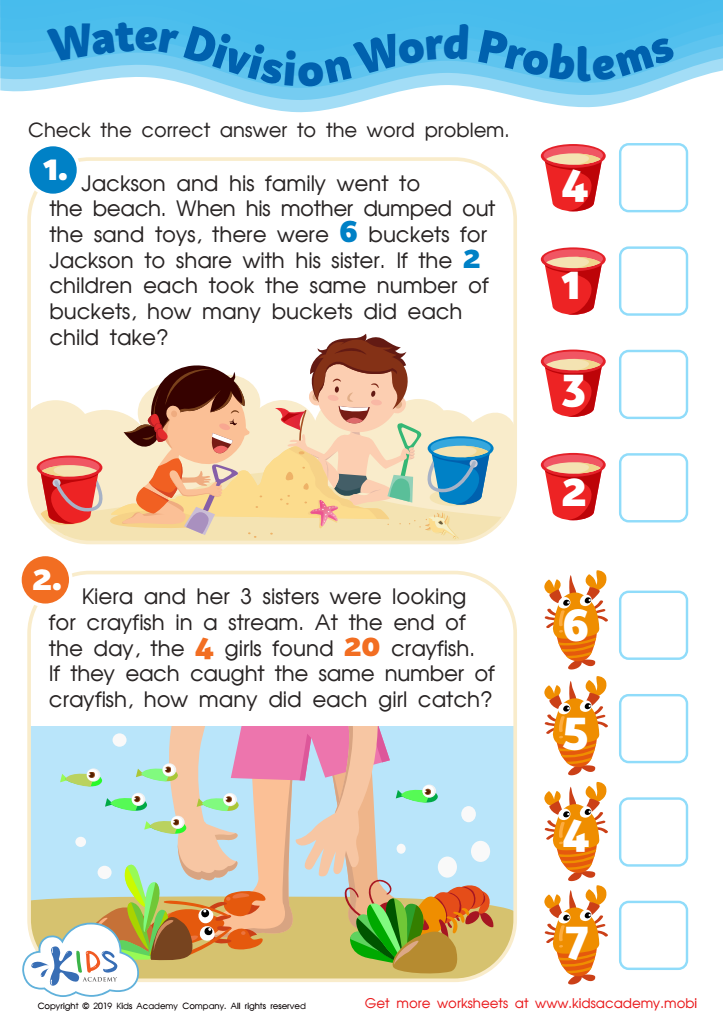
Water Division Word Problems Worksheet
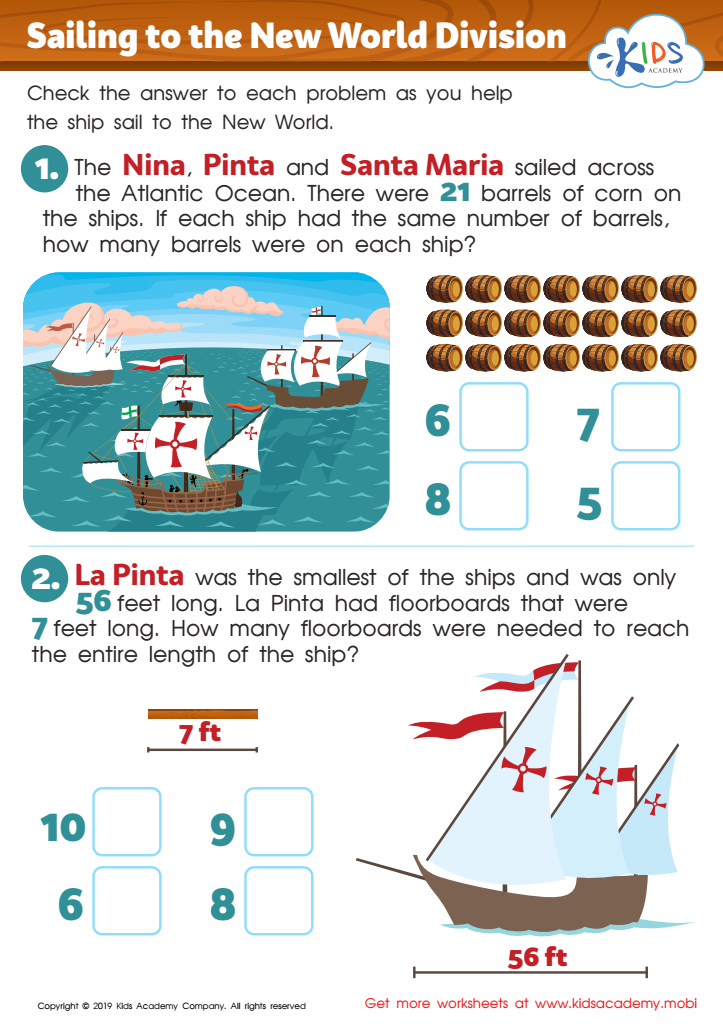
Sailing to the New World Division Worksheet








Parents and teachers should prioritize division practice, alongside normal multiplication and division word problems, for children ages 4-9, because these skills are foundational to their overall mathematical understanding. Early mastery of these basic arithmetic operations bolsters number sense, boosts logical thinking, and nurtures problem-solving skills. Division, specifically, teaches children how to distribute numbers evenly and understand parts of a whole, which are essential concepts in daily life activities such as sharing and managing resources.
Incorporating word problems contextualizes these operations, making math relevant and engaging. By using everyday scenarios, word problems illustrate how math is integrated into daily activities, fostering a natural curiosity and reducing math anxiety. This contextual learning encourages children to think critically and develop perseverance as they navigate through complex situations step by step.
Effective division practice also sets a solid groundwork for future math topics such as fractions, ratios, and algebra. Early exposure ensures that students have a strong grasp of key concepts before progressing to more advanced subjects. Moreover, it helps identify and address learning gaps early, preventing future difficulties in more complex mathematical concepts.
Building this mathematical foundation from an early age equips children with the confidence and skills necessary for academic success and daily life problem-solving, making it an essential focus for both parents and educators.