Mental math skills Normal Multiplication Worksheets for Ages 4-9
3 filtered results
-
From - To
Develop essential mental math skills with our Normal Multiplication Worksheets designed for ages 4-9. These engaging and diverse worksheets are expertly crafted to help young learners master multiplication concepts, from basic single-digit calculations to more complex problems. By practicing with these printable resources, children will enhance their problem-solving abilities, foster a stronger number sense, and build confidence in their math skills. Perfect for both classroom and home use, our worksheets provide a fun and effective way to support early math education. Explore our collection today to give your child a solid foundation in multiplication.
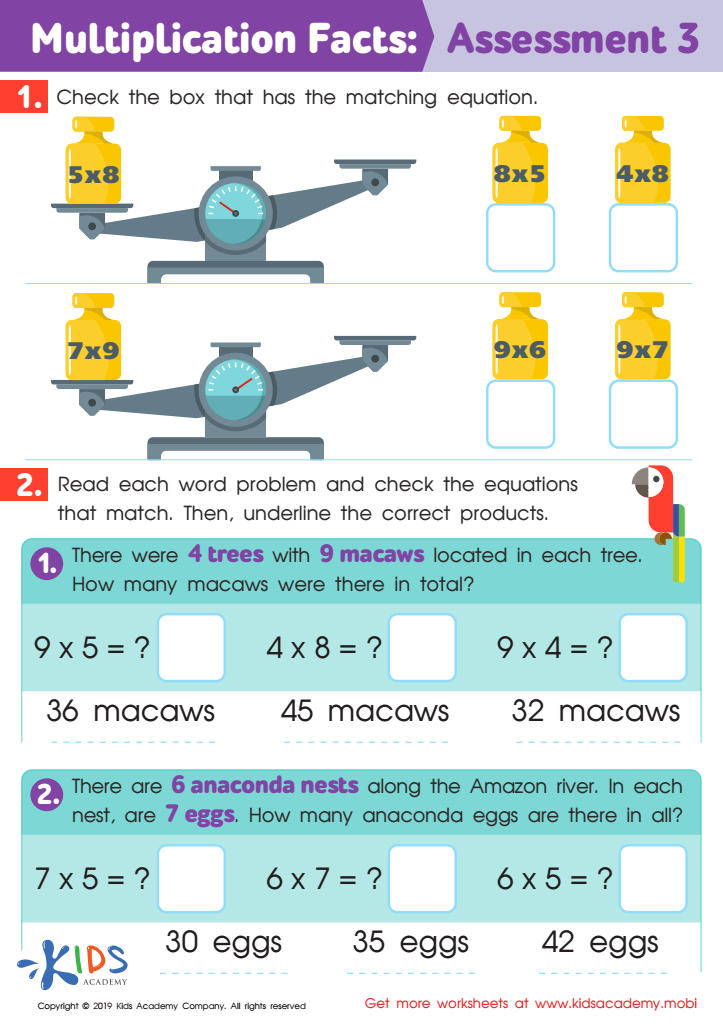
Multiplication Facts: Assessment 3 Worksheet
 Assign to My Students
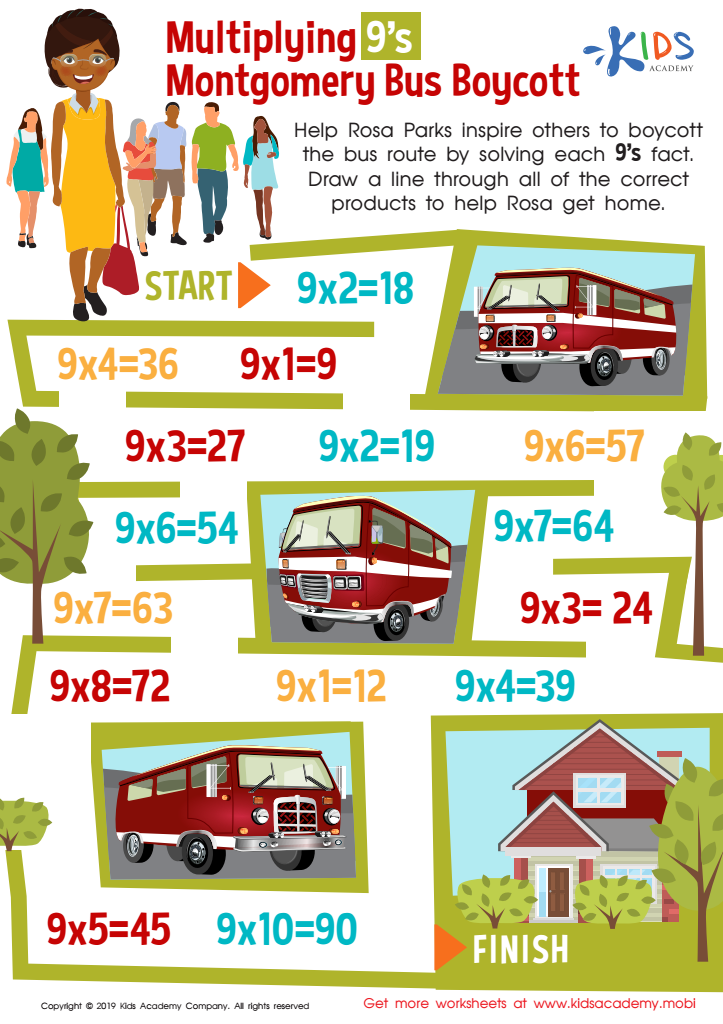
Multiplying 9’s Montgomery Bus Boycott Worksheet








Developing mental math skills, particularly multiplication, in children aged 4-9 is crucial for several reasons. Firstly, mental math fosters a deeper understanding of mathematical concepts. When children perform calculations in their heads, they internalize the relationships between numbers, which builds a strong mathematical foundation for more complex operations they will encounter later on.
Moreover, mental math skills improve problem-solving abilities. Children learn to think quickly and efficiently, which helps them tackle not only math problems but also real-life situations where quick thinking is an asset. Practicing multiplication tables mentally also strengthens memory and concentration, boosting overall academic performance.
Additionally, fostering these skills at a young age builds confidence. Children who can accurately perform mental calculations feel more competent and are likely to participate actively in class, reducing math-related anxiety. It's also essential for developing lifelong skills, as adults often rely on mental arithmetic in daily tasks, like shopping or cooking.
For parents and teachers, prioritizing mental math and multiplication exercises cultivates a positive attitude towards mathematics. This can lead to increased enthusiasm for the subject, cultivating an enduring curiosity and appreciation for learning, which benefits children throughout their education and beyond.








