Moral lesson understanding Normal Building Vocabulary Worksheets for Ages 4-9
3 filtered results
-
From - To
Discover our engaging Moral Lesson Understanding Normal Building Vocabulary Worksheets designed for children ages 4-9! These worksheets help young learners expand their vocabulary while instilling essential moral values. Each activity encourages critical thinking as kids explore themes of kindness, honesty, and respect. With a variety of fun exercises, your child will not only improve their language skills but also learn important life lessons in a playful and interactive way. Perfect for educators and parents alike, these worksheets provide valuable resources for fostering moral understanding and vocabulary development. Dive into a world of learning that nurtures both the mind and character!
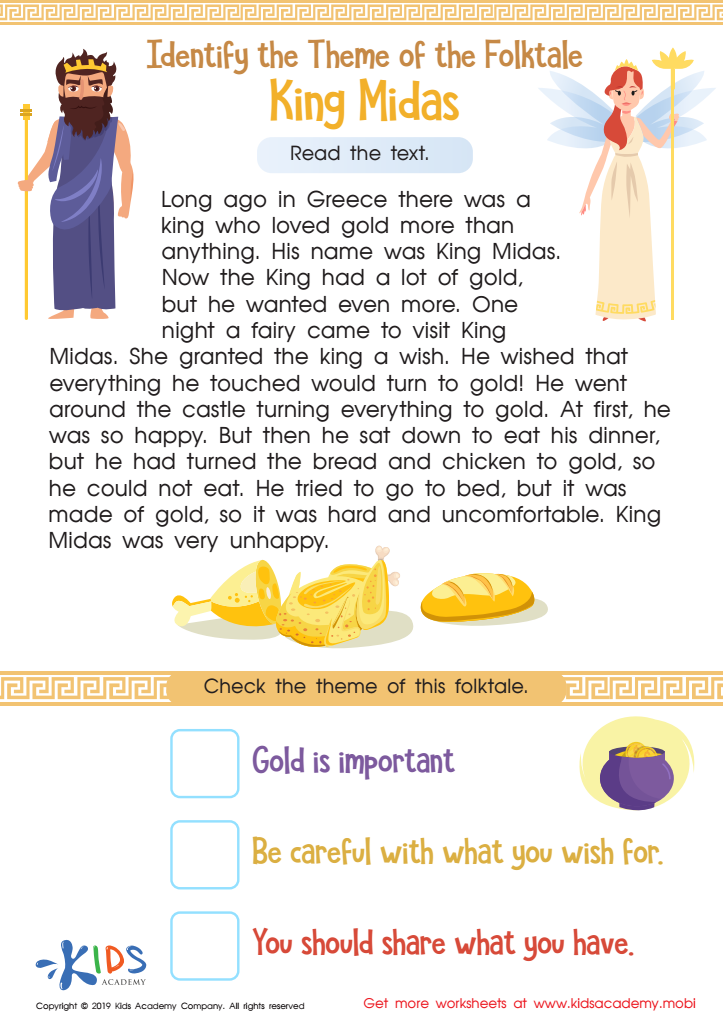
King Midas Worksheet
 Assign to My Students











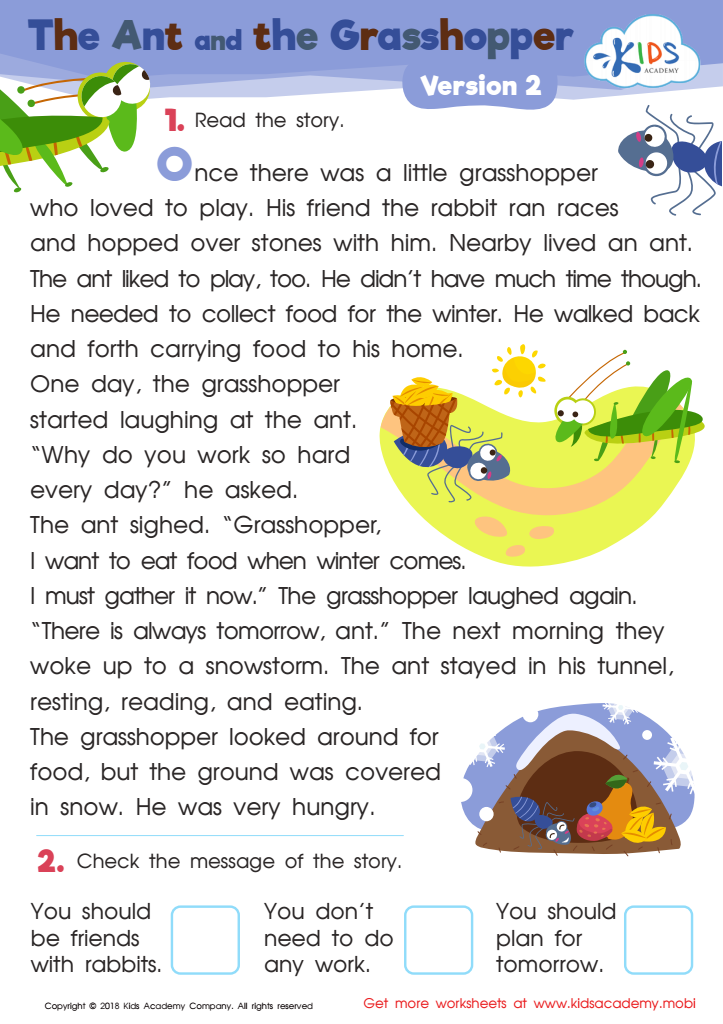
The Ant and The Grasshopper Version 2 Worksheet
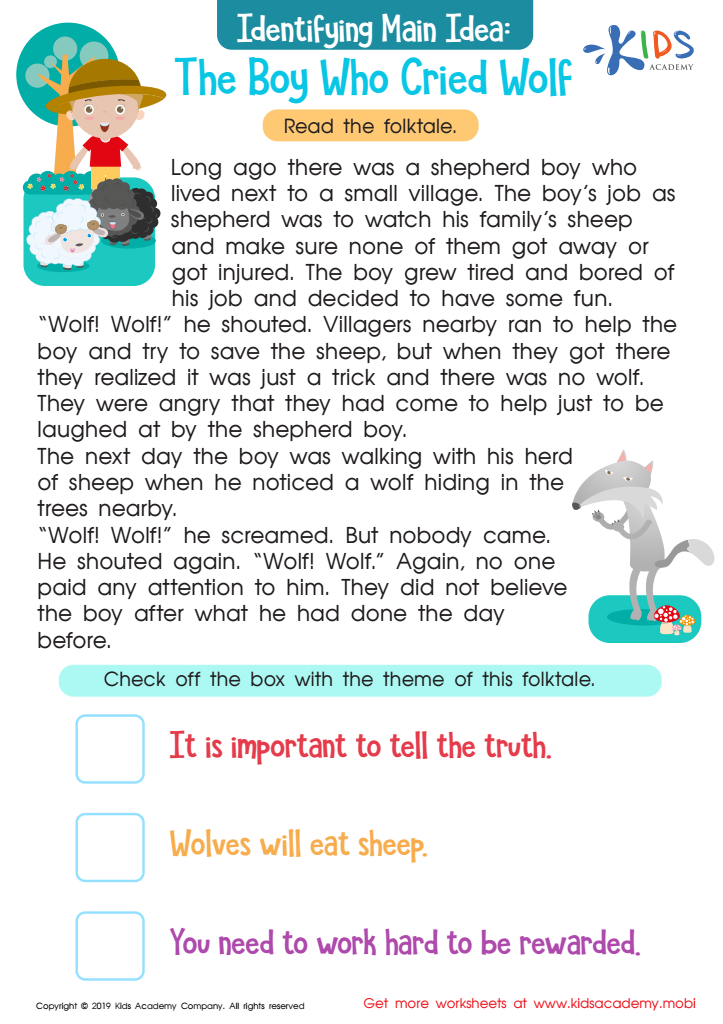
The Boy Who Cried Wolf Part 2 Worksheet





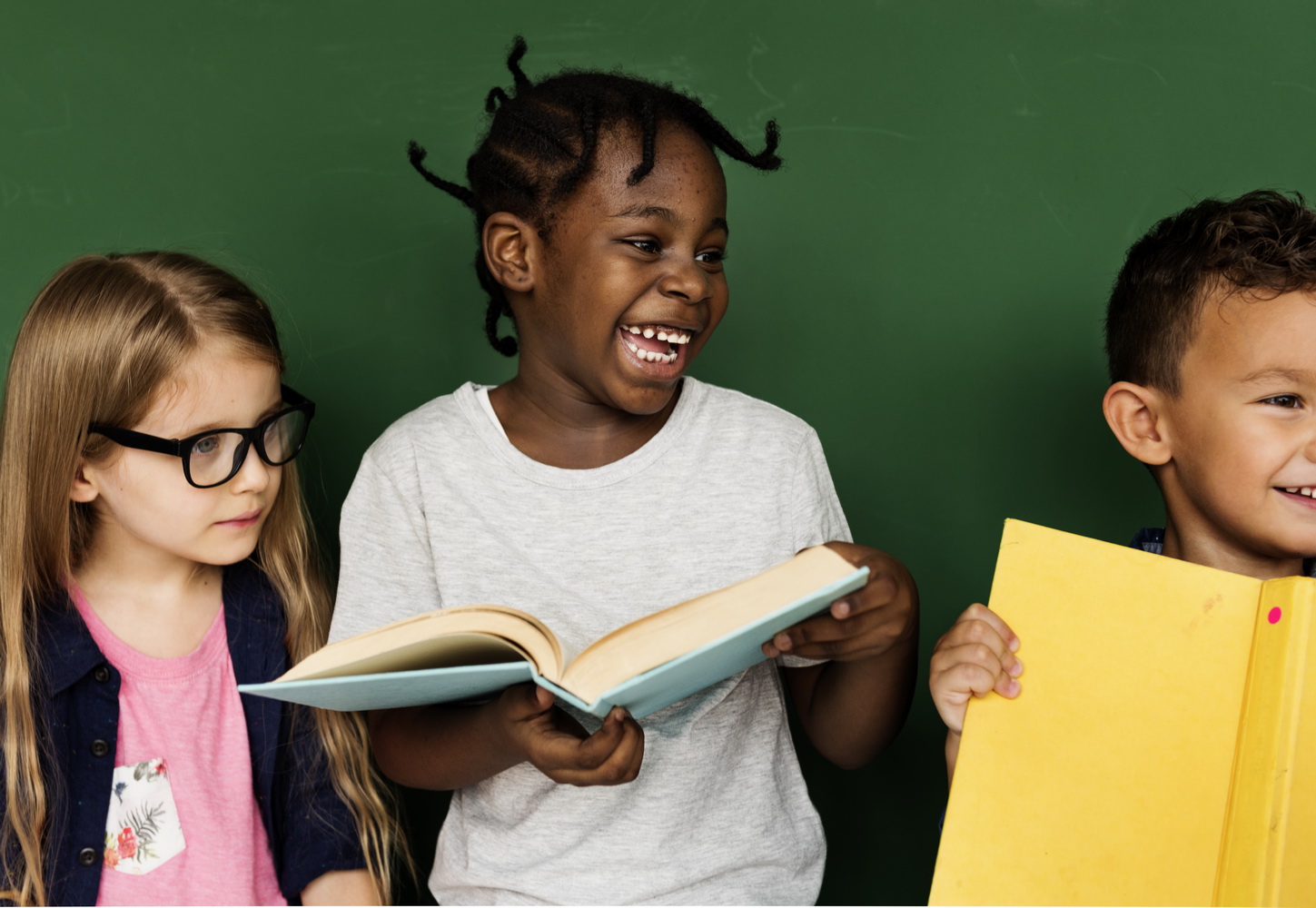


Parents and teachers play a critical role in children's moral and vocabulary development, especially for ages 4-9, a crucial period for cognitive and emotional growth. Understanding moral lessons helps children develop empathy, integrity, and social awareness. When children grasp moral concepts—from honesty to kindness—they learn to navigate complex social interactions and make responsible decisions, fostering a supportive community around them. This is essential for creating a harmonious classroom and home environment.
Building vocabulary simultaneously enriches children’s communication skills, expanding their ability to express thoughts, emotions, and ideas. A rich vocabulary encourages active participation in discussions, enhances reading comprehension, and improves writing proficiency. When children encounter new words in the context of moral lessons, they connect language with values, making learning more meaningful.
Moreover, a strong foundation in both morals and vocabulary lays the groundwork for lifelong learning and effective citizenship. Children who understand the implications of their words and actions are better equipped to conduct themselves ethically and express themselves clearly. For parents and teachers, fostering an environment where morality and vocabulary development coalesce is pivotal—it not only shapes well-rounded individuals but also cultivates an engaged and compassionate society.








