Reading Improvement Normal Building Vocabulary Worksheets for Ages 4-9
5 filtered results
-
From - To
Elevate your child's vocabulary and reading skills with our "Reading Improvement Normal Building Vocabulary Worksheets for Ages 4-9." Designed to engage young learners, these worksheets foster a love for reading while expanding their vocabulary. Perfect for parents and educators, our activities focus on developing critical language skills essential for academic success. With age-appropriate content and fun exercises, our worksheets cater to children from preschool to early elementary levels. Using creative themes and interactive tasks, we aim to make vocabulary building both enjoyable and effective. Enhance your child's reading abilities and give them a head start in their educational journey!
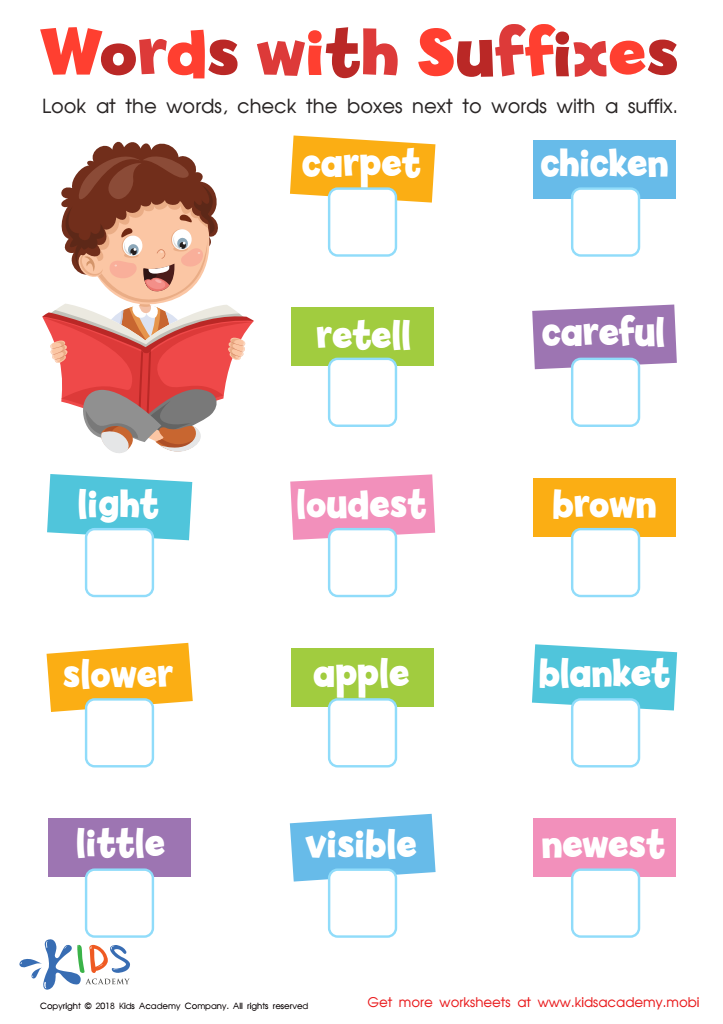
Reading: Words With Suffixes Worksheet
 Assign to My Students











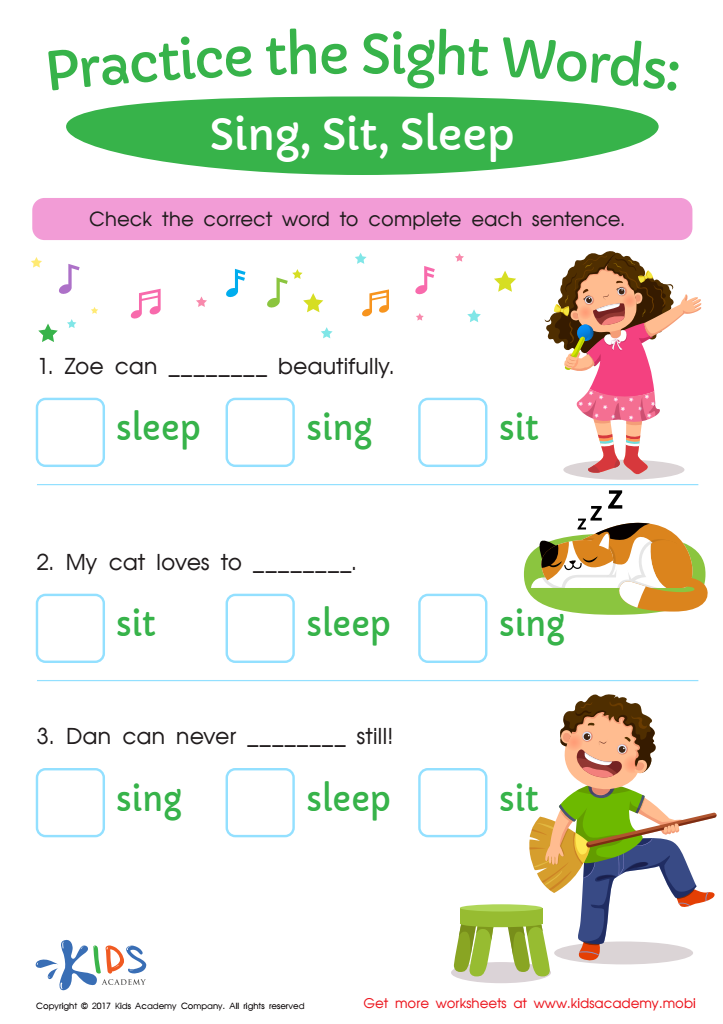
Sing, Sit, Sleep Sight Words Worksheet
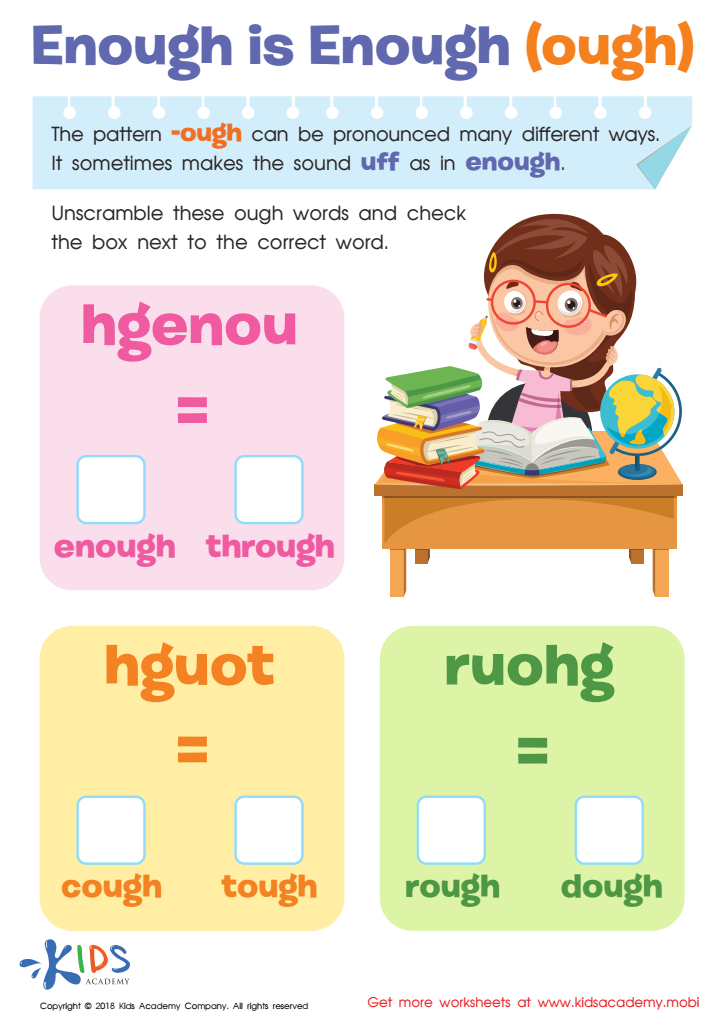
Enough Is Enough (ough) Worksheet
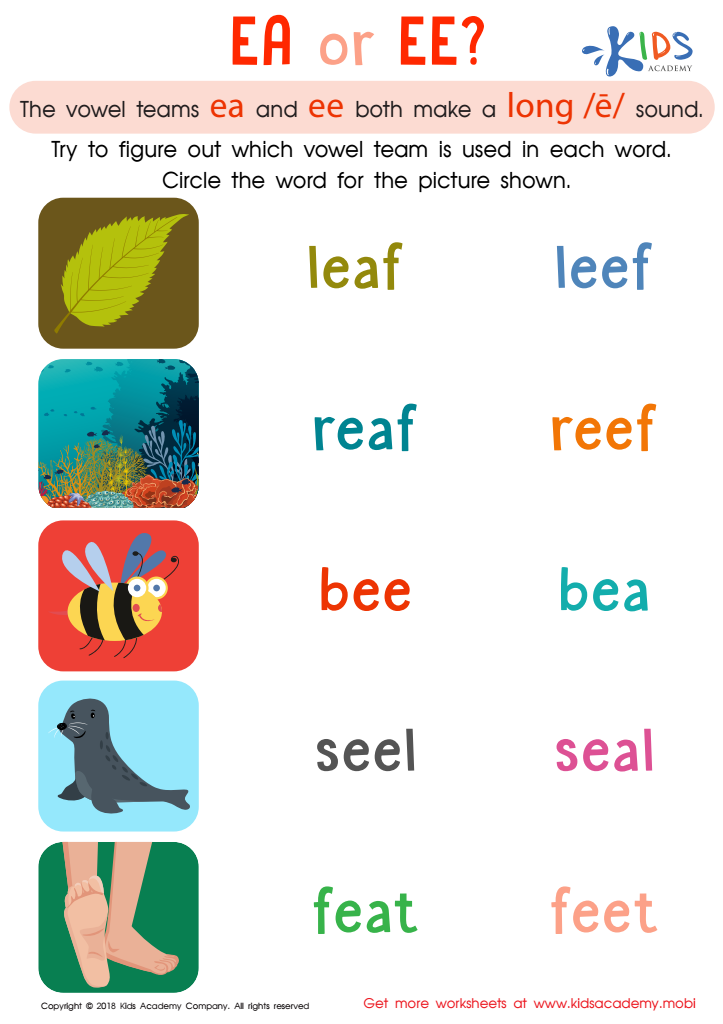
Reading: EA and EE Worksheet
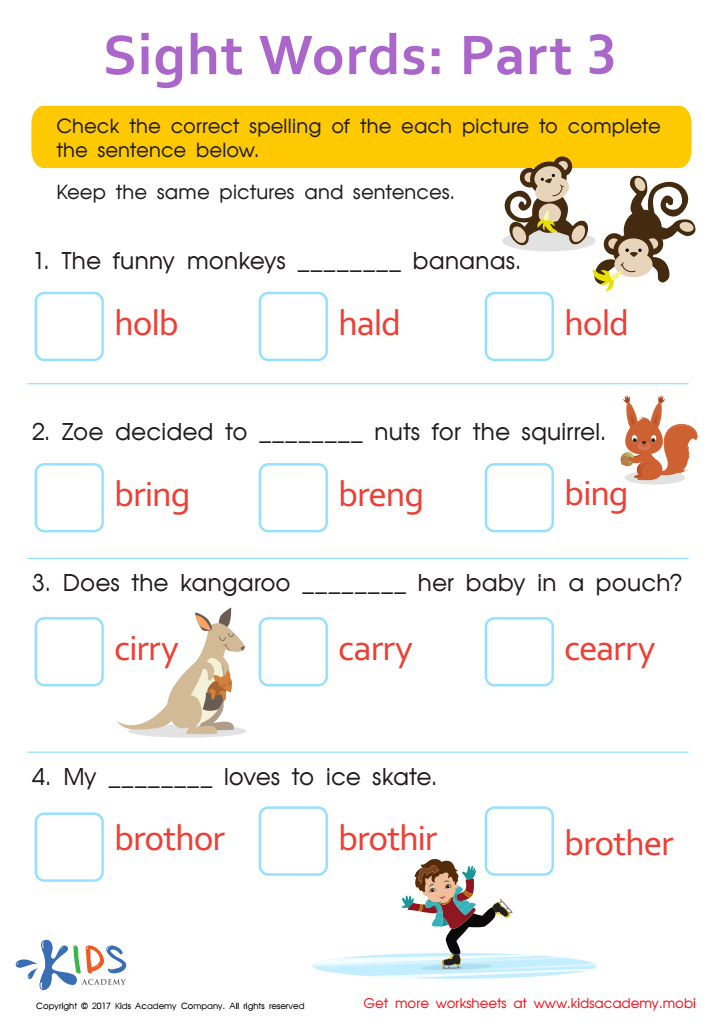
Hold, Bring, Carry, Brother Sight Words Worksheet





.jpg)


Investing in reading improvement and building vocabulary for children aged 4-9 is essential because these early years are foundational for all future learning. During this critical period, children's brains are incredibly receptive, making it an ideal time to instill crucial language and literacy skills.
First, developing strong reading and vocabulary abilities enhances cognitive development. Kids learn to decode words, understand context, and infer meaning, which promotes critical thinking. A rich vocabulary not only helps children to express themselves more effectively but also improves their ability to comprehend what they read.
Second, early reading skills are predictive of later academic success. Children who enter school with a robust vocabulary and reading experience often find learning more accessible, are more engaged, and perform better across subjects. This early success can boost self-esteem and foster a lifelong love of learning, setting the stage for academic accomplishments throughout their education.
Socially and emotionally, having the ability to understand and use words effectively helps children to communicate their thoughts, needs, and feelings, leading to better relationships and reduced frustration.
In a world increasingly driven by information and communication, ensuring children develop these essential skills provides them with tools to navigate life with confidence and competence. Parents and teachers play pivotal roles in this developmental phase, guiding children through this critical learning journey.








