
Story analysis Normal Building Vocabulary Worksheets for Ages 4-9
3 filtered results
Difficulty Level
Grade
Age
-
From - To
Subject
Activity
Standards
Discover our engaging "Story Analysis Vocabulary Worksheets" designed specifically for children ages 4-9! These worksheets encourage young learners to dive deeper into stories, enhancing comprehension and vocabulary skills. Through fun and interactive exercises, children will analyze characters, settings, and key events, fostering critical thinking and language development. Our carefully crafted materials align with educational standards, making them an ideal classroom or home resource. By integrating story analysis with vocabulary building, kids not only learn new words but also how to express thoughts and ideas about their favorite tales. Unlock your child’s imagination and vocabulary skills today with our unique worksheets!
Favorites
With answer key
Interactive
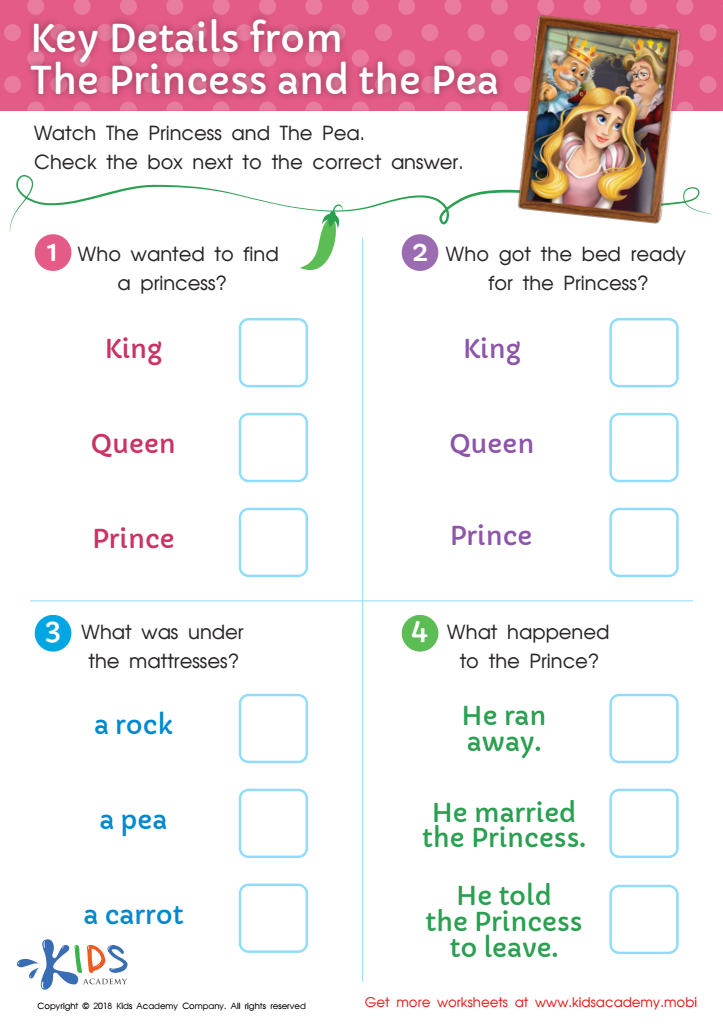
Key Details from the Princess and the Pea Worksheet
After reading The Princess and the Pea, ask your students questions to assess their comprehension of the story. Check their knowledge of key details. This printable can be used to help evaluate their understanding. Encouraging the recall of story events helps build important reading skills.
 Assign to My Students
Key Details from the Princess and the Pea Worksheet
Worksheet











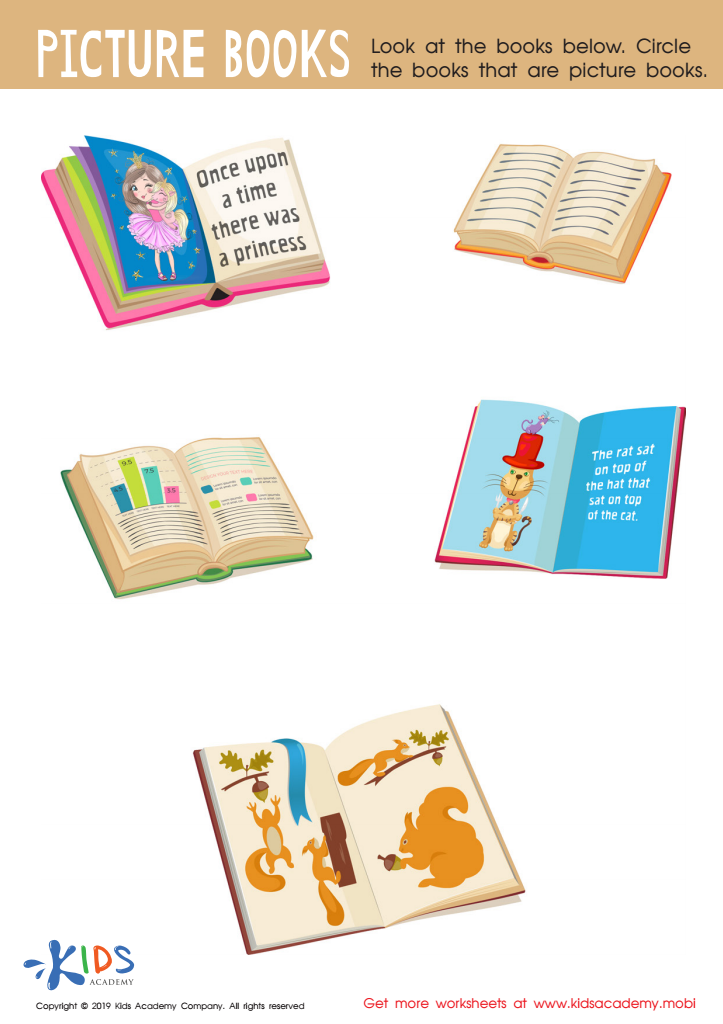
Picture Books Worksheet
Kids will love this exercise! Get their imaginations going with five colorful picture books. Ask them to circle the books that are picture books and have them enjoy the exciting stories, along with the colorful images. Reading can become that much more enjoyable!
Picture Books Worksheet
Worksheet
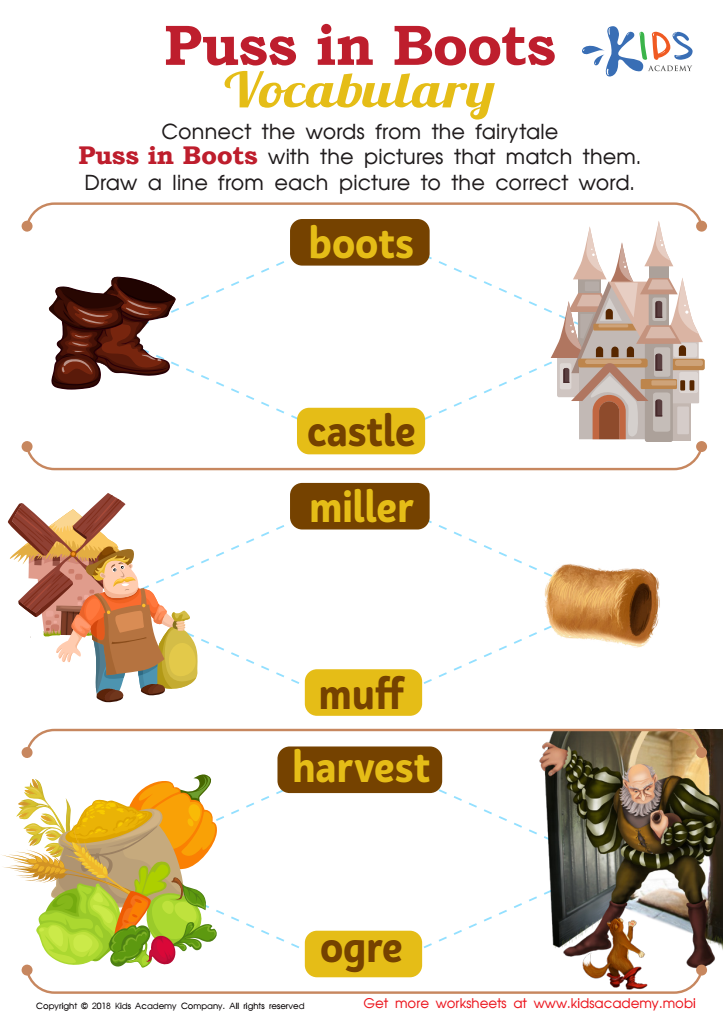
Puss in Boots Vocabulary Worksheet
Let your kids enjoy story-telling while learning at the same time. Help them learn from the fairytale, Puss in Boots, by connecting words from the worksheet with the matching pictures. Ask them to draw a line between each picture and corresponding word to build their vocabulary.
Puss in Boots Vocabulary Worksheet
Worksheet
Join Kids Academy for Free
Who is primarily going to use this learning content?






.jpg)

Story analysis plays a crucial role in building vocabulary for children aged 4-9, and both parents and teachers should prioritize it for several reasons. First, engaging with stories helps children encounter a rich variety of words in context, enhancing their understanding and use of language. This early exposure is fundamental, as a strong vocabulary sets the foundation for reading comprehension and effective communication as they grow.
Furthermore, story analysis encourages critical thinking skills; children learn to identify characters, settings, and plots, which fosters comprehension and retention of words and phrases. Discussing stories also builds conversational skills, allowing children to express their thoughts and opinions while practicing new vocabulary.
Additionally, story time creates an enriching bonding experience between parents and children or teachers and students. It promotes a love for reading, which has long-term cognitive benefits and supports academic success. Engaging actively with stories encourages imaginative thinking, as children respond to different narratives, expanding their language and analytical abilities.
In conclusion, story analysis is an essential tool for vocabulary development amidst young learners, allowing them to thrive linguistically, socially, and academically. Parents and teachers play a vital role in nurturing these experiences, ensuring children become confident and articulate individuals.








