Categorization skills Normal Reading Worksheets for Ages 4-9
3 filtered results
-
From - To
Boost your child's cognitive and reading abilities with our expertly designed Categorization Skills Normal Reading Worksheets for ages 4-9. At Kids Academy, we offer engaging and educational worksheets that enhance critical thinking by teaching children how to group and organize information. These worksheets help young learners develop essential reading skills and foster a deeper understanding of relationships between objects and concepts. Whether at home or in the classroom, our categorization activities are perfect for nurturing a child's analytical mind, promoting academic success, and ensuring a fun, interactive learning experience.
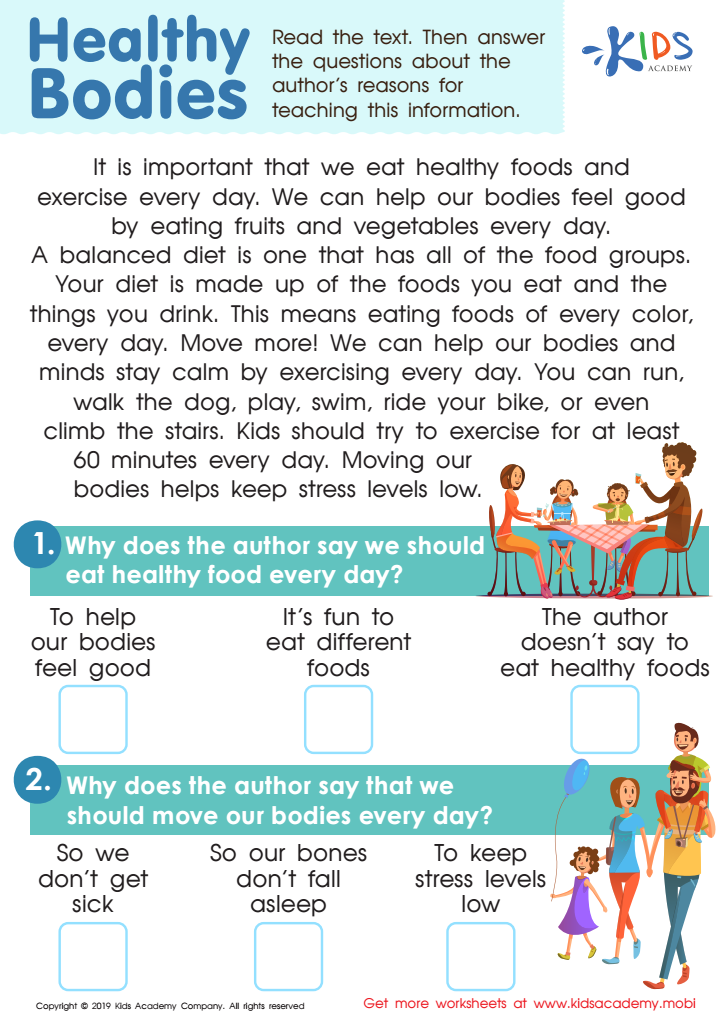
Healthy Bodies Worksheet
 Assign to My Students
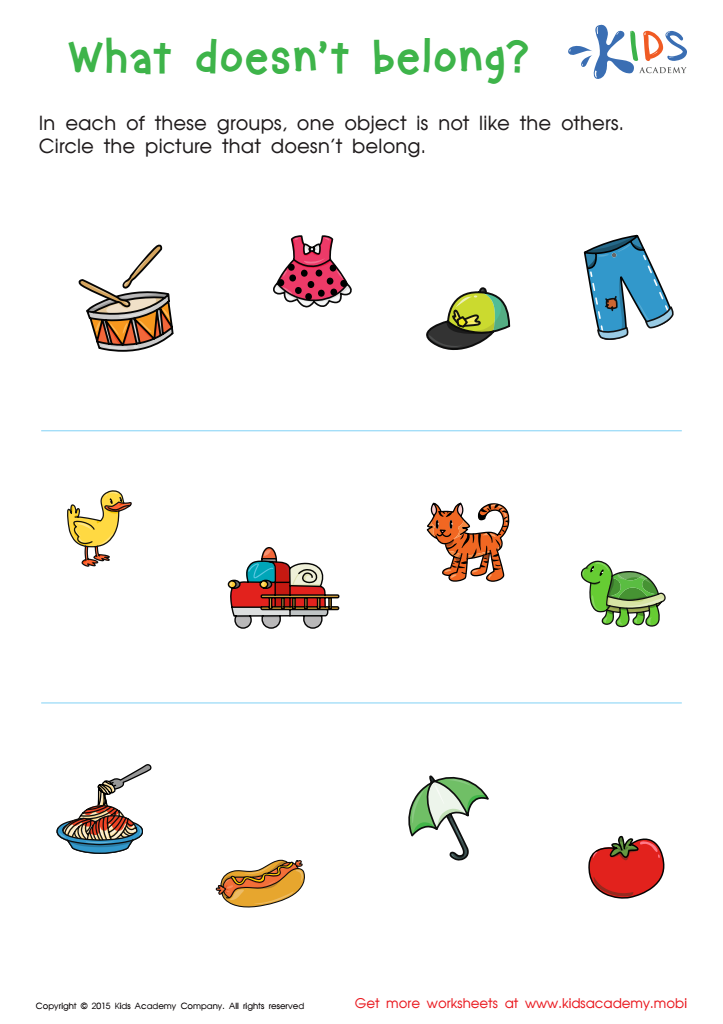
First Words: What Doesn't Belong Worksheet
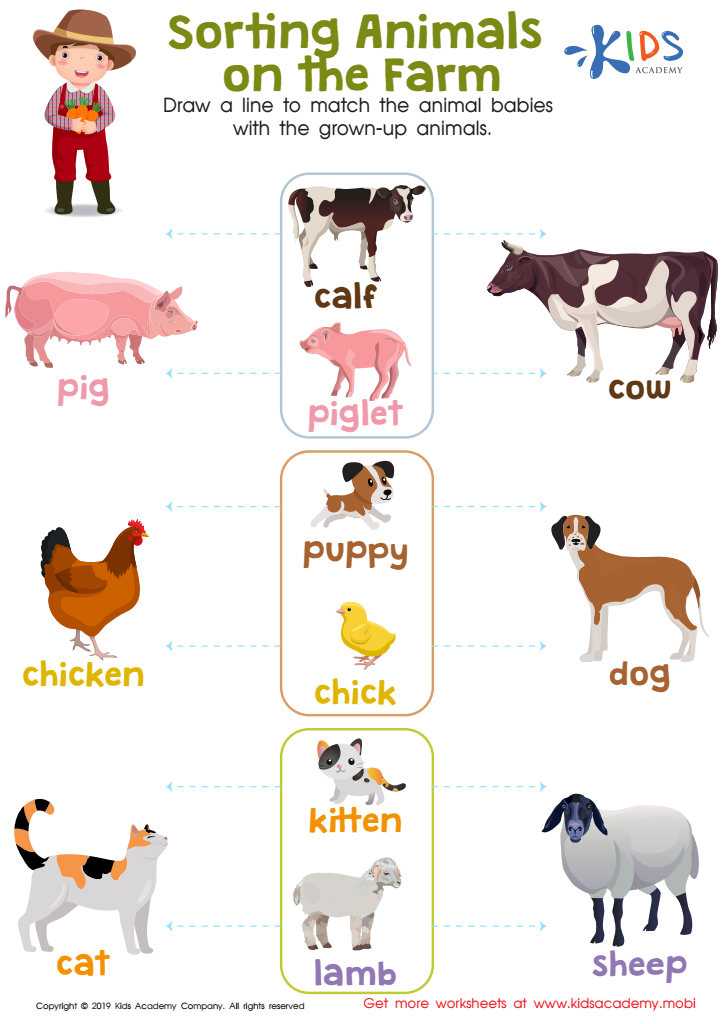
Sorting Animals on the Farm Worksheet


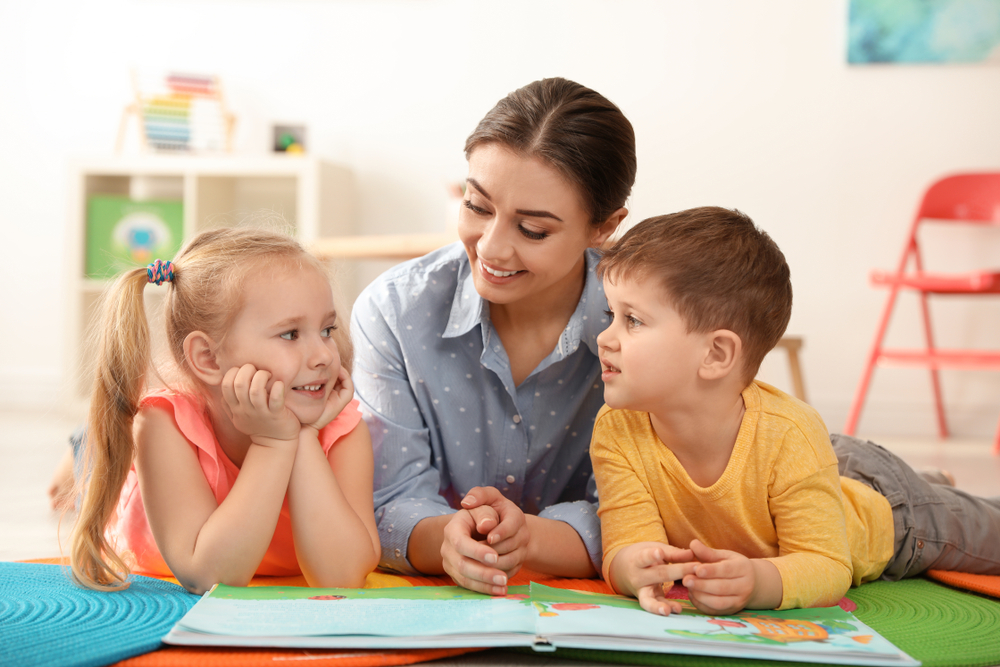




Categorization skills are fundamental cognitive processes that enable children to organize information and make sense of the world around them. For children ages 4-9, these skills are closely tied to their developmental milestones in both academic and social contexts. When children learn to categorize, they can more efficiently retrieve information, understand relationships between concepts, and improve problem-solving skills. These capabilities also play a critical role in early literacy development, which is crucial for normal reading progress.
By the age of four, children start recognizing patterns and sorting objects based on attributes like color, shape, and size. As they grow older, they learn to classify more abstract concepts. This ability enhances their vocabulary, comprehension, and spelling, all crucial aspects of reading. Since reading is a pivotal skill that underpins almost all future learning, fostering categorization skills can significantly affect academic success.
Parents and teachers should therefore prioritize activities that focus on these skills, understanding that categorization is not just about academic readiness but also about brain development and critical thinking. Games, storytelling, and organized play are excellent ways to enhance these skills naturally. Supporting this development can ensure that children gain a solid foundation for reading, which is essential for their future educational journeys.








