
Enhancing vocabulary Normal Reading Worksheets for Ages 4-9
5 filtered results
Difficulty Level
Grade
Age
-
From - To
Subject
Activity
Standards
Enhance your child's vocabulary with our engaging Normal Reading Worksheets designed for ages 4-9! These interactive resources help young learners expand their word skills through fun activities tailored to their developmental level. Our carefully crafted worksheets encourage reading comprehension, word recognition, and spelling practice, laying a strong foundation for literacy. With colorful visuals and diverse exercises, children will enjoy exploring new words while reinforcing their understanding of language. Perfect for home or classroom use, these worksheets foster a love for reading and strengthen essential language skills. Discover the joy of vocabulary building and watch your child's confidence soar!
Favorites
With answer key
Interactive
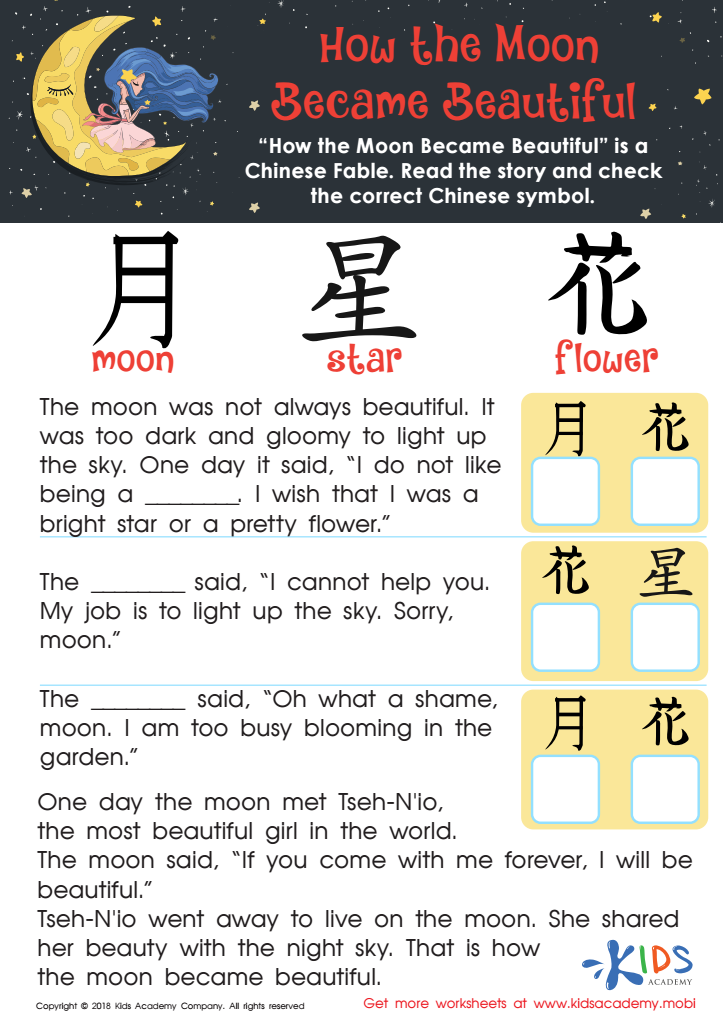
How the Moon Became Beautiful Worksheet
Fables are a great way for kids to learn! This Chinese fable about the moon's beauty is educational and entertaining. The PDF worksheet provides the English translations and symbols associated with the story. Kids can fill in the blanks with the correct symbols and have fun learning a new language!
 Assign to My Students
How the Moon Became Beautiful Worksheet
Worksheet
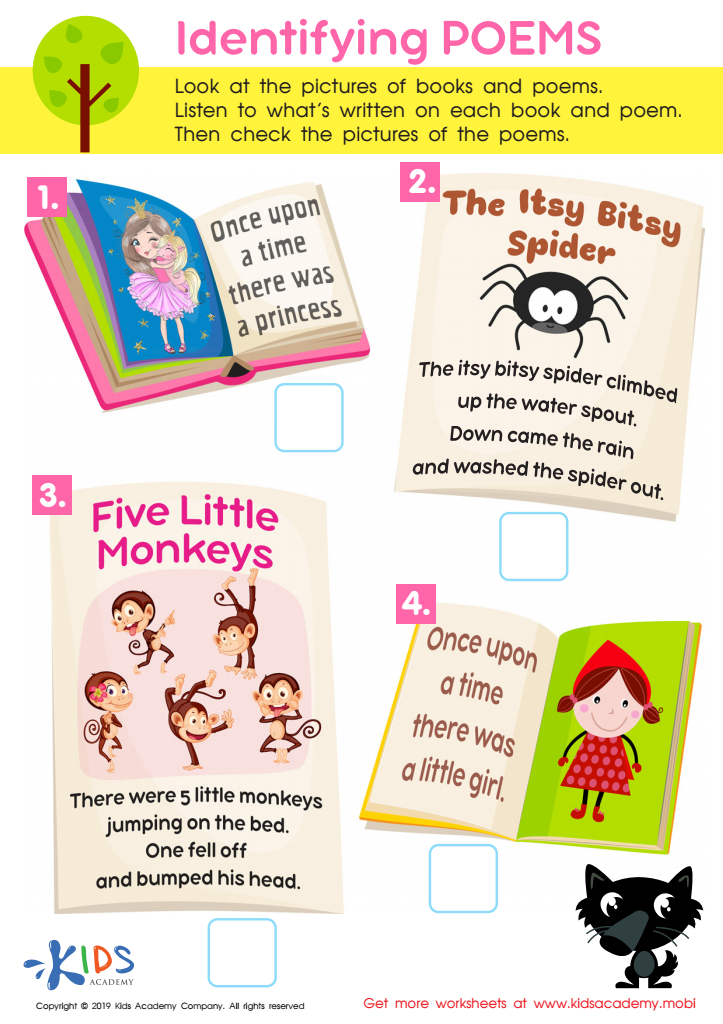
Identifying Poems Worksheet
Read to your kids often and look at the pictures of books and poems in this worksheet. Guide them by reading aloud each book and poem. Make sure they are paying attention and help them check the pictures. This is a great way for your kids to learn to read properly.
Identifying Poems Worksheet
Worksheet
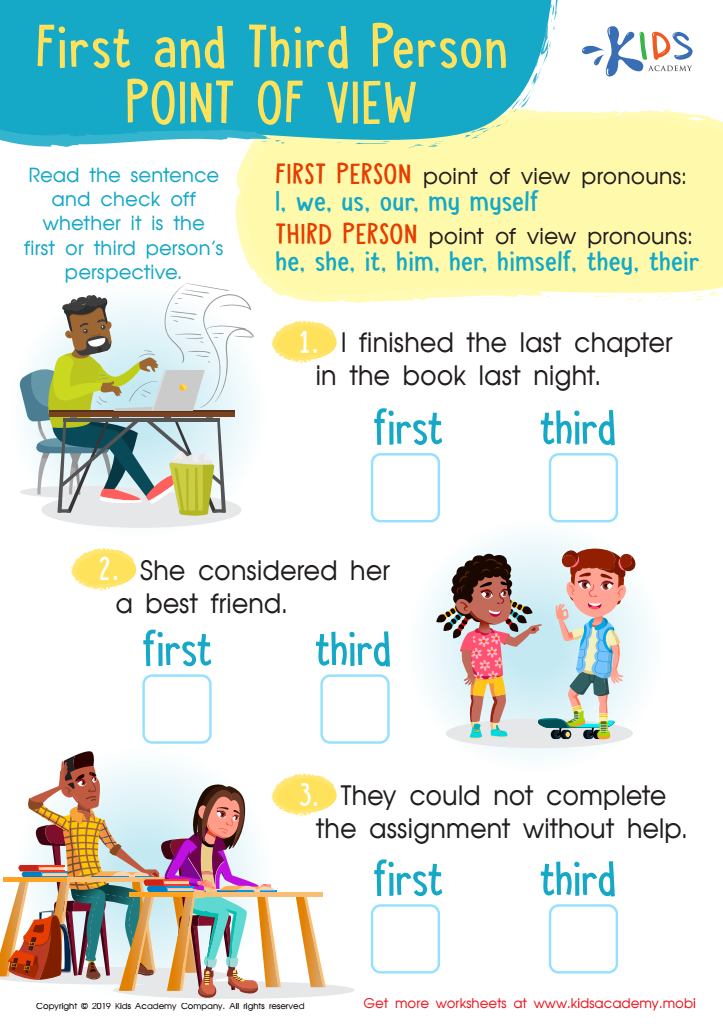
First and Third Person Point of View Worksheet
Remind kids what a point of view is in a story. First person is from the character's perspective; third person is from the narrator's. Ask students to check if sentences in the exercise are in first or third person point of view.
First and Third Person Point of View Worksheet
Worksheet
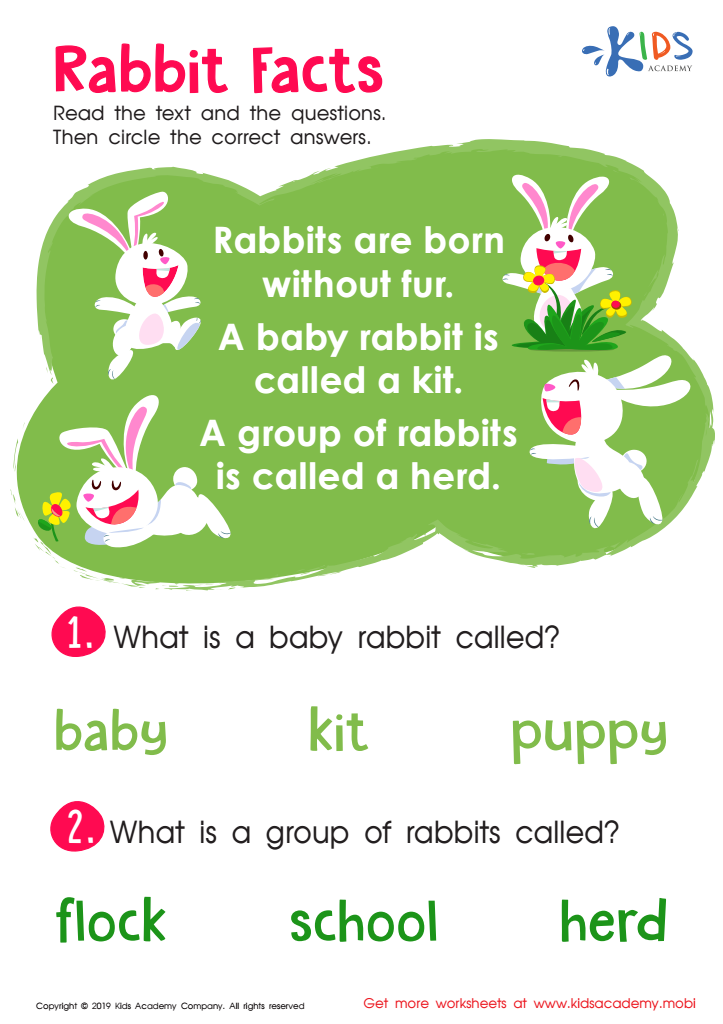
Rabbit Facts Worksheet
Reading comprehension skills can be strengthened with this fun PDF about fluffy rabbits. It helps kids recall and retell details from the text while engaging them in the topic. This encourages success in reading comprehension.
Rabbit Facts Worksheet
Worksheet
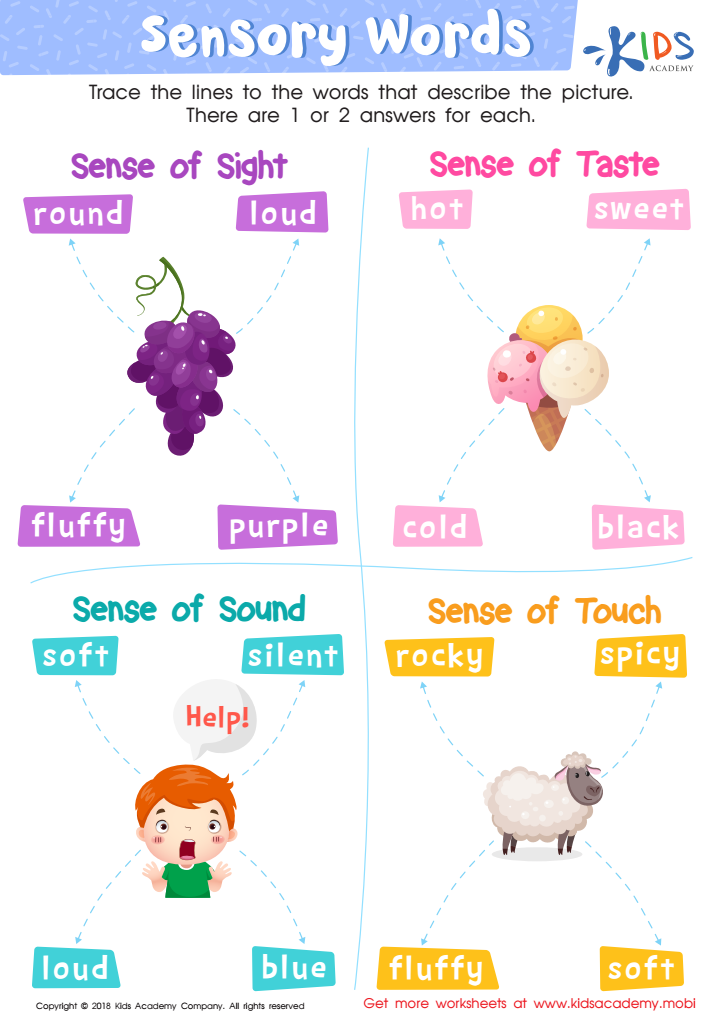
Sensory Words Worksheet
This worksheet helps students explore sensory words by looking at pictures and selecting one or two words to describe how it looks, feels, tastes, smells or sounds. Adding sensory words to texts makes them more interesting and helps students comprehend stories and articles better.
Sensory Words Worksheet
Worksheet
Join Kids Academy for Free
Who is primarily going to use this learning content?








Enhancing vocabulary during the formative years of ages 4-9 is crucial for several reasons, notably for educational and social development. At this stage, children's brains are highly receptive to language, allowing for rapid vocabulary acquisition that becomes foundational for all future learning. A rich vocabulary equips children with the tools needed to comprehend complex texts, engage in discussions, and express their thoughts effectively. This, in turn, enhances literacy skills, ensuring prescribed reading levels are consistently met and paving the way for academic success.
Moreover, a strong vocabulary positively influences emotional intelligence and social interactions. Children who can articulate their feelings and ideas are better equipped to establish friendships, resolve conflicts, and communicate needs. Early vocabulary building also fosters critical thinking and creativity, encouraging children to think deeply and express unique perspectives when they encounter new information.
For parents and teachers, investing in vocabulary enhancement not only cultivates academic prowess but also nurtures confident, self-assured individuals. This holistic approach prepares children for lifelong learning and personal growth, facilitating smoother transitions into adulthood. Ultimately, fostering a love for language at an early age sets the stage for a child’s success in all facets of life.








