Identifying story elements Normal Reading Worksheets for Ages 4-9
3 filtered results
-
From - To
Unlock the power of storytelling with our "Identifying Story Elements" worksheets, designed specifically for children aged 4-9. These engaging resources help young readers recognize key story components such as characters, settings, events, and resolutions. By integrating fun visuals and age-appropriate text, these worksheets enhance critical thinking and comprehension skills. Our user-friendly format fosters an interactive learning experience, making it easy for teachers and parents to guide children through the essential elements of narratives. Perfect for classroom activities or home practice, these worksheets will inspire a love for reading and storytelling in your child. Start your adventure in literacy today!
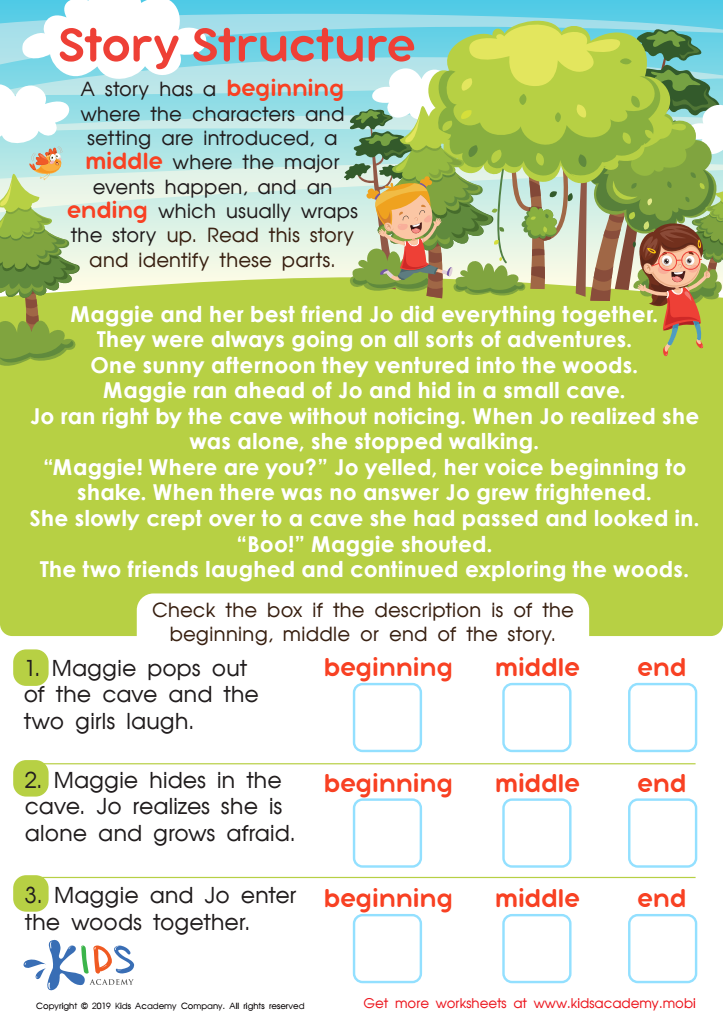
Story Structure Worksheet
 Assign to My Students
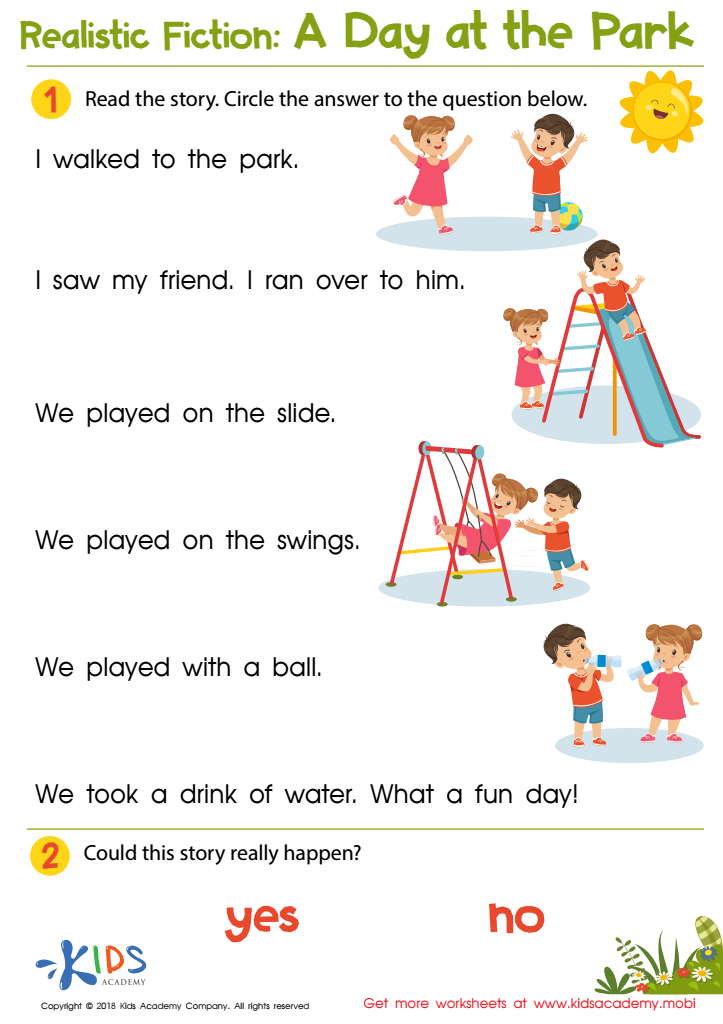
A Day at the Park Worksheet
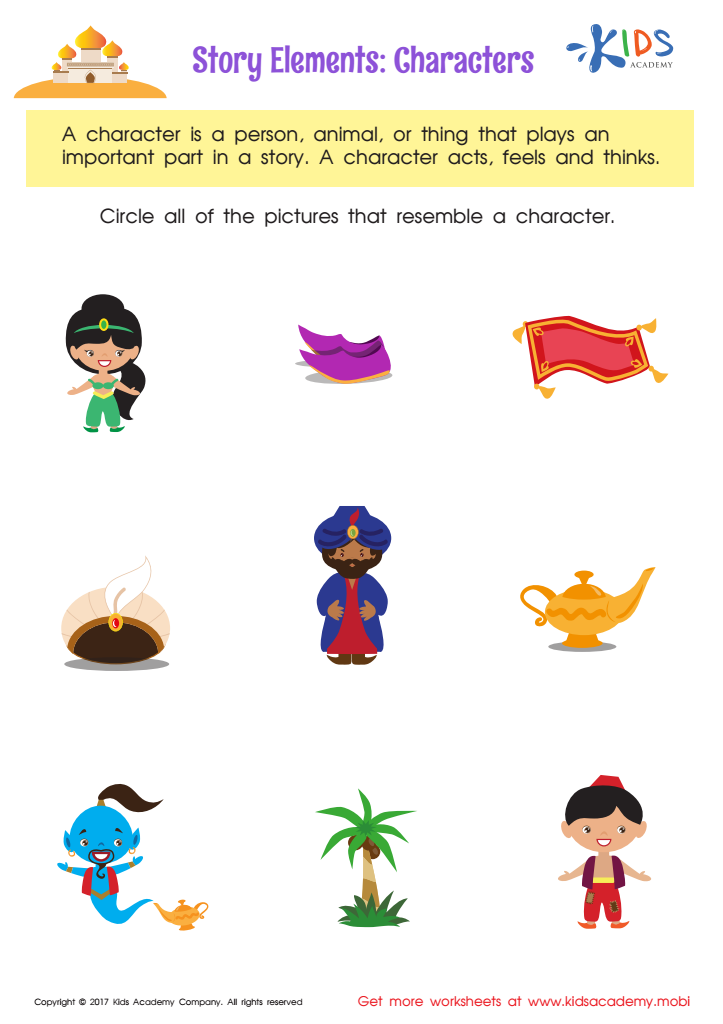
Story Elements Printable







Identifying story elements is crucial for young readers aged 4-9 as it fosters comprehension and enhances engagement with the text. Parents and teachers play a pivotal role in guiding children through this learning process. Recognizing key elements such as characters, setting, plot, conflict, and resolution helps children understand the structure of stories, making them more adept readers and storytellers.
When children can identify these elements, they develop critical thinking skills. For instance, they learn to predict outcomes based on the plot or understand character motivations, deepening their overall comprehension. This engagement encourages a love for reading, making it an enjoyable experience rather than a chore.
Additionally, recognizing story elements cultivates valuable communication skills. As children articulate their thoughts about a narrative’s components, they often draw connections to their own experiences and emotions, enhancing empathetic development. It also provides parents and teachers with an opportunity to encourage discussions around the stories, reinforcing vocabulary and language development.
In short, caring about story elements not only supports literacy skills, but also holistic development, including critical thinking, empathy, and effective communication, laying a strong foundation for lifelong learning.








