Sight words recognition Normal Reading Worksheets for Ages 4-9
4 filtered results
-
From - To
Boost your child's reading skills with our Sight Words Recognition Normal Reading Worksheets, specially designed for ages 4-9. These engaging and interactive worksheets help young learners recognize and read high-frequency sight words, essential for fluent reading. Explore various fun activities, including matching, tracing, and filling in the blanks, that make learning exciting and effective. Our curriculum-aligned resources cater to diverse learning styles, ensuring every child builds confidence in their reading abilities. Perfect for classrooms or at-home practice, these worksheets empower children to become enthusiastic readers. Start your child’s reading journey today with our thoughtfully crafted materials!
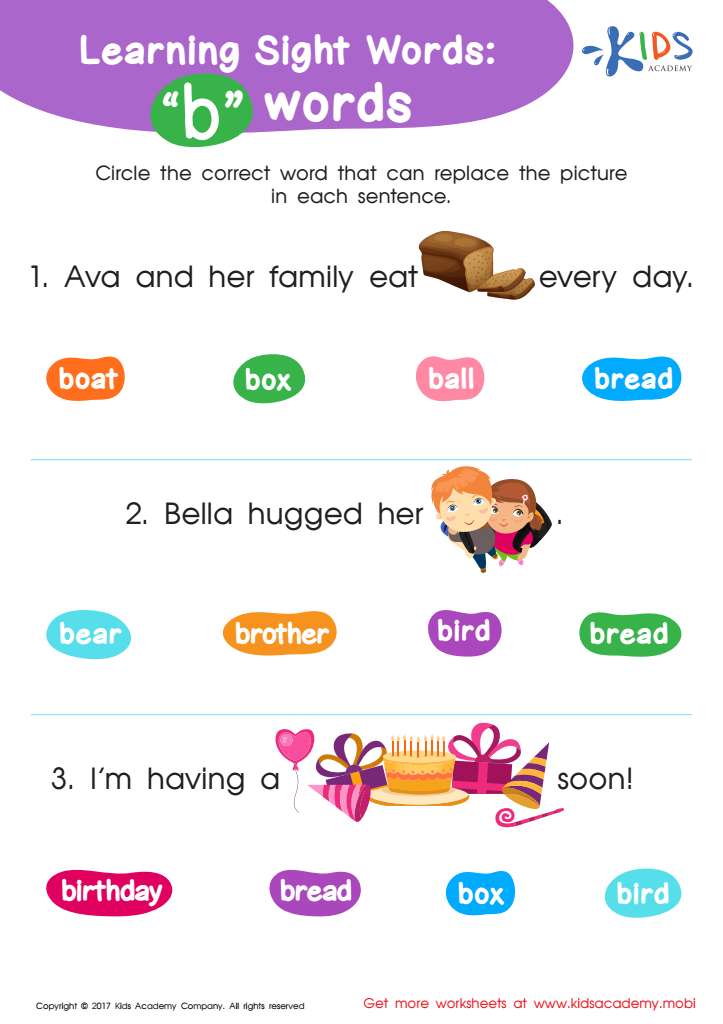
Sight Words Free Worksheet – B Words
 Assign to My Students
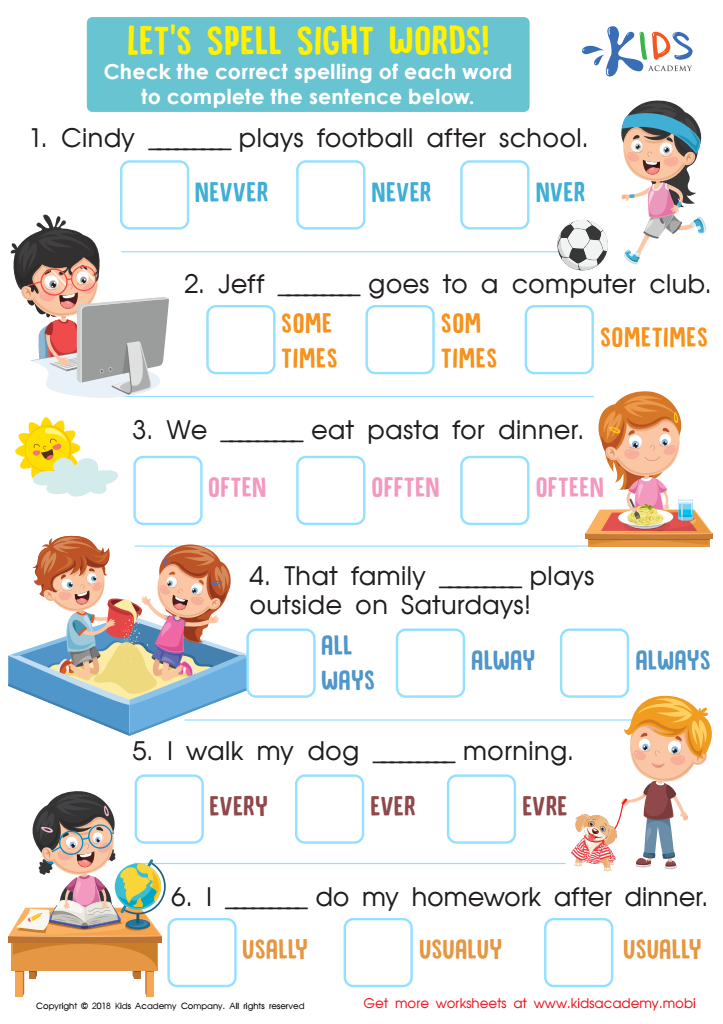
Let's Spell Sight Words Worksheet
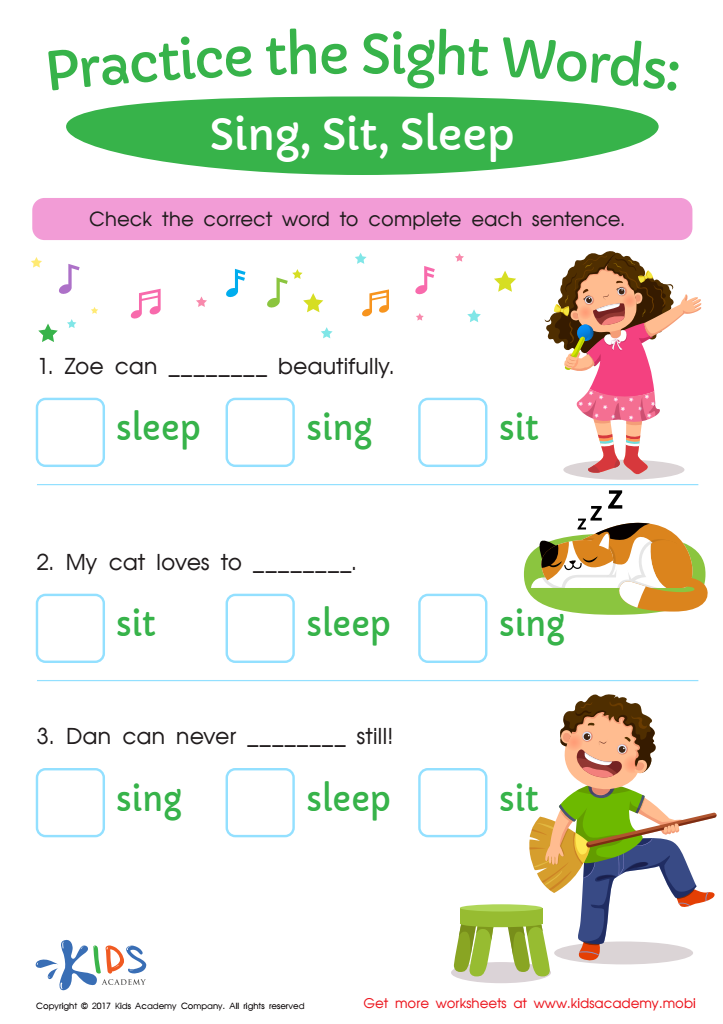
Sing, Sit, Sleep Sight Words Worksheet
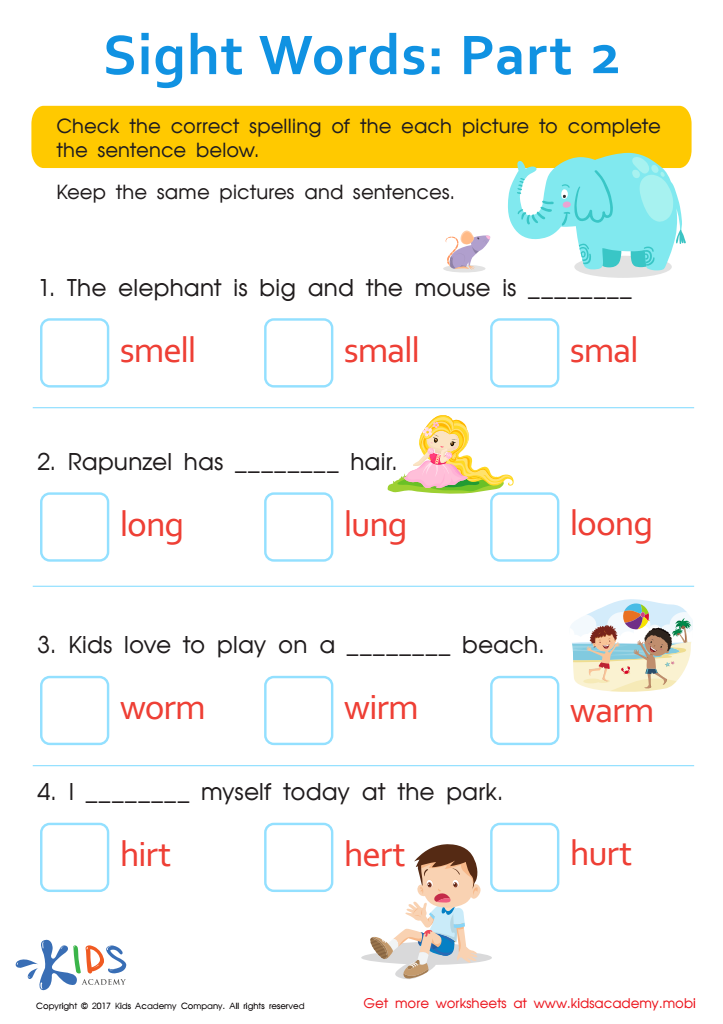
Sight Words Worksheet








Parents and teachers should prioritize sight word recognition for children aged 4-9 because it plays a crucial role in early literacy development. Sight words are commonly used words that children learn to recognize instantly without needing to sound them out. Mastery of these words facilitates smoother reading, enabling children to focus on comprehension rather than decoding.
At this stage, children's brains are highly adaptable, and frequent exposure to sight words helps build a strong foundation in reading. Immediate recognition of these words boosts confidence, encouraging children to engage more with texts. As they encounter familiar words, they develop fluency and speed, crucial for understanding larger texts.
Furthermore, sight word recognition ties directly to broader language skills, including vocabulary expansion and sentence structure understanding. The ability to recognize sight words can significantly enhance a child's motivation and enthusiasm for reading, fostering a lifelong love of literature.
In the classroom and at home, parents and teachers can employ games, flashcards, and playful activities to make learning enjoyable. By creating a positive reading environment centered around sight word recognition, they can support children's overall academic success and stimulate critical thinking and imagination, laying the groundwork for future educational achievements.








