Understanding perspectives Normal Reading Worksheets for Ages 4-9
3 filtered results
-
From - To
Explore our "Understanding Perspectives Normal Reading Worksheets" designed for ages 4 to 9, helping young learners develop empathy and comprehension skills! These engaging worksheets encourage kids to see beyond their own experiences, enhancing their ability to understand different viewpoints through interactive activities and stories. Perfect for classroom or home use, these resources offer a fun way to build critical thinking and reading skills while fostering emotional intelligence. Ideal for early grade teachers and parents, our worksheets ensure an enjoyable learning experience that inspires curiosity about the world around them. Join us in nurturing thoughtful, compassionate readers today!
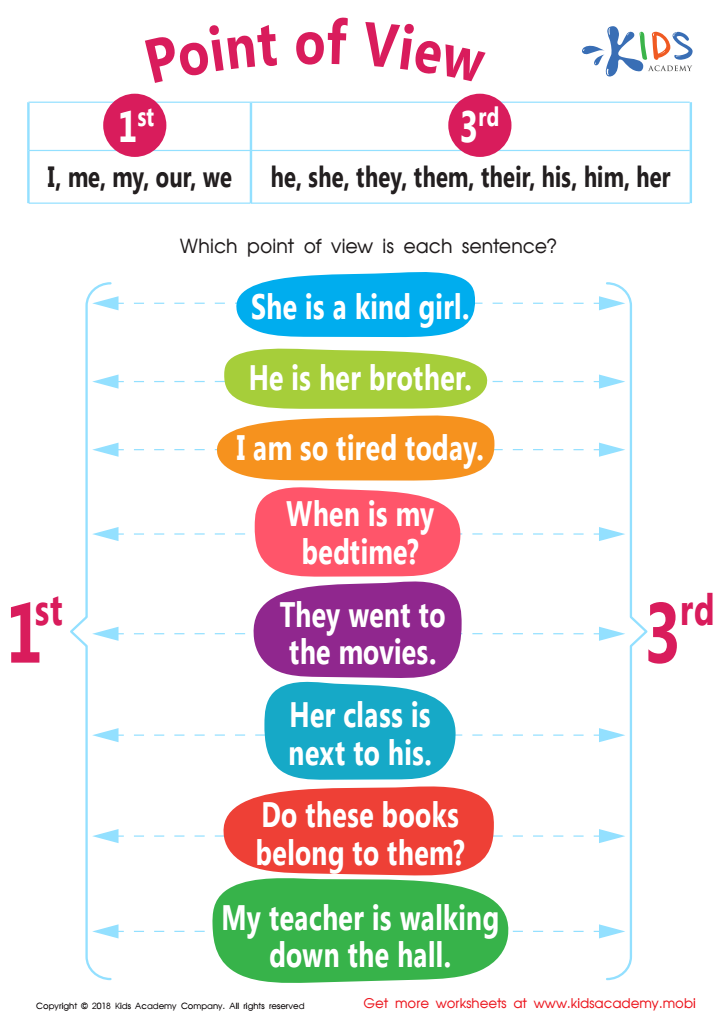
Point of View Worksheet
 Assign to My Students
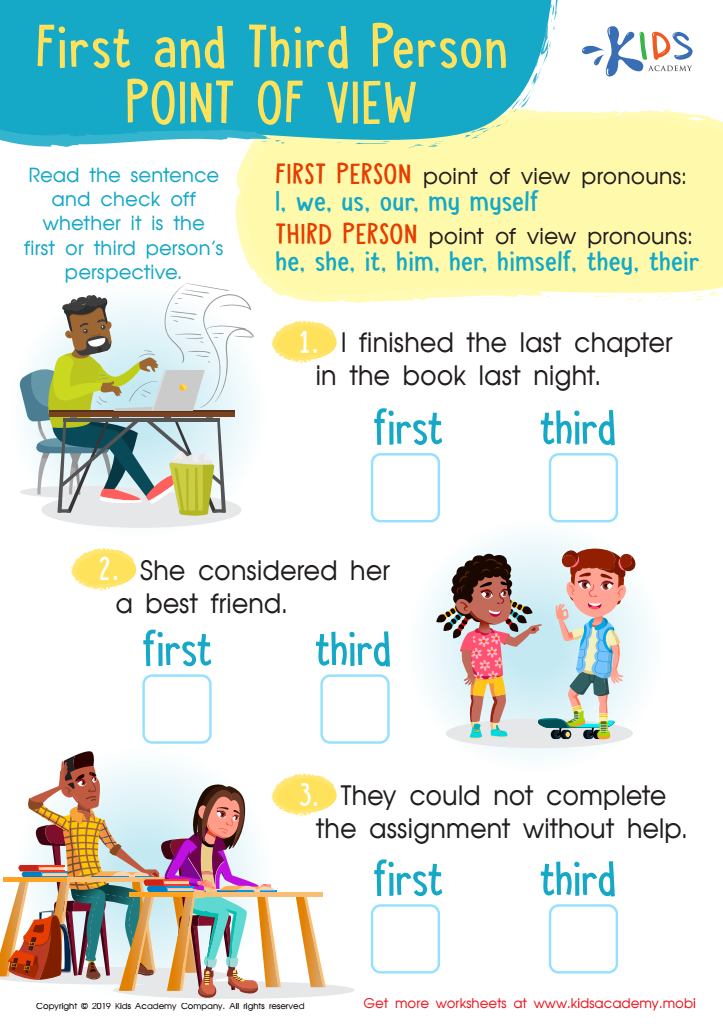
First and Third Person Point of View Worksheet
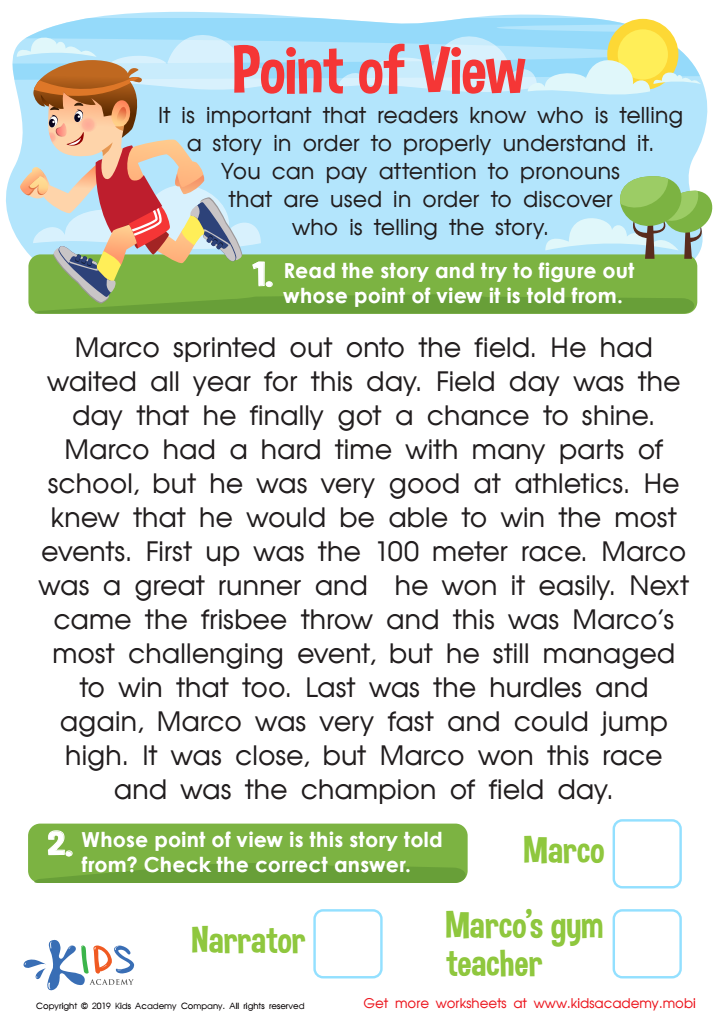
Point of View Worksheet








Understanding perspectives holds significant importance for young readers aged 4-9, as it enhances their comprehension skills and emotional intelligence. At this developmental stage, children begin to recognize that others may have different thoughts, feelings, and experiences. By engaging with stories that present varied perspectives, they learn to navigate complex social situations and develop empathy, a crucial trait for effective communication and relationships.
Parents and teachers can foster this skill by selecting books and activities that introduce characters from diverse backgrounds and viewpoints. This encourages children to put themselves in others' shoes, enhancing their critical thinking and reflection skills. Furthermore, discussions around different perspectives can help young readers better understand narrative structures, and motivations behind characters’ actions, leading to deeper engagement with texts.
Moreover, understanding perspectives prepares children for the increasingly diverse world they will encounter. It equips them with the tools to appreciate multiculturalism, fostering inclusivity and cooperation. When children grasp different perspectives, they are more adept at conflict resolution and collaboration, both in academic settings and beyond. Therefore, nurturing this skill should be a priority for parents and educators striving to cultivate well-rounded and socially aware individuals.








