Verb identification Normal Reading Worksheets for Ages 4-9
3 filtered results
-
From - To
Introduce your child to the fun world of verbs with our Verb Identification Normal Reading Worksheets, designed specifically for ages 4-9. These engaging and interactive worksheets foster essential reading skills by helping young learners recognize and use action words in sentences. Each worksheet is crafted to enhance vocabulary, improve comprehension, and promote critical thinking. With colorful illustrations and age-appropriate activities, your child will enjoy identifying verbs while building confidence in their reading abilities. Perfect for home or classroom use, these worksheets provide an exciting way to develop language skills that lay the foundation for lifelong learning. Explore our collection today!
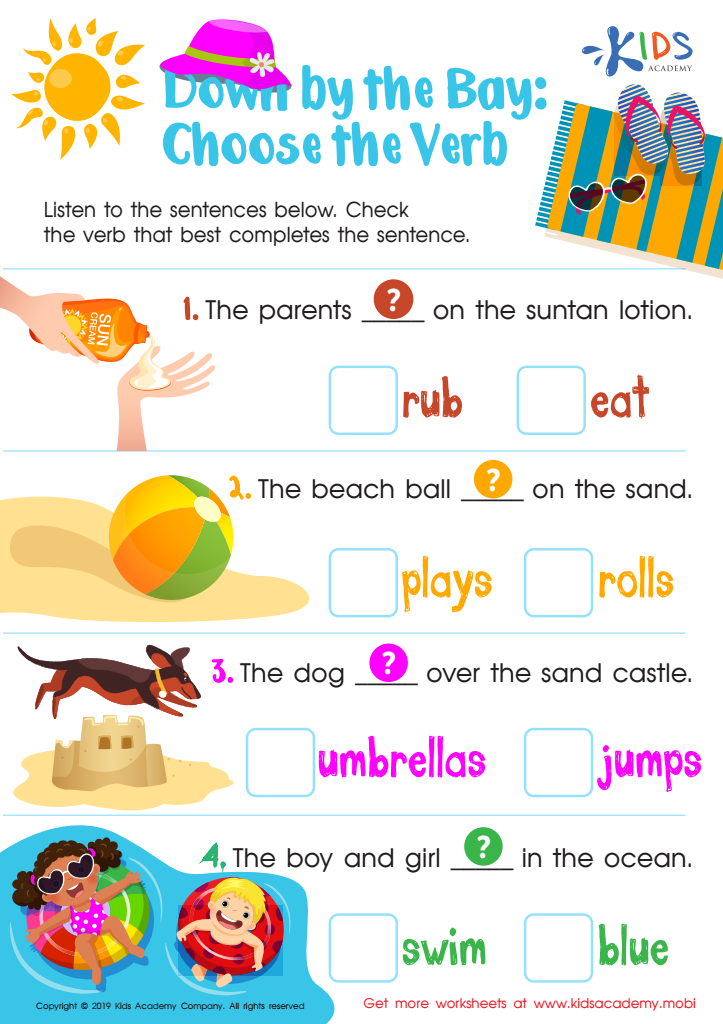
Down by the Bay: Choose the Verb Worksheet
 Assign to My Students
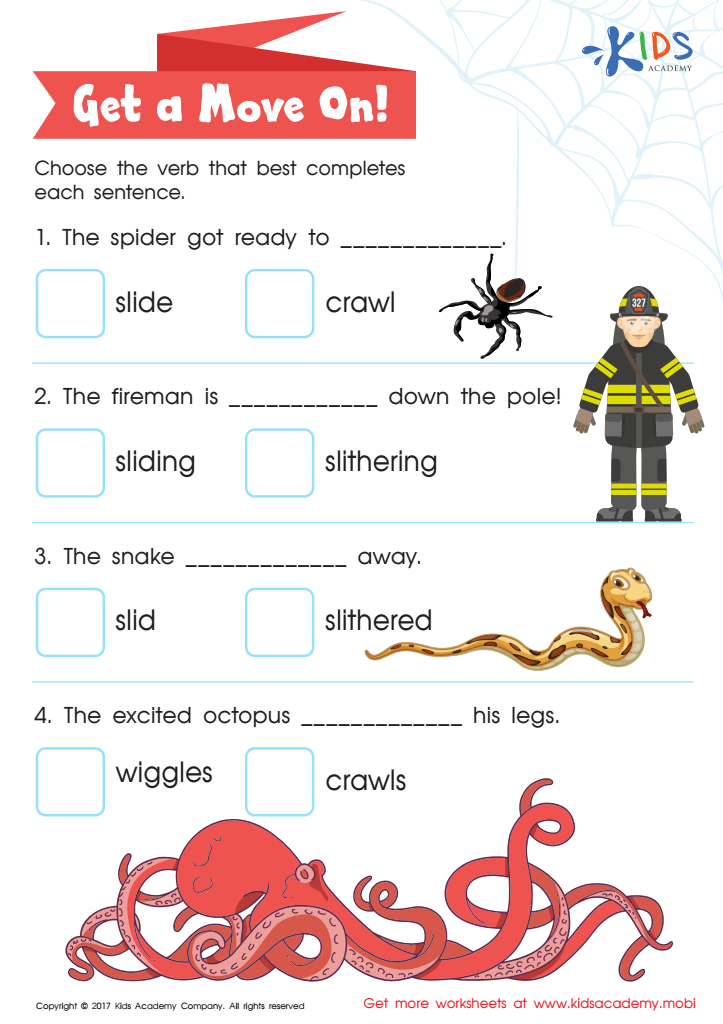
Verb Worksheet
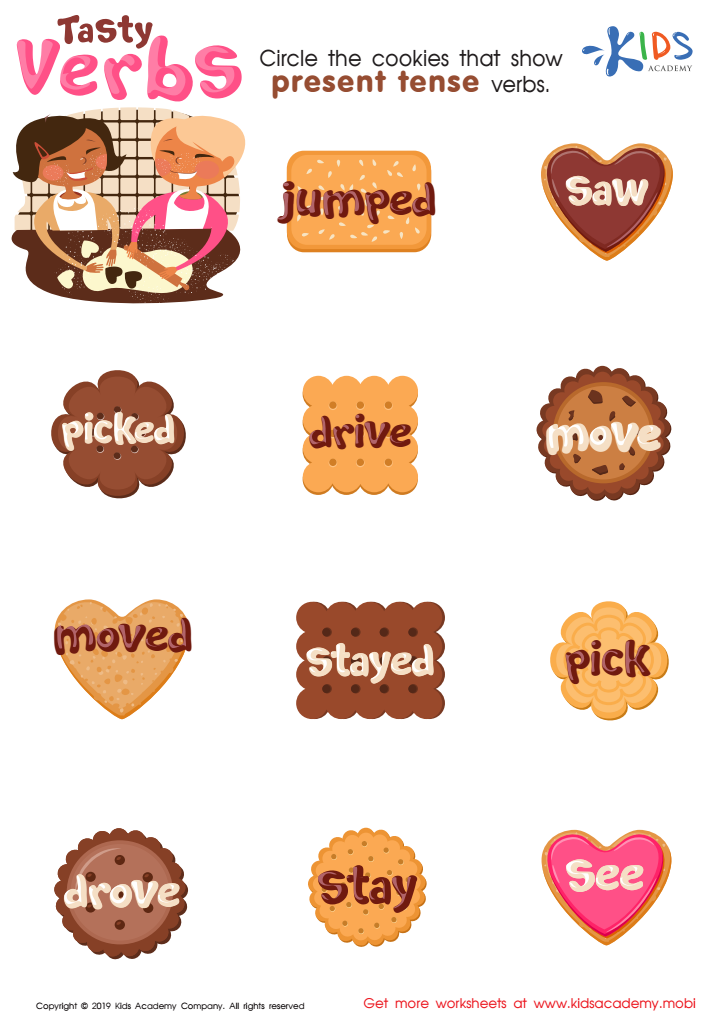
Tasty Verbs Worksheet



.jpg)




Parents and teachers should care about verb identification in early readers aged 4-9 because it plays a critical role in language development and literacy skills. Verbs are action words that provide essential context and meaning in sentences, helping children understand and construct more complex ideas. Mastering verb identification enhances reading comprehension, as students learn to associate actions with subjects, thereby enriching their understanding of stories and information.
Furthermore, identifying verbs fosters vocabulary growth. As children recognize and use various verbs, they expand their language repertoire, gaining the ability to express themselves more clearly and creatively. This skill also underpins crucial writing abilities; knowing how to effectively use verbs helps kids create more interesting and vivid sentences.
Additionally, an early focus on verbs supports critical thinking. Children who can identify and interpret actions within texts cultivate analytical skills as they learn to discuss motivations and sequences of events. Finally, strengthening verb identification during these formative years is a predictor of future literacy success; it lays a solid foundation for more advanced reading and writing tasks. Overall, prioritizing this aspect of language development is essential for a child's academic and personal growth.








