Detail identification Normal Reading Comprehension Worksheets for Ages 4-9
3 filtered results
-
From - To
Elevate your child’s reading skills with our "Detail Identification Normal Reading Comprehension Worksheets for Ages 4-9." Designed to enhance critical thinking, these worksheets help young readers identify key details within texts. Perfect for children in early grades, these fun and engaging activities build a strong foundation in reading comprehension. Through a variety of exercises, kids practice pinpointing specific information and understanding narrative elements. Ideal for parents and teachers, our printable worksheets are crafted to boost confidence and academic success in young learners. Watch your child flourish as they master the art of detail identification, essential for effective reading comprehension skills.
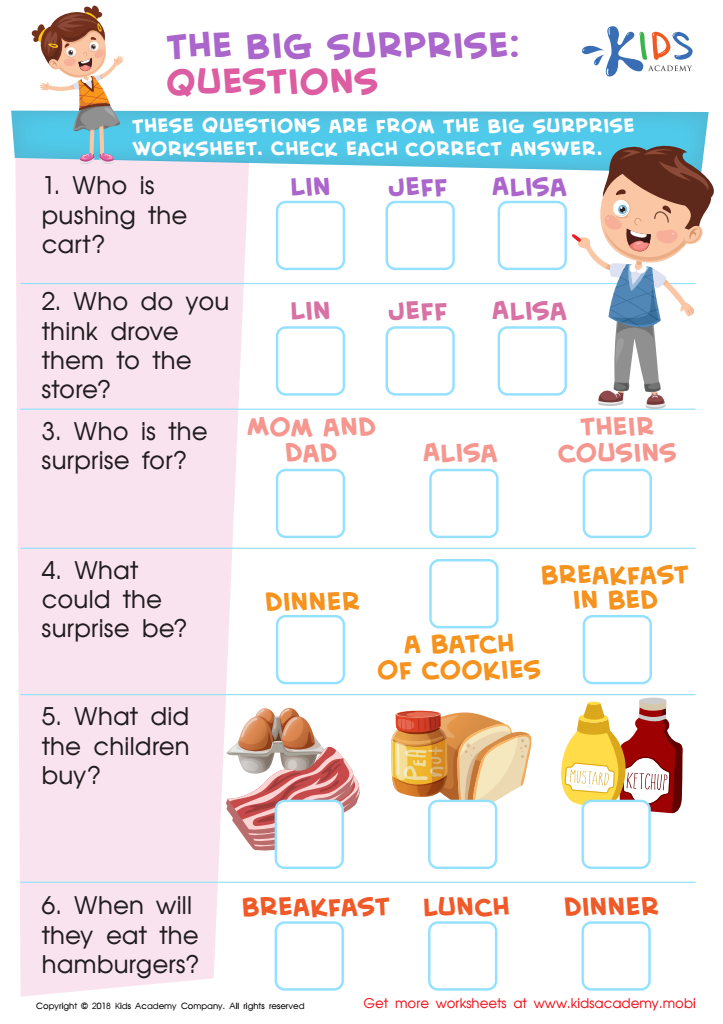
The Big Surprise: Questions Worksheet
 Assign to My Students
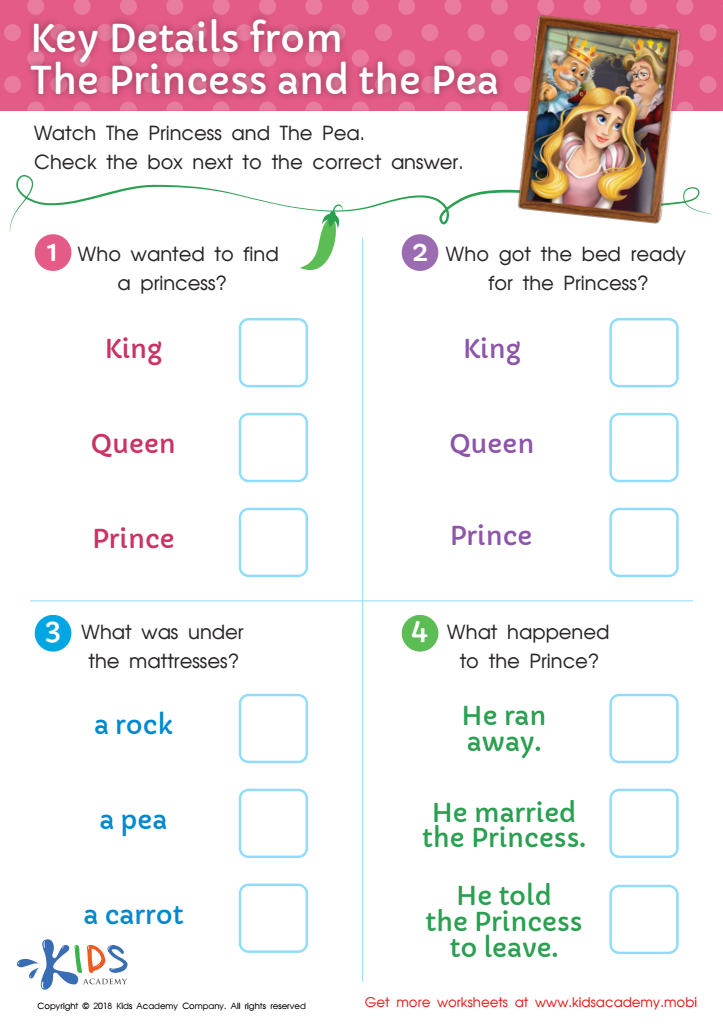
Key Details from the Princess and the Pea Worksheet
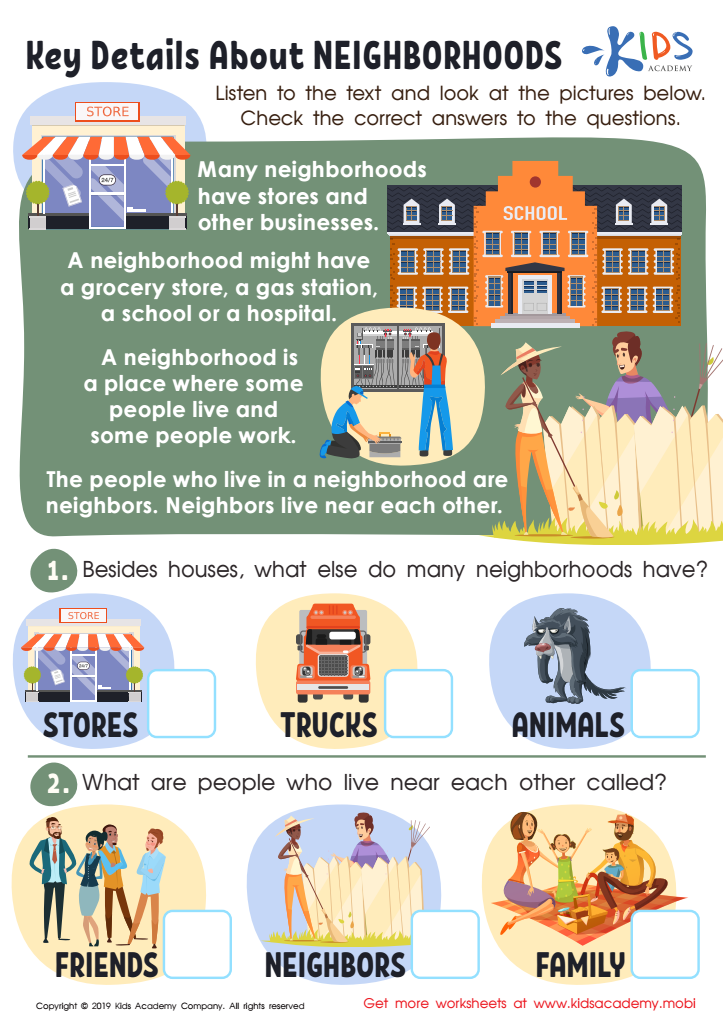
Key Details Neighborhoods Worksheet








Detail identification in normal reading comprehension for children aged 4-9 is foundational to their overall literacy and cognitive development. At this developmental stage, their brains are highly receptive to language acquisition, making it an optimal time to enhance their comprehension skills. Here’s why it matters:
Firstly, grasping details within a text improves understanding and retention of information, which is crucial for academic success across subjects. When children actively engage with content by identifying specifics, they develop the ability to process and remember important facts and ideas, leading to better performance in school.
Secondly, focusing on detail identification helps in developing critical thinking and analytical skills. By encouraging young readers to notice and reflect on details, we help them think beyond the surface to interpret, predict, and infer—skills essential for deeper learning.
Moreover, identifying details enhances vocabulary and language skills. Exposure to varied texts and noticing nuances expands their language repertoire, aids in expressive abilities, and improves communication skills.
Finally, children’s enthusiasm for reading can be bolstered through this practice. Feeling competent with comprehension fosters a love for reading, leading to lifelong literacy. For these reasons, parents and teachers should prioritize nurturing detail identification in early readers to lay a strong foundation for their educational journey.








