Story analysis Normal Reading Comprehension Worksheets for Ages 4-9
4 filtered results
-
From - To
Unlock your child's reading potential with our Story Analysis Normal Reading Comprehension Worksheets designed for ages 4-9. These engaging and educational worksheets help young learners develop essential skills such as understanding the plot, identifying characters, and grasping the main idea. Perfect for early readers, each activity fosters critical thinking and enhances comprehension, ensuring your child builds a strong literacy foundation. With a variety of colorful and interactive exercises, Kids Academy makes learning fun and effective. Support your child's reading journey with these expertly crafted worksheets to promote confidence and academic success.
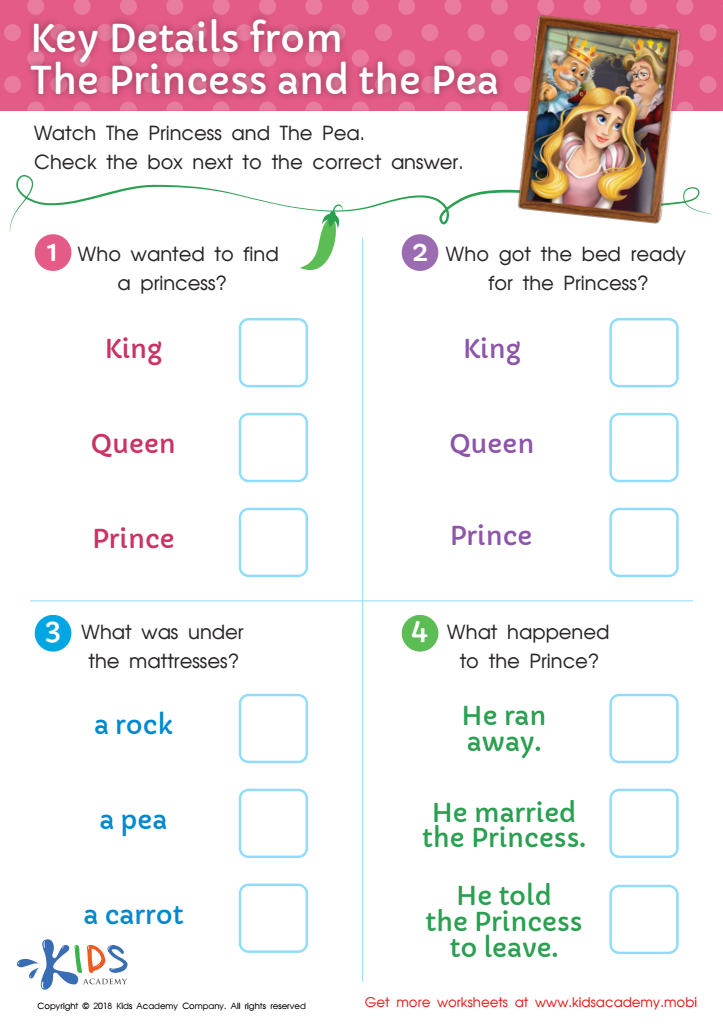
Key Details from the Princess and the Pea Worksheet
 Assign to My Students
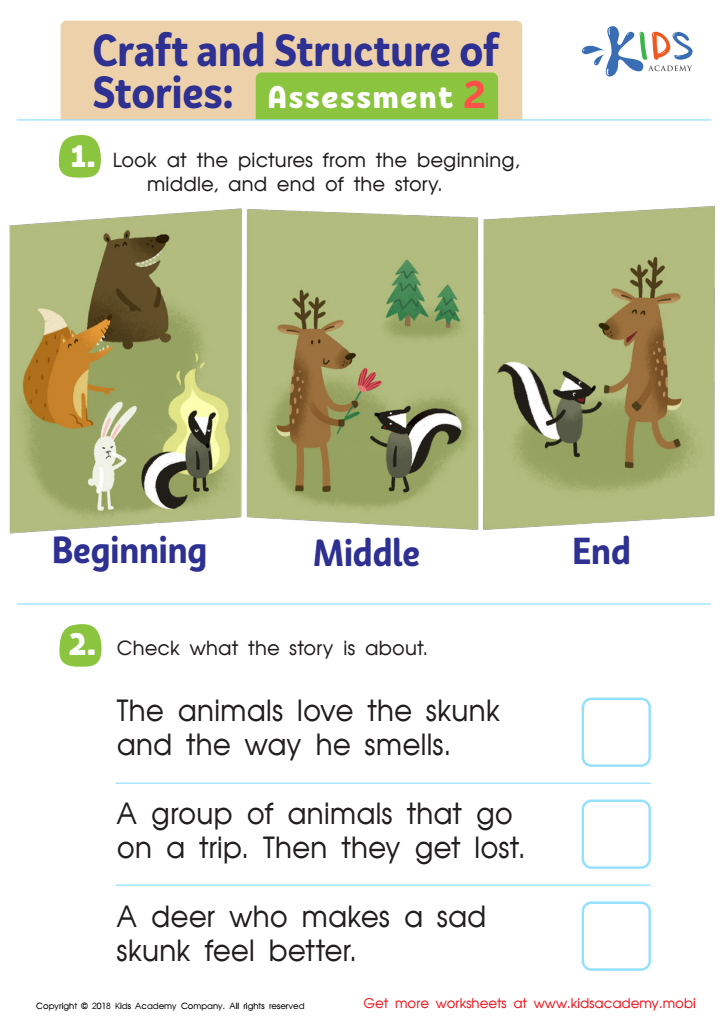
Craft and Structure of Stories: Assessment 2 Worksheet
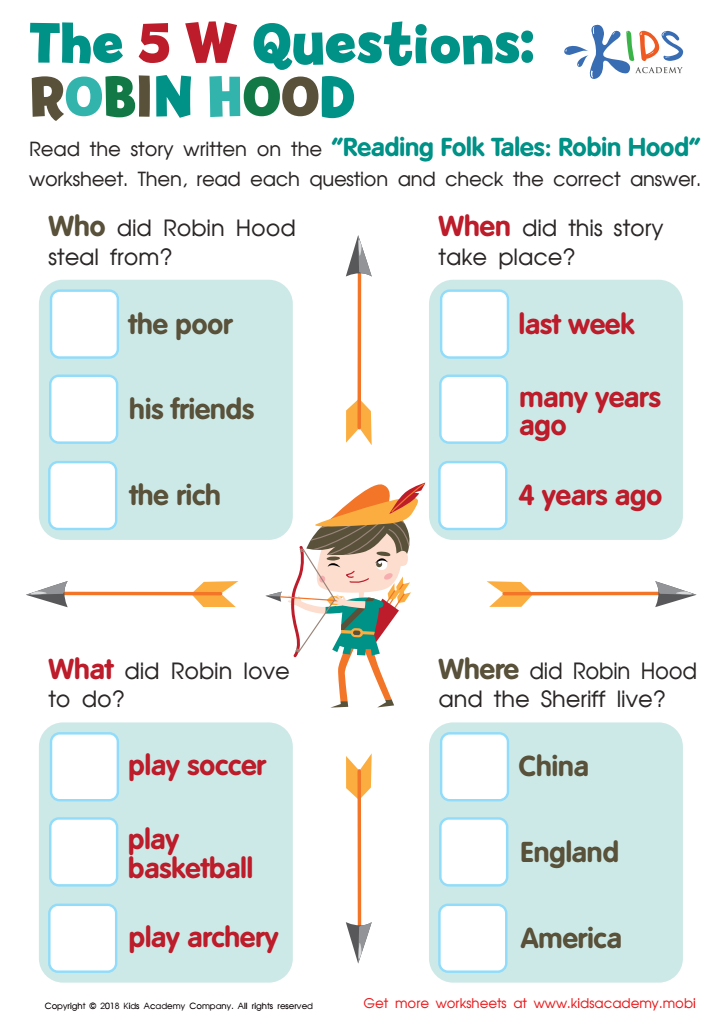
The 5 W Questions: Robin Hood Worksheet
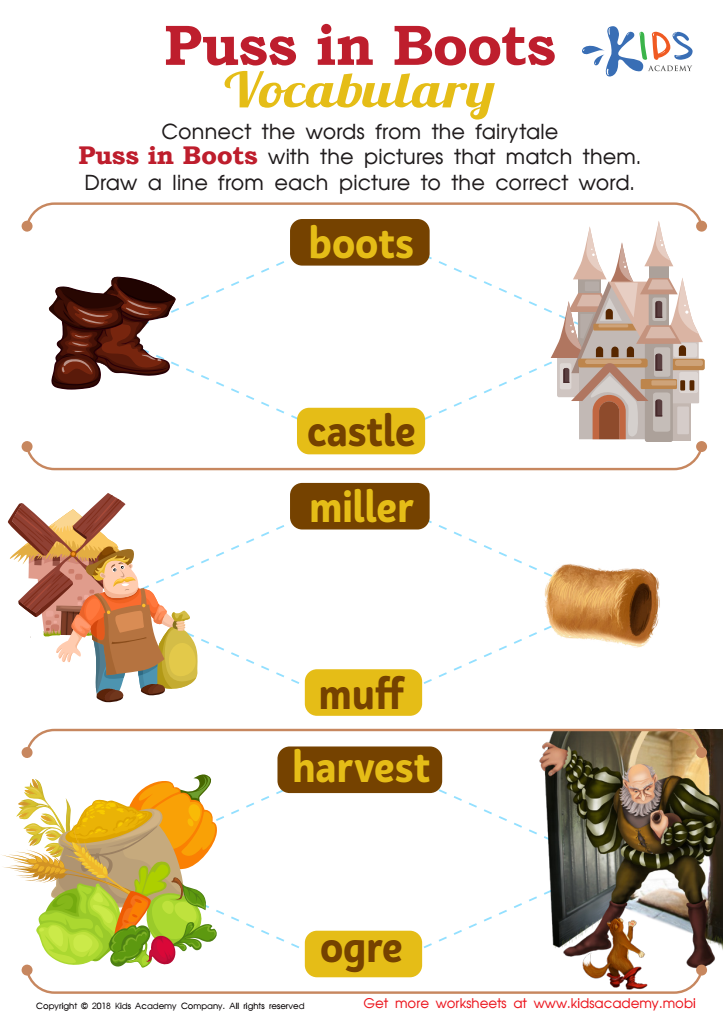
Puss in Boots Vocabulary Worksheet








Story analysis and normal reading comprehension for children aged 4-9 are crucial elements in early childhood education and development. Parents and teachers should care about these because they lay the groundwork for essential life skills. Firstly, story analysis encourages critical thinking. Children learn to dissect narratives, understand character motivations, and predict outcomes, fostering a deeper engagement with texts. This early development of analytical skills transcends literature and applies to real-world problem-solving scenarios.
Moreover, normal reading comprehension enhances linguistic capabilities. As children comprehend stories, they gain new vocabulary, understand sentence structures, and grasp grammatical principles. This language development is vital for effective communication and literacy progression. Proficient readers are often more confident in their speaking and writing abilities, leading to better academic performance across subjects.
Furthermore, stories play a significant role in emotional and social development. Through storytelling, children encounter diverse characters and scenarios, helping them develop empathy and understanding of different perspectives. Discussing these stories in a group setting also enhances social interaction and collaborative thinking.
Engaging in regular story analysis and comprehension activities enriches a child’s imagination and fosters a lifelong love of reading. Therefore, investing time in these activities creates a robust educational foundation, critical for future success in both academic and personal growth.








