
Enhancing vocabulary Normal Reading Fiction Worksheets for Ages 4-9
3 filtered results
Difficulty Level
Grade
Age
-
From - To
Subject
Activity
Standards
Boost your child's vocabulary with our specially designed worksheets for ages 4-9. At Kids Academy, our Enhancing Vocabulary Normal Reading Fiction Worksheets combine exciting stories with vocabulary-building activities to make learning fun and effective. Engaging with captivating tales, children will naturally expand their vocabulary while improving reading comprehension. Our worksheets incorporate a variety of learning methods including matching words to definitions, sentence completion, and creative word usage. Perfect for use at home or in the classroom, these resources support young learners in becoming confident readers with a rich vocabulary. Discover the key to unlocking your child's language potential today!
Favorites
With answer key
Interactive
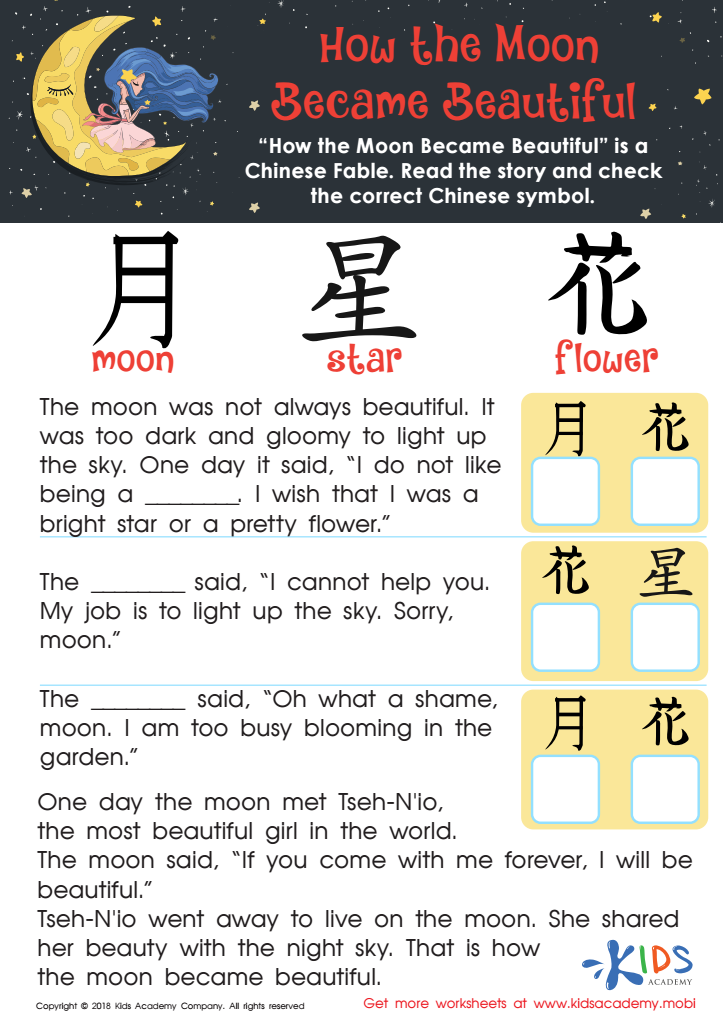
How the Moon Became Beautiful Worksheet
Fables are a great way for kids to learn! This Chinese fable about the moon's beauty is educational and entertaining. The PDF worksheet provides the English translations and symbols associated with the story. Kids can fill in the blanks with the correct symbols and have fun learning a new language!
 Assign to My Students
How the Moon Became Beautiful Worksheet
Worksheet
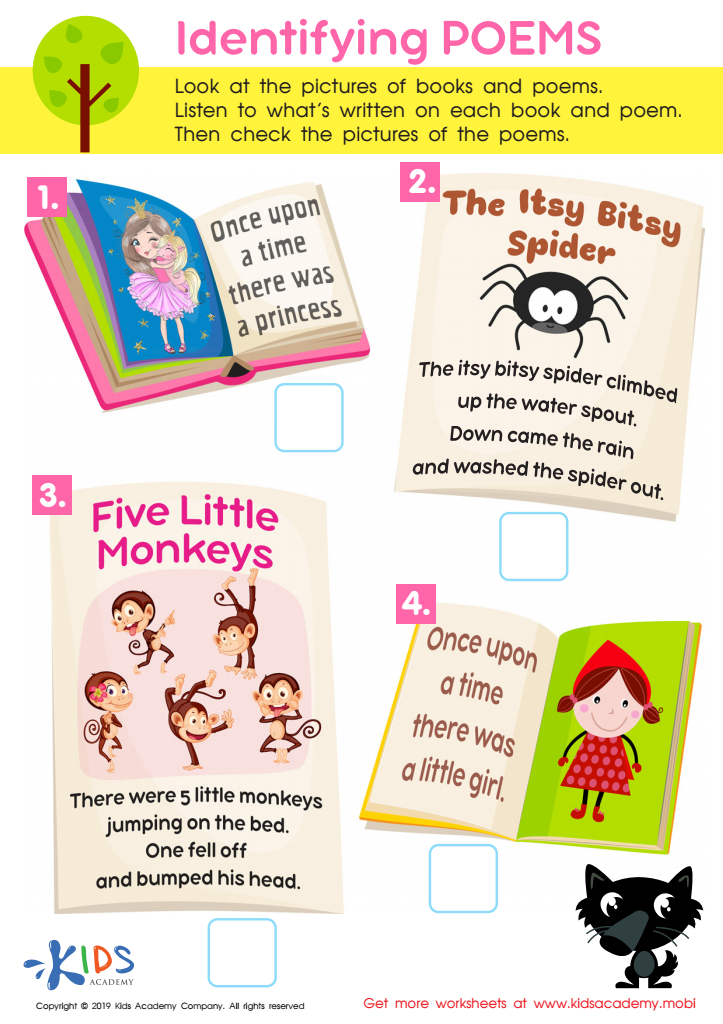
Identifying Poems Worksheet
Read to your kids often and look at the pictures of books and poems in this worksheet. Guide them by reading aloud each book and poem. Make sure they are paying attention and help them check the pictures. This is a great way for your kids to learn to read properly.
Identifying Poems Worksheet
Worksheet
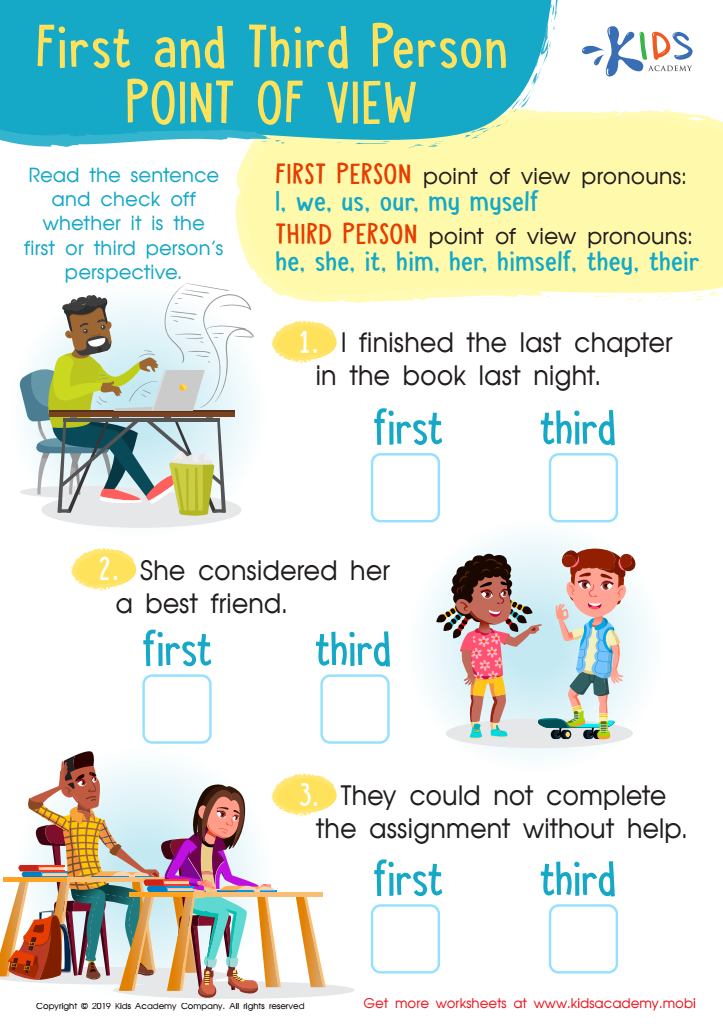
First and Third Person Point of View Worksheet
Remind kids what a point of view is in a story. First person is from the character's perspective; third person is from the narrator's. Ask students to check if sentences in the exercise are in first or third person point of view.
First and Third Person Point of View Worksheet
Worksheet
Join Kids Academy for Free
Who is primarily going to use this learning content?


.jpg)





Enhancing vocabulary through normal reading of fiction for ages 4-9 plays a critical role in a child's development. During these formative years, children's brains are highly receptive to learning new words and understanding their meanings in various contexts. Fictional stories are packed with rich vocabulary that goes beyond everyday conversation, helping to expand a child's word bank significantly.
When parents or teachers prioritize reading fiction, they immerse children in language that is more descriptive and varied. This exposure helps children develop better linguistic skills which in turn improves their ability to express themselves clearly and effectively. Enhanced vocabulary also supports better comprehension skills. Recognizing and understanding a wide array of words enhances a child's ability to grasp complex ideas and follow narratives more effortlessly.
Additionally, reading fiction can improve cognitive and social-emotional development. Stories often introduce moral lessons, empathy, and problem-solving scenarios, enriching children's life skills. By encountering diverse characters and situations, children learn to navigate their own world more competently.
Parents and teachers caring about enhancing vocabulary through fiction help lay a foundation for lifelong learning. Strong reading and vocabulary skills are crucial for academic success and everyday communication, making early investment in this area invaluable for a child's future.







