Logical Reasoning Normal Reading Fiction Worksheets for Ages 4-9
5 filtered results
-
From - To
Discover our engaging Logical Reasoning Normal Reading Fiction Worksheets, meticulously designed for children ages 4-9. These worksheets combine captivating fictional stories with thought-provoking questions to enhance critical thinking and comprehension skills. Each worksheet encourages young readers to make connections, deduce outcomes, and solve challenges, fostering logical reasoning in a fun and educational manner. Incorporate these activities into your child’s routine to boost their reading abilities and cognitive development. Perfect for both classroom and home use, our worksheets offer an enjoyable pathway to mastering essential learning skills. Explore now to empower your child's intellectual growth!
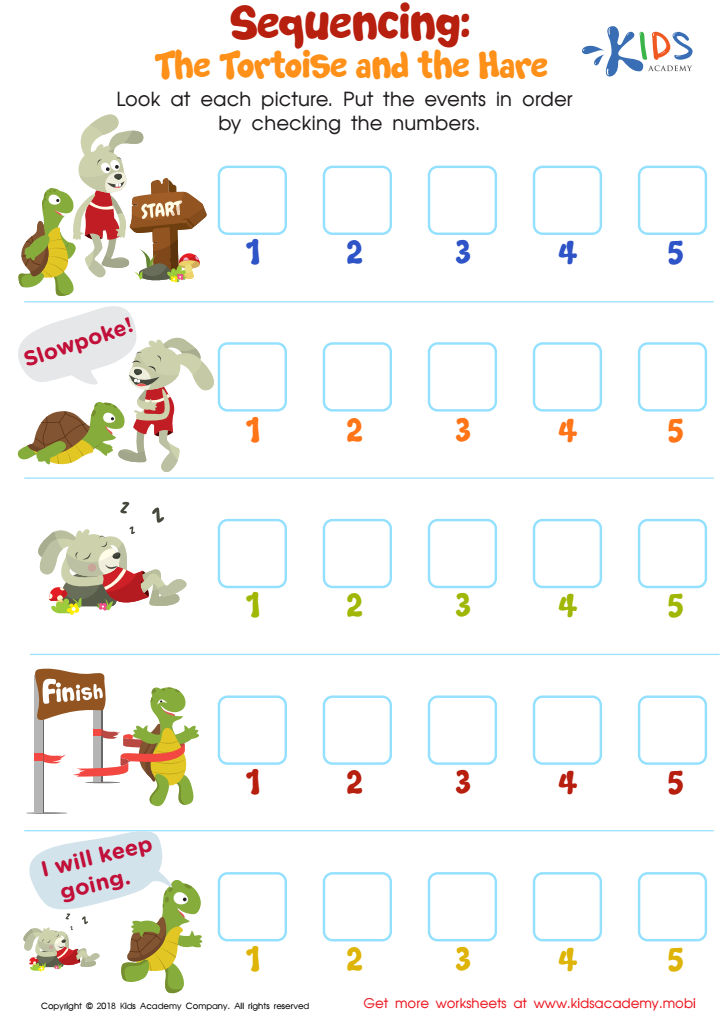
Sequencing: The Tortoise and the Hare Worksheet
 Assign to My Students
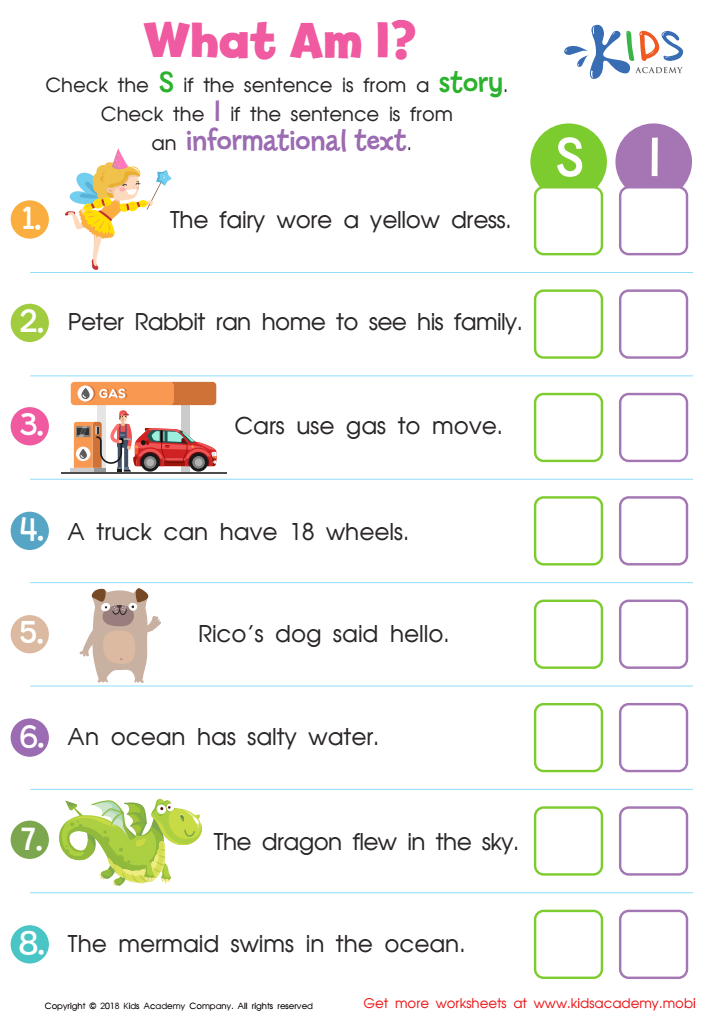
What Am I? Worksheet
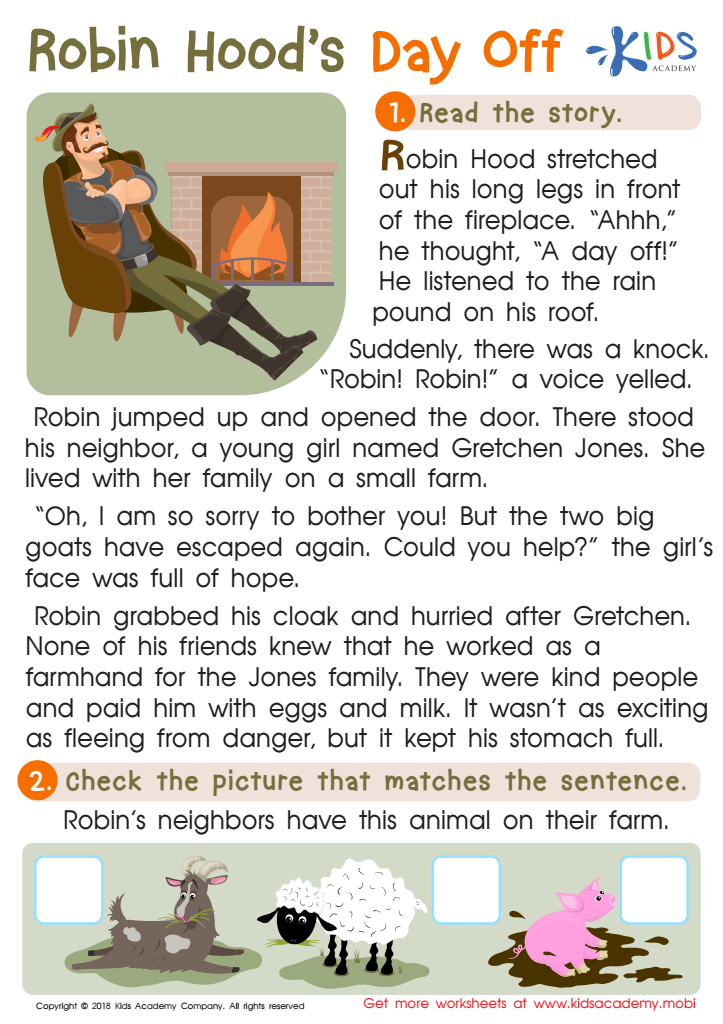
Robin Hood's Day Off Worksheet
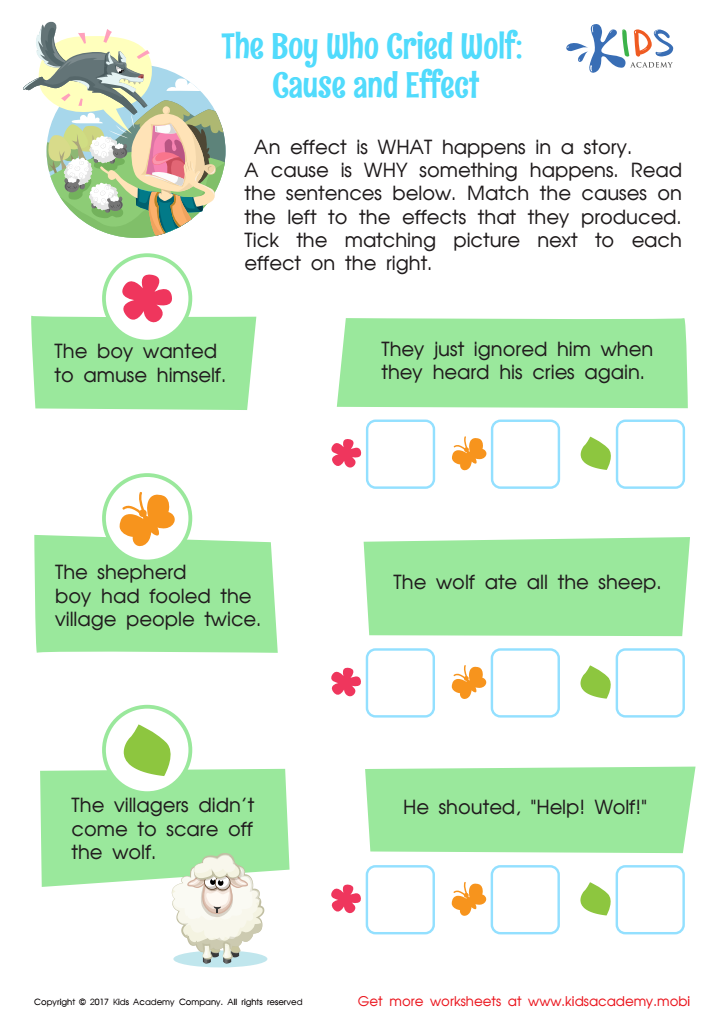
The Boy Who Cried Wolf: Cause and Effect Worksheet
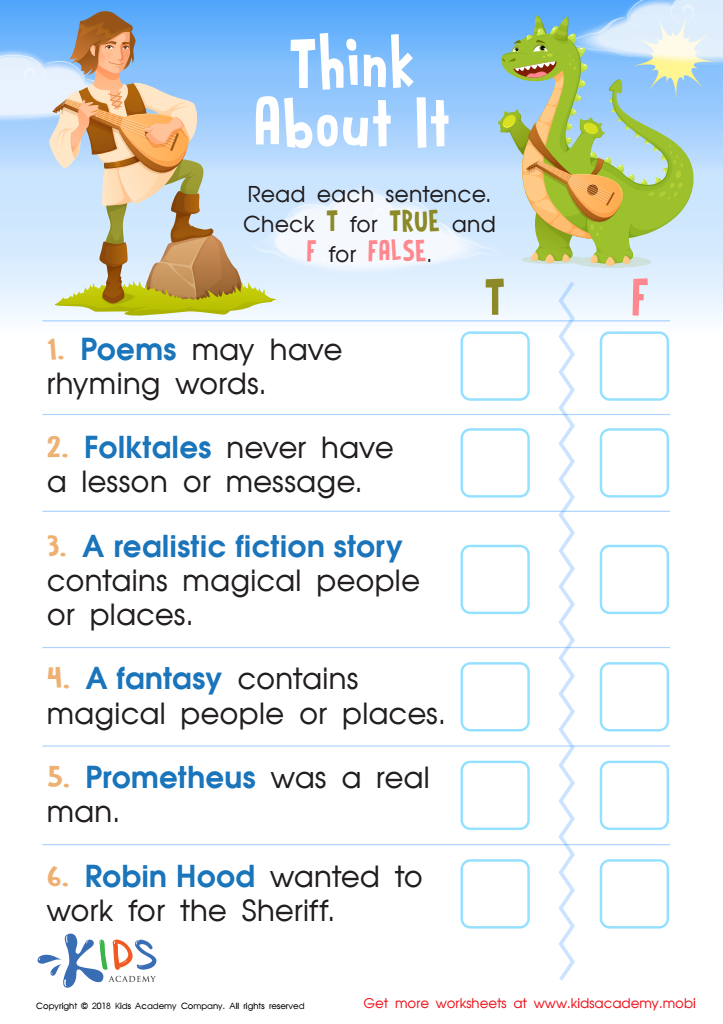
Think About It: Assessment Worksheet








Parents and teachers should prioritize fostering logical reasoning and regular reading of fiction for children ages 4-9 because these activities play crucial roles in their cognitive and emotional development. Logical reasoning helps children hone critical thinking skills, improving their ability to solve problems methodically and make informed decisions. As young learners engage in games and activities that stimulate their logical reasoning, such as puzzles and simple math challenges, they build foundational skills that support later academic success.
Reading fiction regularly provides additional, multifaceted benefits. Fictional stories stimulate the imagination and enhance creativity, helping children to understand and explore different perspectives and ideas. By encountering diverse characters and scenarios, children develop empathy and social-emotional skills, key components in fostering healthy interpersonal relationships. Moreover, regular reading nurtures a love for literature early on, expanding vocabulary and improving language comprehension. This is essential for performing well in all subjects, both present and future.
Combining both logical reasoning and reading fiction cultivates well-rounded individuals who are not only intellectually equipped but also emotionally intelligent. Ultimately, these practices equip children with vital skills that contribute to academic achievements and a deeper understanding of the world around them. Thus, parents and teachers’ investment in these areas is fundamental to children’s holistic growth.







