Story analysis Normal Reading Fiction Worksheets for Ages 4-9
4 filtered results
-
From - To
Our "Story Analysis Normal Reading Fiction Worksheets for Ages 4-9" are designed to strengthen young readers' comprehension and critical thinking. These engaging worksheets help children analyze key story elements, including characters, setting, plot, and moral. Ideal for early readers, each activity encourages thoughtful discussions and boosts literacy skills in a fun, interactive way. Perfect for classrooms or home study, our worksheets support learners’ growth as they explore enchanting tales and nurturing insightful observations. Let your child dive into the magical world of stories, enhancing their understanding and fostering a lifelong love for reading!
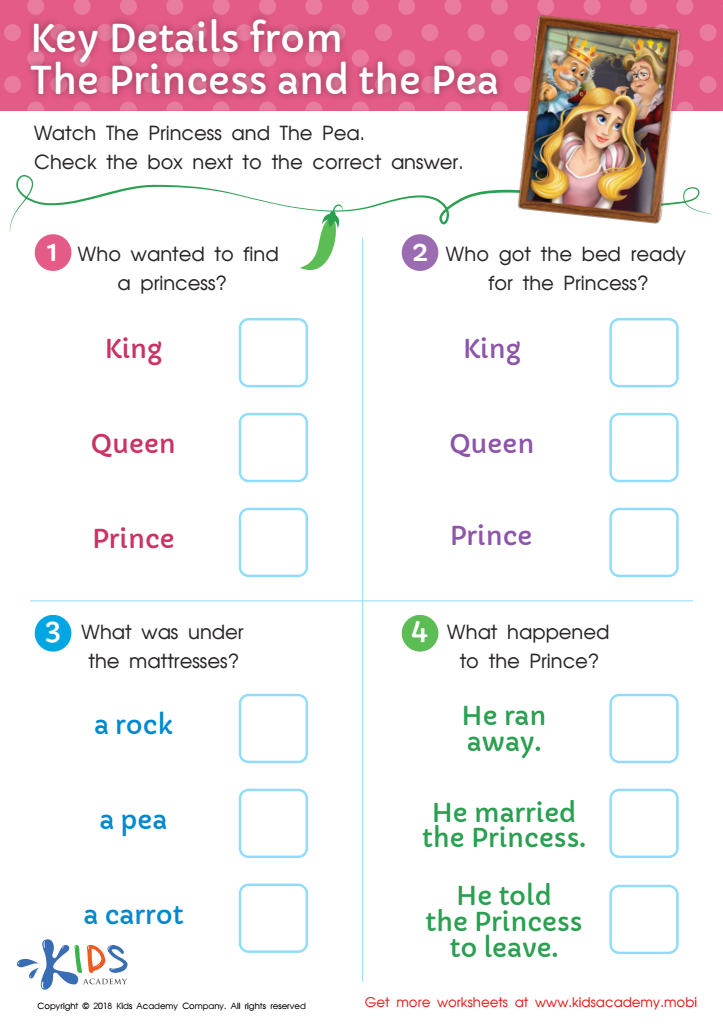
Key Details from the Princess and the Pea Worksheet
 Assign to My Students
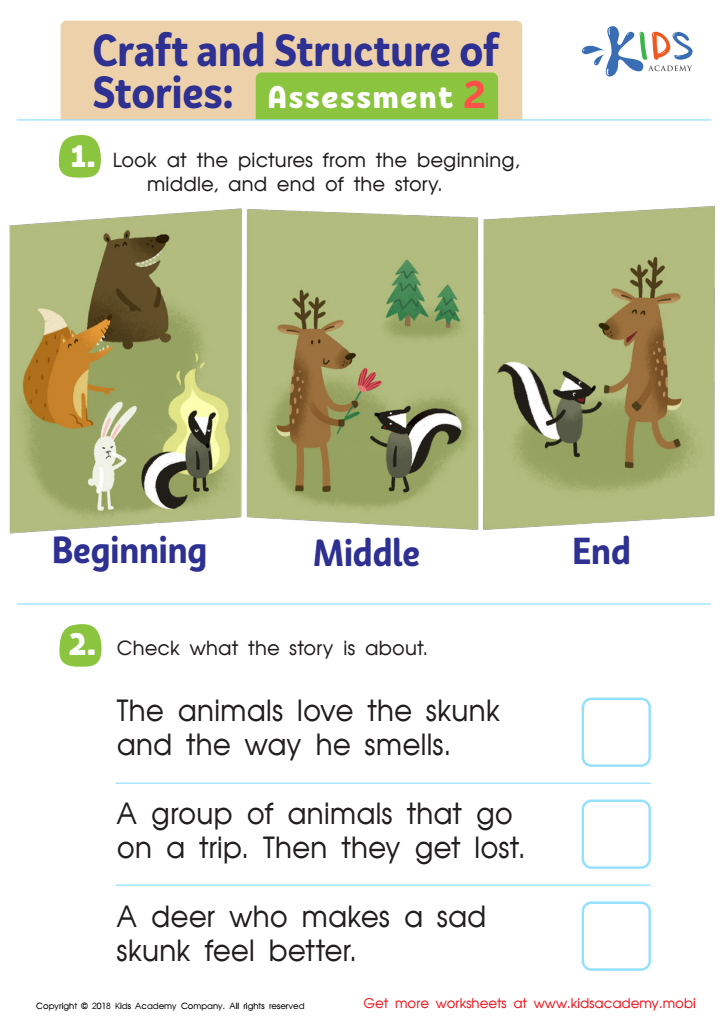
Craft and Structure of Stories: Assessment 2 Worksheet
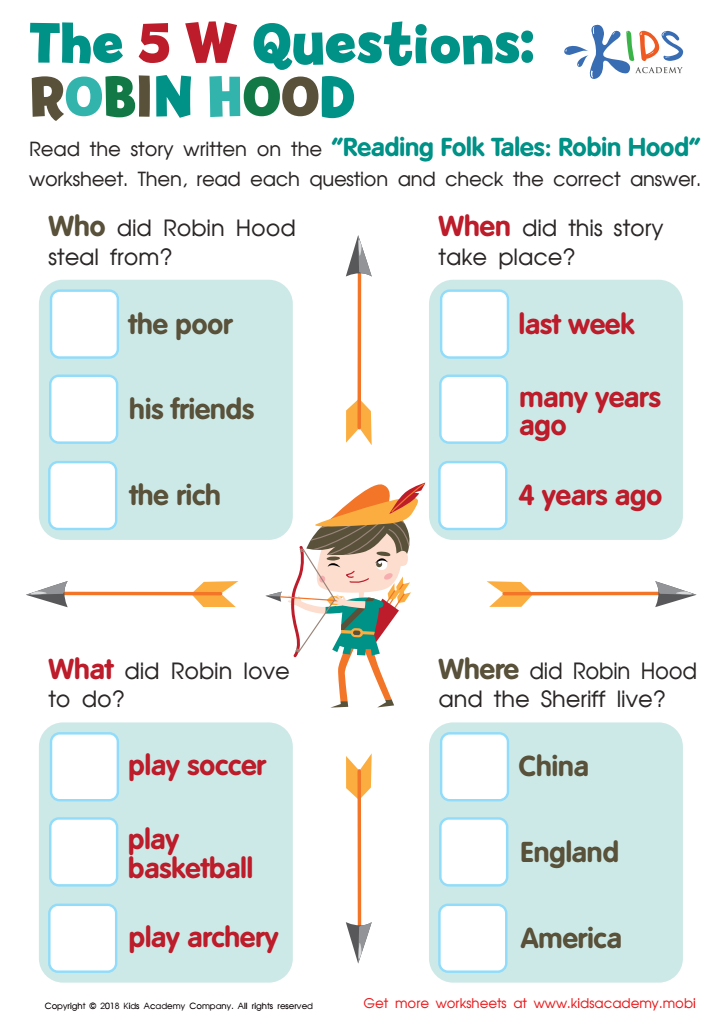
The 5 W Questions: Robin Hood Worksheet
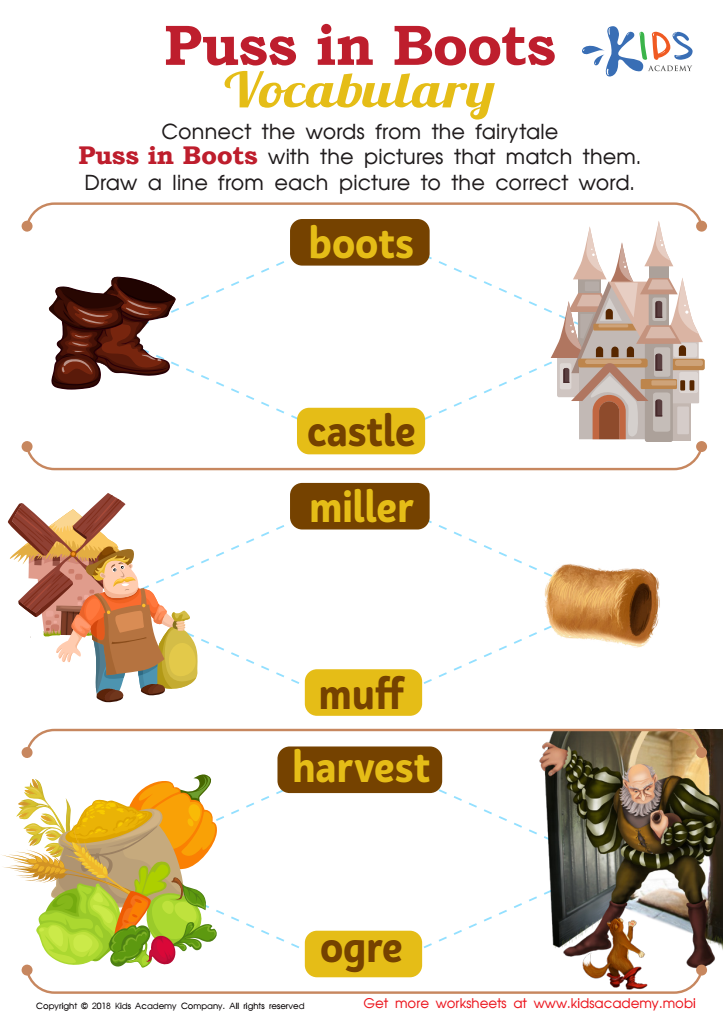
Puss in Boots Vocabulary Worksheet








Parents and teachers should care deeply about story analysis and normal reading fiction for children ages 4-9 because it fosters crucial developmental skills during formative years. Story analysis enhances comprehension and critical-thinking abilities. When children dissect characters’ motives, predict plot outcomes, and understand narratives, they learn to think deeply and logically. This skill transcends literature and is invaluable in all academic areas.
Fiction reading also significantly enriches vocabulary and language skills. Encountering new words in context helps children grasp meanings and pronunciations, expanding their communication toolkit. Additionally, well-crafted stories introduce colorful phrases and expression techniques, making students articulate and expressive.
Fiction nurtures creativity and imagination. Fairy tales and imaginative worlds captivate young minds, encouraging creative thinking and problem-solving skills. Children learn to envision possibilities beyond the ordinary, shaping inventiveness and innovation.
Moreover, stories instill empathy by allowing children to see the world from different perspectives. Understanding diverse characters and scenarios promotes emotional intelligence, teaching kids to relate to others' feelings and experiences.
Socially, sharing stories cultivates bonding and improves listening and conversational skills. Discussing stories in a group setting teaches patience, turn-taking, and respect for others' viewpoints.
In essence, engaging with fiction and story analysis is integral in developing well-rounded, insightful, and empathetic individuals.







