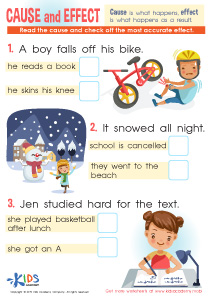
Logical Reasoning Normal Reading Non-Fiction Worksheets for Ages 4-9
3 filtered results
-
From - To
Unlock your child's potential with our "Logical Reasoning Normal Reading Non-Fiction Worksheets" tailored for ages 4-9. Featuring engaging content, these worksheets help young learners develop crucial logical reasoning skills while exploring fascinating non-fiction topics. Each activity is designed to enhance critical thinking, comprehension, and reasoning capabilities in a fun and interactive way. Perfect for preschool and early elementary students, our resources provide guided practice, making learning both effective and enjoyable. Help your child build the foundation for lifelong learning with our thoughtfully crafted worksheets that combine knowledge exploration with essential reasoning skills! Ideal for classroom use or at-home learning.
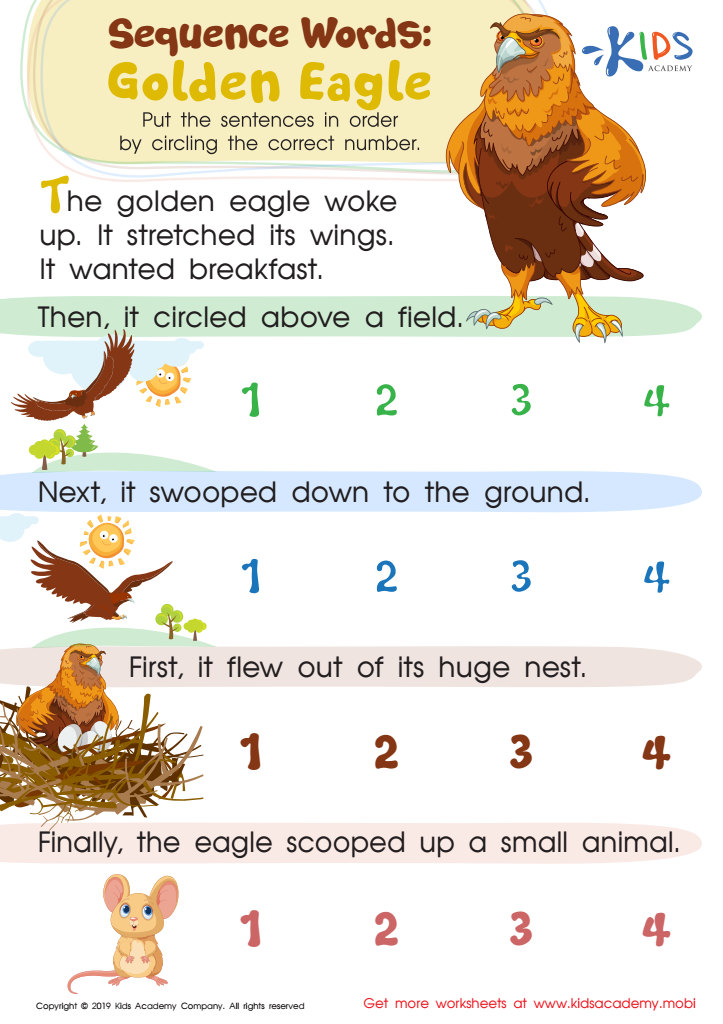
Sequence Word Eagle Worksheet
 Assign to My Students
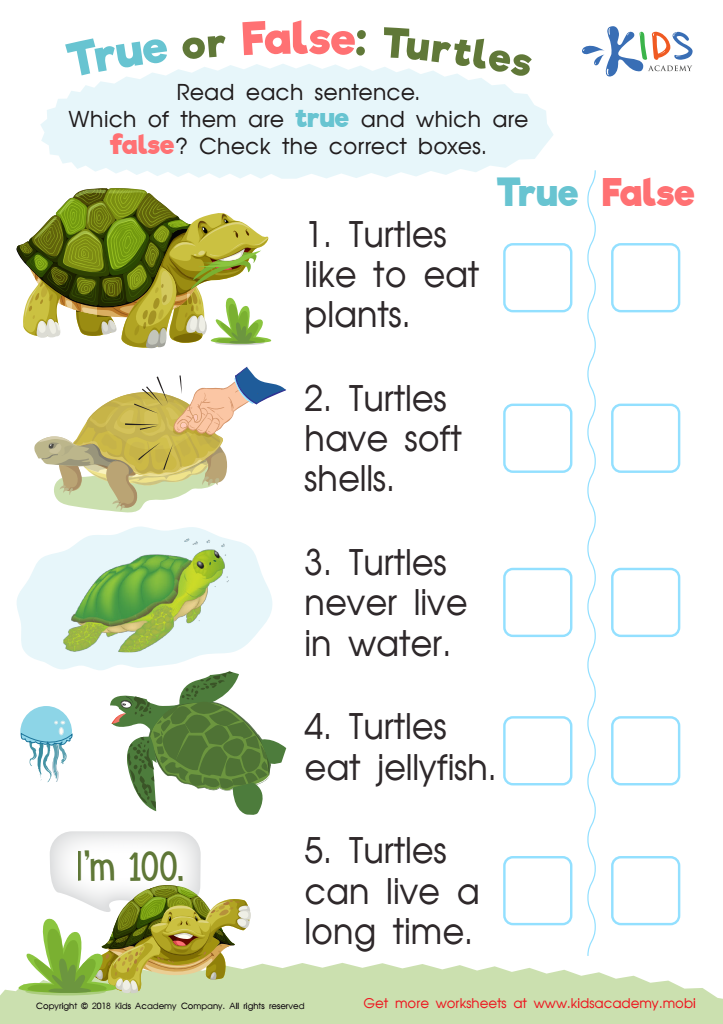
True or False: Turtles Worksheet
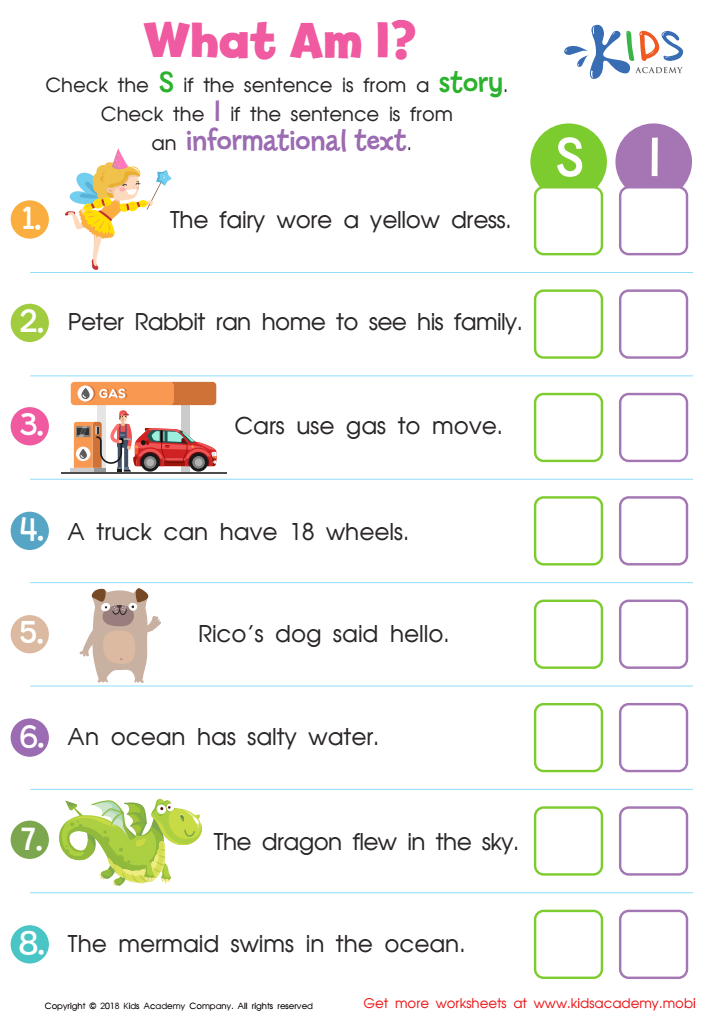
What Am I? Worksheet








Parents and teachers should care about Logical Reasoning Normal Reading Non-Fiction for Ages 4-9 because it plays a critical role in developing essential cognitive skills in young learners. At this stage, children are naturally curious and eager to explore the world around them. Introducing them to non-fiction helps nurture that curiosity while enhancing their logical reasoning abilities, which form the backbone of critical thinking. Non-fiction texts often present real-world concepts, encouraging children to make connections between information, ask questions, and engage with the material meaningfully.
By interacting with logical reasoning materials, children learn to analyze arguments, draw conclusions, and solve problems—skills that are vital in all areas of life. Moreover, early exposure to non-fiction supports literacy development by broadening vocabulary and providing context to language use. When caregivers and educators prioritize such reading material, they help lay a solid foundation for academic success and informed citizenship.
Cultivating logical reasoning and comprehension through engaging non-fiction not only enriches children's knowledge but also fosters their ability to think independently and critically. Ultimately, this prepares them for future learning challenges and helps instill a lifelong love for learning and exploration.