Reading comprehension Normal Rhyming Words Worksheets for Ages 4-9
7 filtered results
-
From - To
Discover our engaging "Reading Comprehension Normal Rhyming Words Worksheets" designed for children ages 4-9. These worksheets help young learners enhance their reading skills while having fun with rhymes! Each activity focuses on improving comprehension through playful tasks that encourage critical thinking and vocabulary building. Kids will connect words that rhyme, identify relationships between words, and reinforce their understanding of language patterns. Ideal for parents and educators, these worksheets provide an enjoyable, interactive way to help children master essential reading concepts. Explore our collection today and watch your child's confidence and love for reading grow!
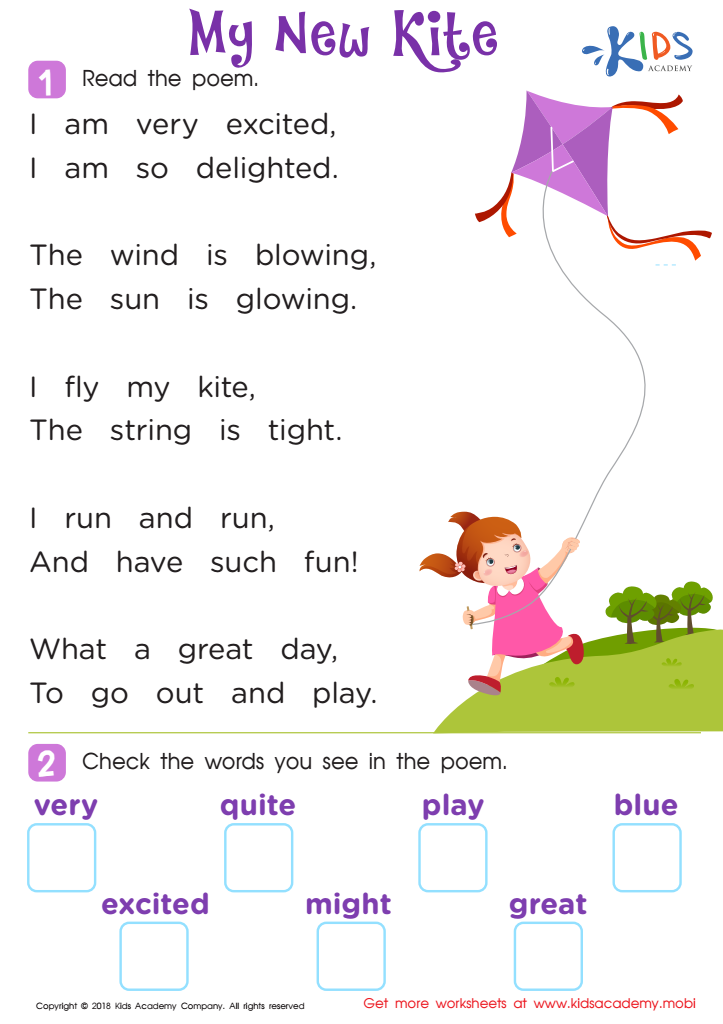
Poem: My New Kite Worksheet
 Assign to My Students
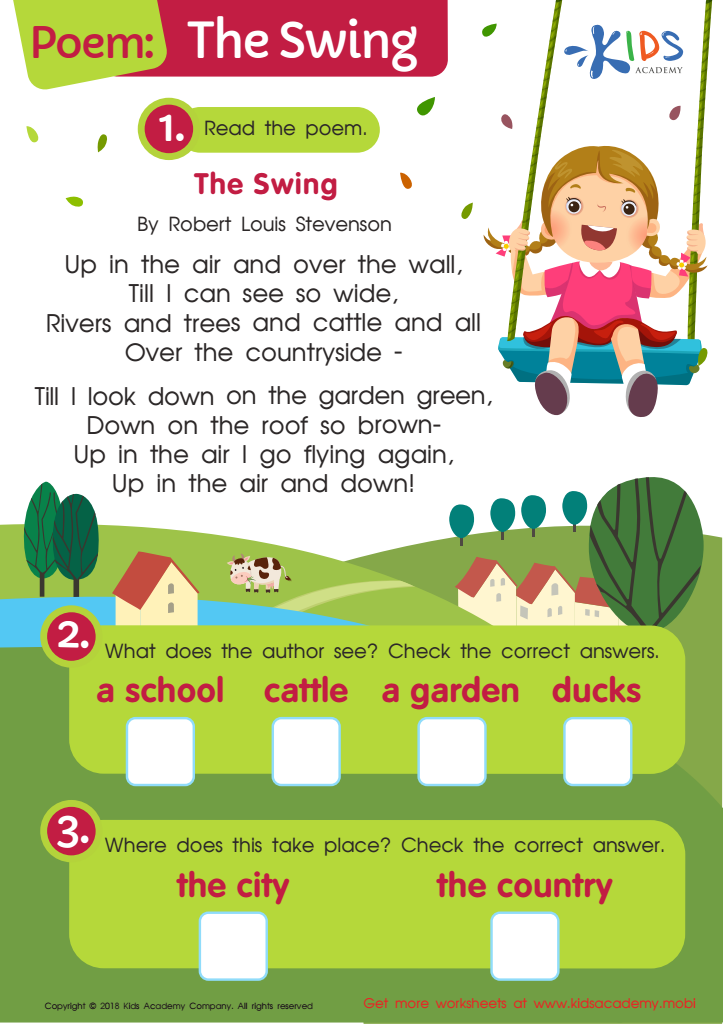
Poem: The Swing Worksheet

Rhyming Words Rhyming Worksheet
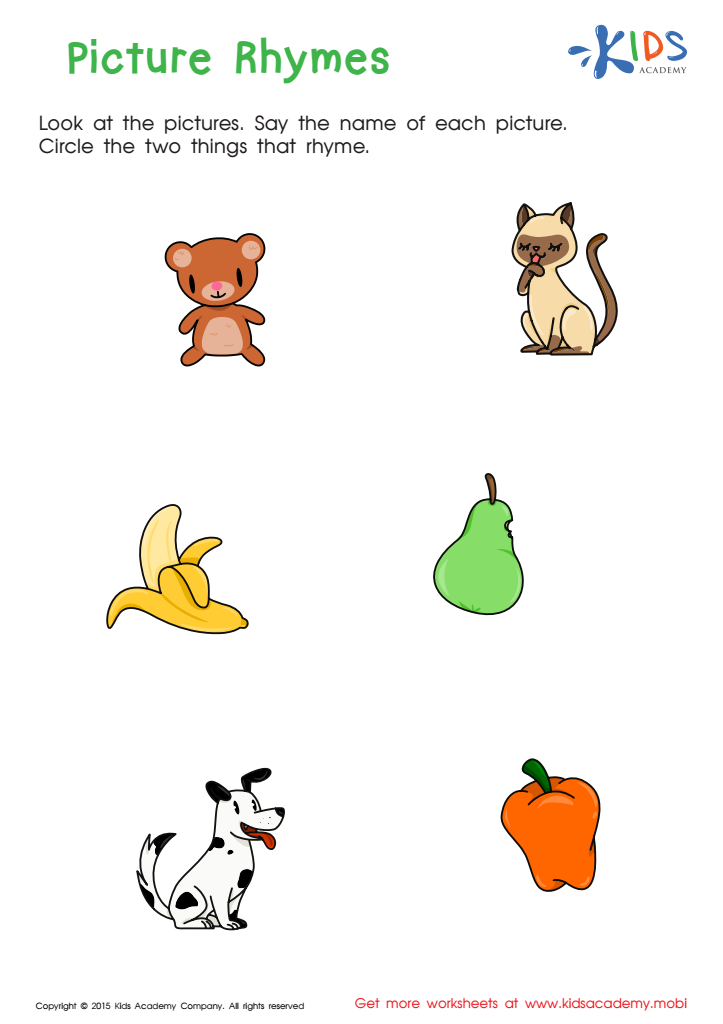
First Words: Picture Rhymes Worksheet
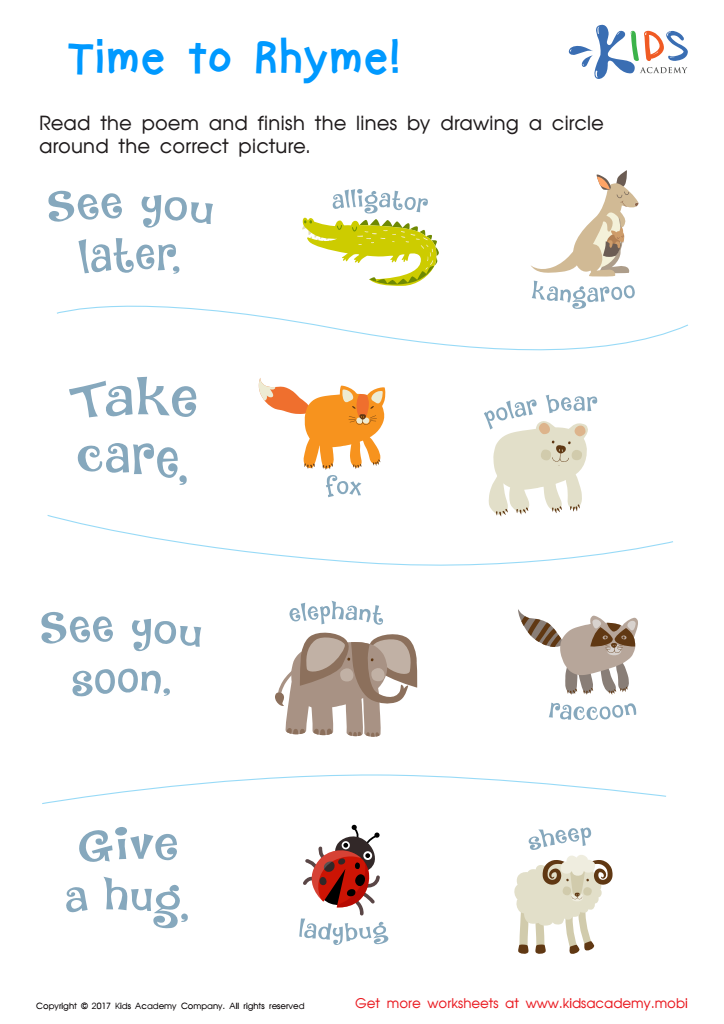
Time to Rhyme Rhyming Worksheet
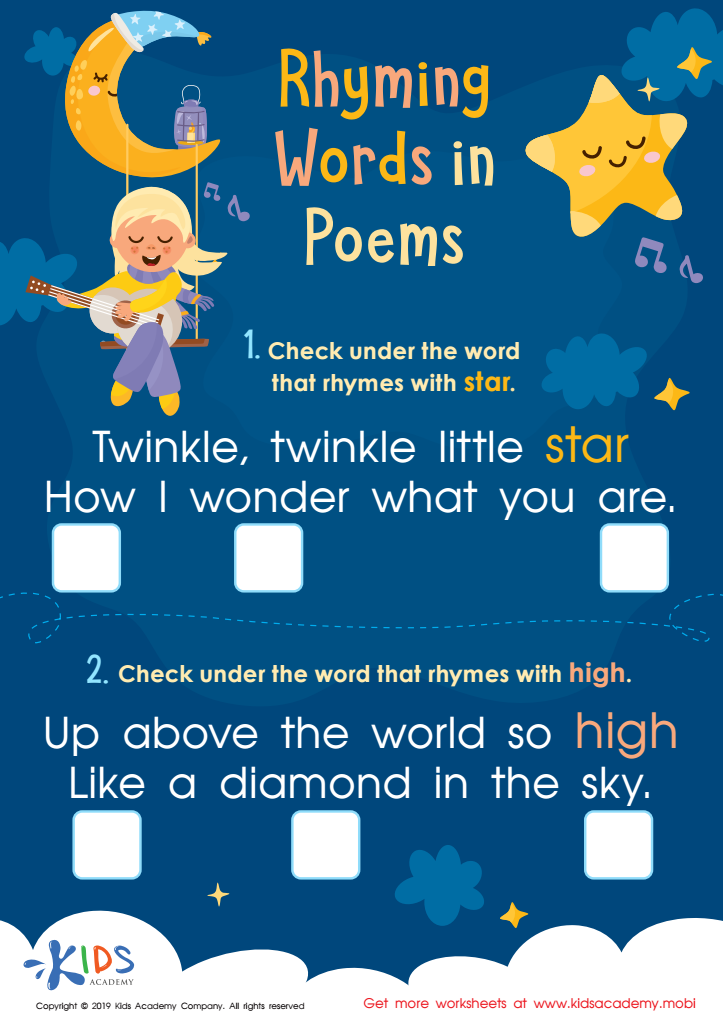
Rhyming Words in Poems Worksheet
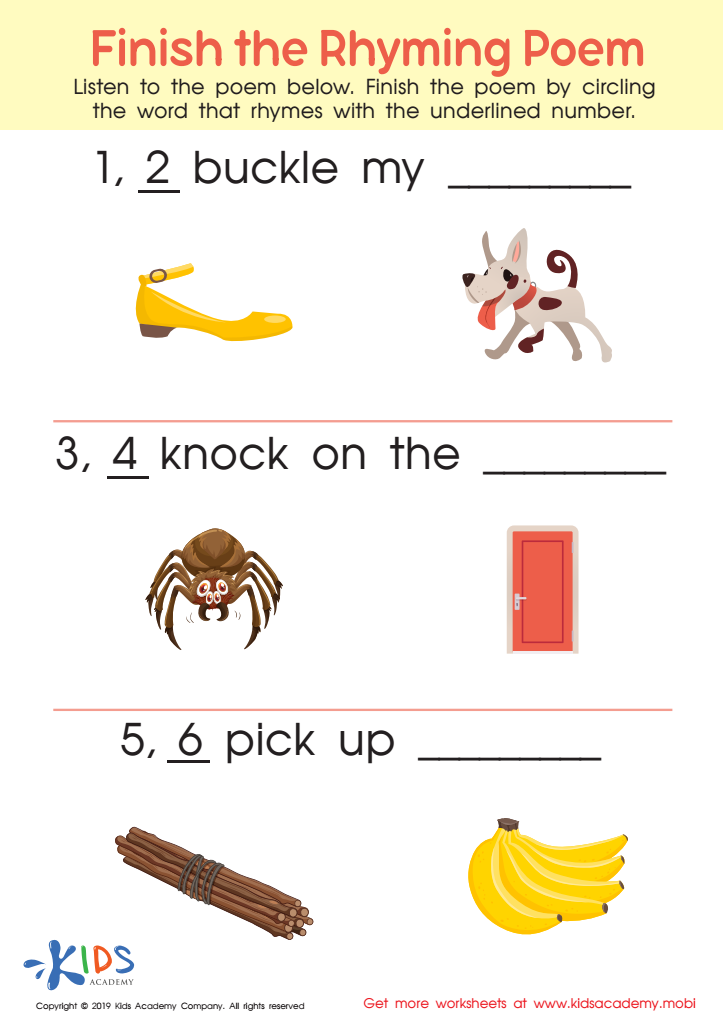
Finish Rhyming Poem Worksheet


.jpg)





Reading comprehension and normal rhyming words are crucial components of early literacy for children aged 4-9. For parents and teachers, fostering a strong foundation in these skills can significantly enhance a child's language development and cognitive abilities. Rhyming words not only make reading fun but also play a critical role in helping children hear, identify, and play with sounds in language, which is essential for phonemic awareness—the ability to recognize and manipulate sounds in words.
When children understand rhymes, they develop better decoding skills, improved vocabulary, and greater overall reading fluency. These elements contribute to better comprehension, allowing children to engage with texts more critically and thoughtfully. This engagement supports a love for reading, which is vital as their literature exposure increases.
Additionally, books that include rhymes reinforce patterns and structure in language, helping children predict what comes next—an important strategy for comprehension. By focusing on these aspects, parents and teachers can nurture a child's confidence and independence in reading, setting them up for success in their academic journeys. In essence, prioritizing reading comprehension and normal rhyming words lays the groundwork for a child's lifelong literacy skills and intellectual development.








