
Division practice Normal Science Worksheets for Ages 4-9
5 filtered results
Difficulty Level
Grade
Age
-
From - To
Subject
Activity
Standards
Explore our engaging "Division Practice Normal Science Worksheets" designed for young learners aged 4-9. These printable worksheets combine fun exercises with foundational division skills, helping children grasp mathematical concepts while exploring scientific themes. Each worksheet features colorful illustrations and age-appropriate activities that make learning enjoyable. By solving division problems set in interesting science contexts, kids will develop critical thinking and problem-solving abilities. Ideal for classroom use or at-home practice, these resources support early education and foster a love for both math and science. Unlock your child’s potential with our thoughtfully crafted division practice worksheets, making learning a delightful adventure!
Favorites
With answer key
Interactive
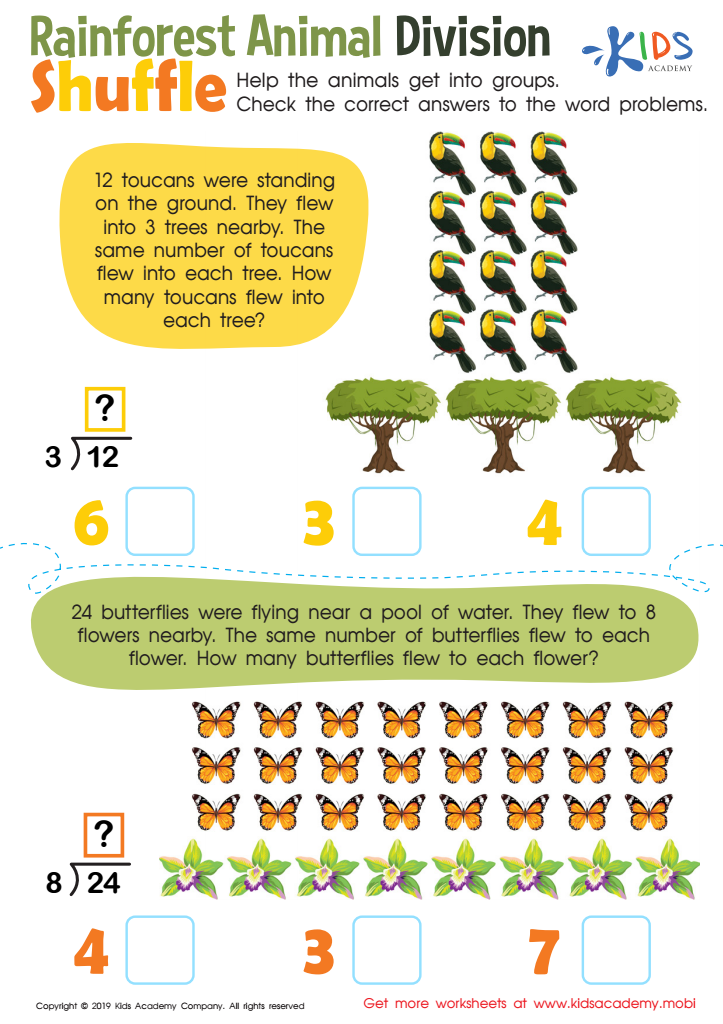
Rainforest Animal Division Worksheet
Children can save the rainforest and learn about division with this worksheet! It helps kids understand that division involves creating equal groups of specific numbers, and with its visual representation, they can grasp the concept more easily. They'll have fun learning about their place in the world and their role in protecting the environment.
 Assign to My Students
Rainforest Animal Division Worksheet
Worksheet
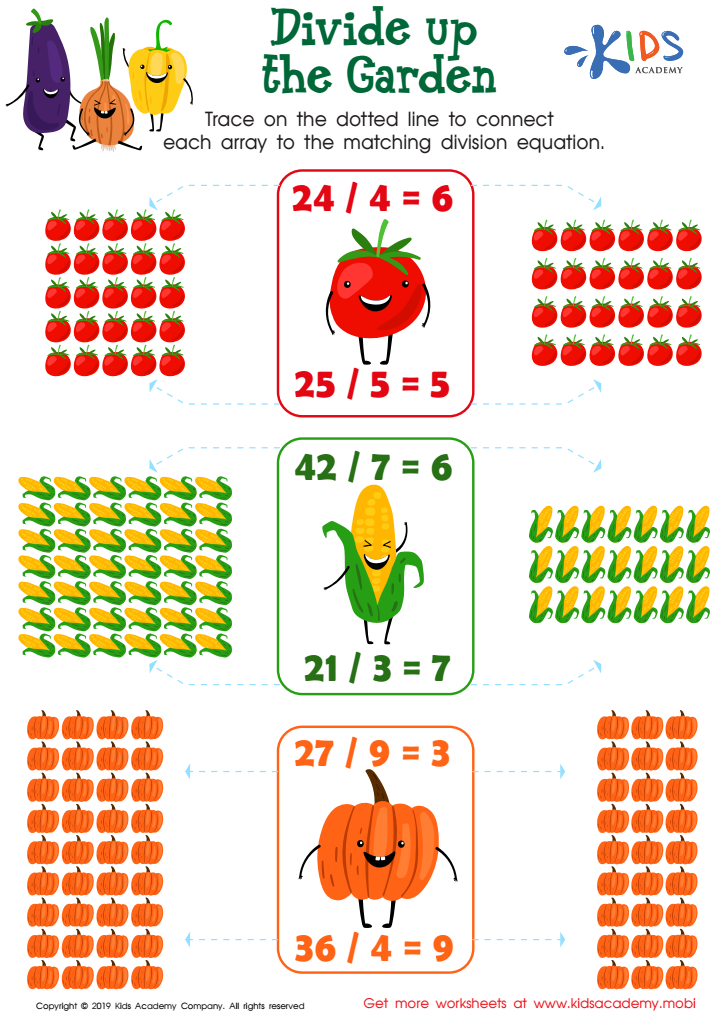
Divide up the Garden Worksheet
Dividing is simply grouping items into equal sets. This worksheet helps kids see division problems in array form. They'll match each equation with a picture group, using the lines provided. It's a great way for beginners to understand division more concretely.
Divide up the Garden Worksheet
Worksheet
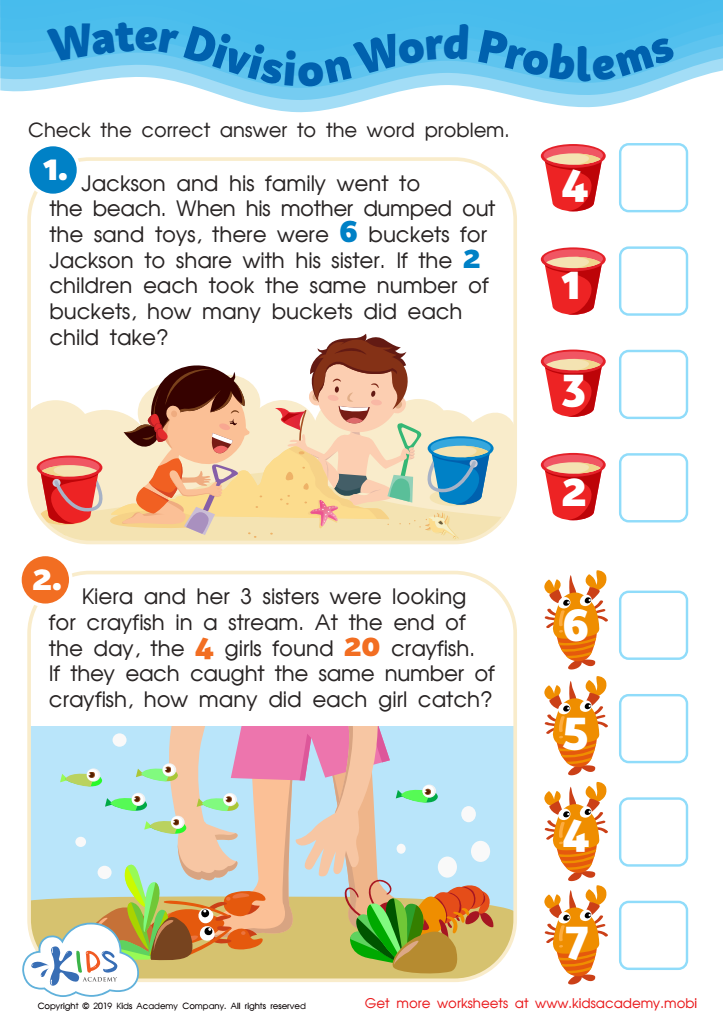
Water Division Word Problems Worksheet
Kids can sharpen their math skills with this fun PDF! They'll see pictures of friends at the beach, plus bold numbers and colorful pictures. All they need to do is read and understand the problem to find the answer - without even realizing they're doing division. A great way to make math enjoyable!
Water Division Word Problems Worksheet
Worksheet
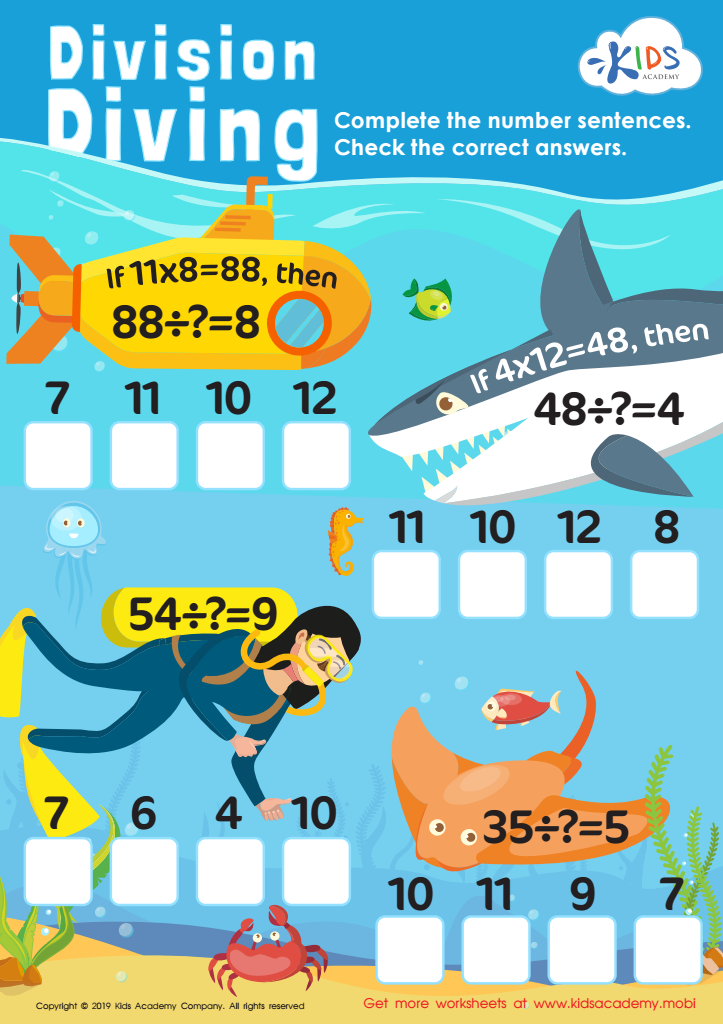
Division Diving Worksheet
Kids love exploring water and this free PDF worksheet is a great way to bring the fun and math together! Kids can help the underwater friends with number sentences, and use their fact family knowledge to solve for the missing number, then choose the correct answer. This worksheet is an enjoyable way for them to practice division!
Division Diving Worksheet
Worksheet
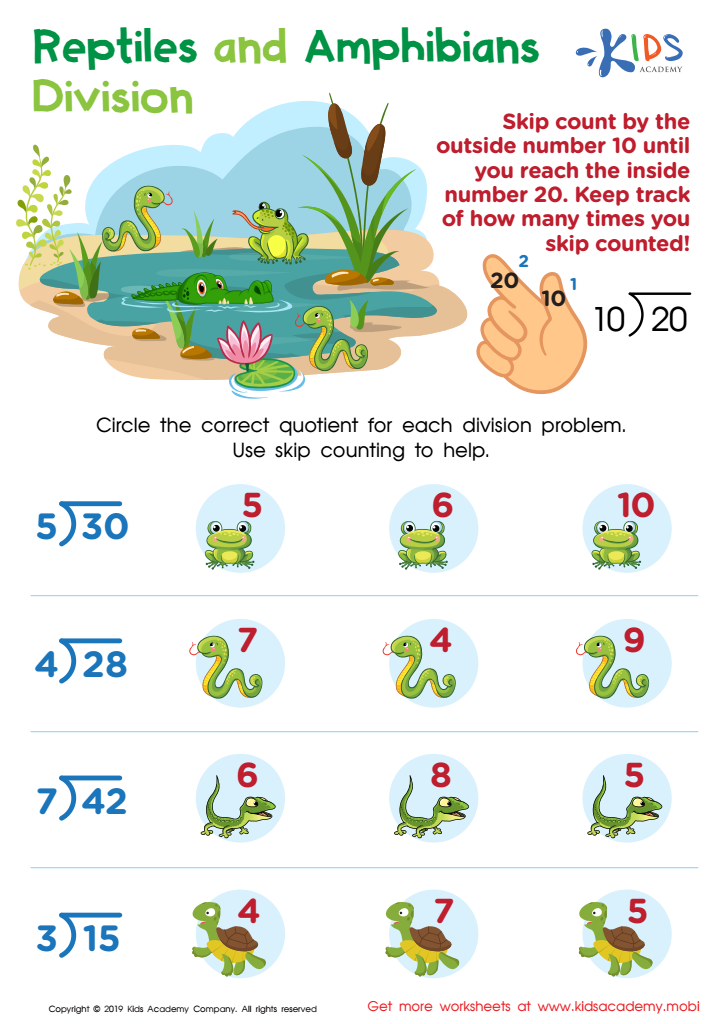
Reptile and Amphibians Division Worksheet
Skip counting is key in division. This PDF worksheet helps children practice this skill with fun reptile and amphibian friends. They must circle the right quotient among the choices given to reinforce their pattern recognition. Perfect for mastering division!
Reptile and Amphibians Division Worksheet
Worksheet
Join Kids Academy for Free
Who is primarily going to use this learning content?





%20(1).jpg)


Parents and teachers should prioritize division practice in early education, particularly for children aged 4-9, as it lays a critical foundation for mathematical understanding. At this age, children are not only developing number sense but also learning how to think logically and solve problems. Division, being one of the four basic operations, introduces the concept of sharing, grouping, and understanding fractions, which are essential skills for everyday life.
Engaging in division practice helps enhance cognitive skills. It encourages children to develop their reasoning abilities, improve their critical thinking, and fosters a sense of achievement when they comprehend these concepts. Introducing division through engaging activities like manipulatives, games, and storytelling can make learning more enjoyable and relatable.
Additionally, understanding division early on helps prevent math anxiety later in life. When children approach division confidently, they create a positive attitude towards mathematics, promoting persistence and a growth mindset. Furthermore, early exposure to diverse mathematical operations prepares students for more advanced concepts in higher grades, ensuring they are not left behind.
In summary, fostering division skills in young learners equips them with essential life skills, enhances cognitive development, and instills a love for learning that will benefit their futures.







