
Historical Knowledge Normal Science Worksheets for Ages 4-9
5 filtered results
Difficulty Level
Grade
Age
-
From - To
Subject
Activity
Standards
Discover our engaging "Historical Knowledge Normal Science Worksheets" designed specifically for children aged 4-9! These worksheets introduce young learners to significant historical concepts and events in a fun and interactive way. With vibrant illustrations and age-appropriate activities, kids will explore topics like famous figures, ancient civilizations, and key milestones in an enjoyable format. Ideal for home or classroom use, our worksheets encourage curiosity and promote critical thinking skills. Help your students build a strong foundation in historical knowledge while cultivating their love for science. Explore the past and inspire their future with our comprehensive collection today!
Favorites
With answer key
Interactive
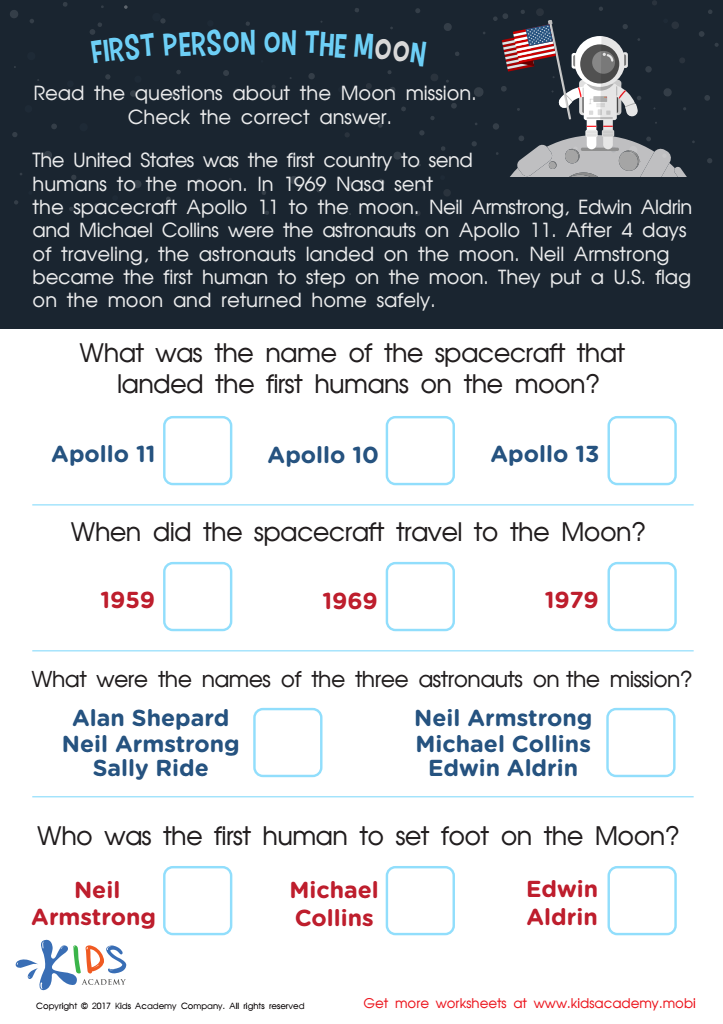
First Person on the Moon Worksheet
In 1969, Neil Armstrong made history by becoming the first person to step foot on the moon! With this fun worksheet, you can teach kids fascinating facts about the Apollo 11 mission. After reading, they can show off what they've learned with a quiz!
 Assign to My Students
First Person on the Moon Worksheet
Worksheet
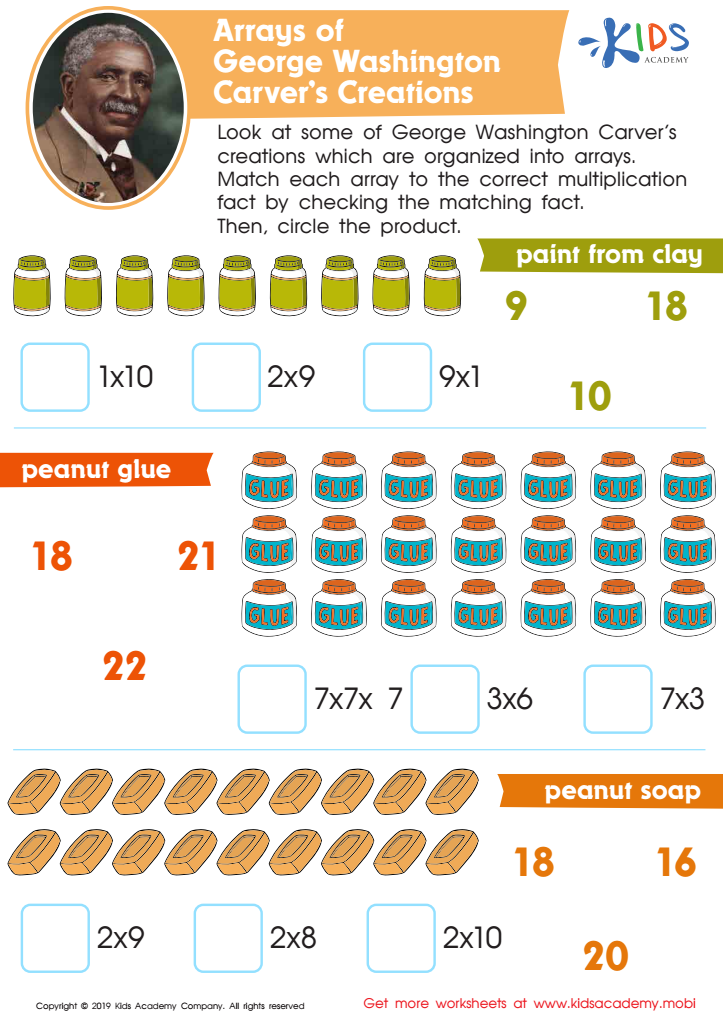
Arrays of George Washington Carver’s Creations Worksheet
Remind your child of what George Washington Carver created. Can they tell you? This worksheet has arrays with his creations. Match the array to the multiplication fact and help your child to circle the product.
Arrays of George Washington Carver’s Creations Worksheet
Worksheet
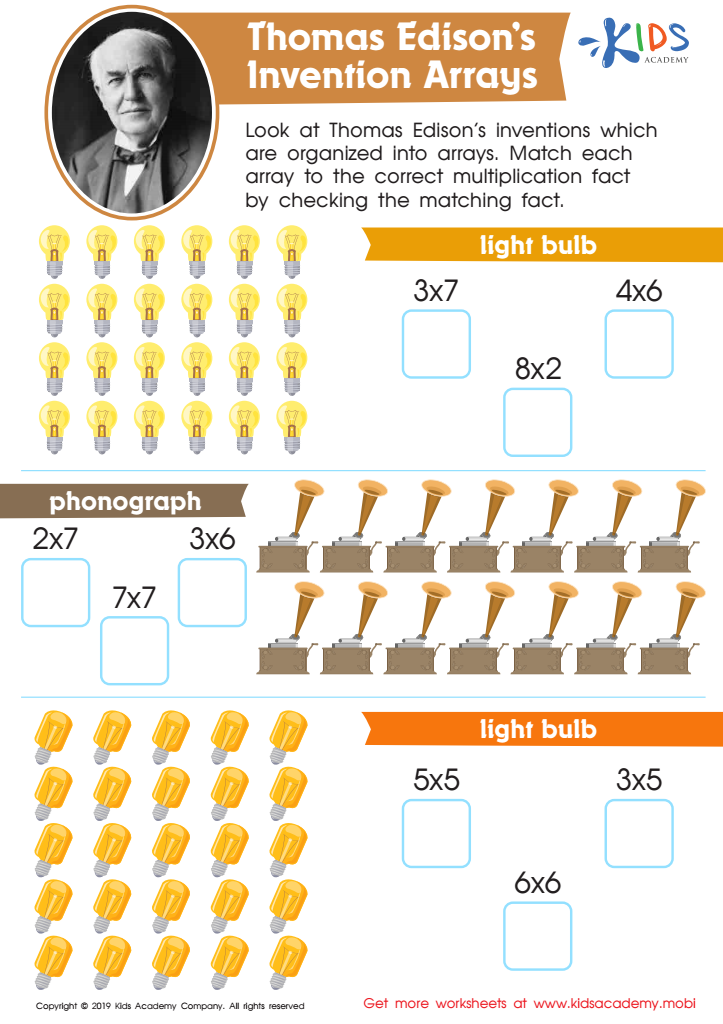
Thomas Edison’s Invention Arrays Worksheet
Test your students' knowledge on history by asking them what Thomas Edison invented. If they get the right answer, provide more information on other inventors. Check out this printout of Edison's light bulb inventions laid out in arrays. Get them to match each array to the correct multiplication fact.
Thomas Edison’s Invention Arrays Worksheet
Worksheet
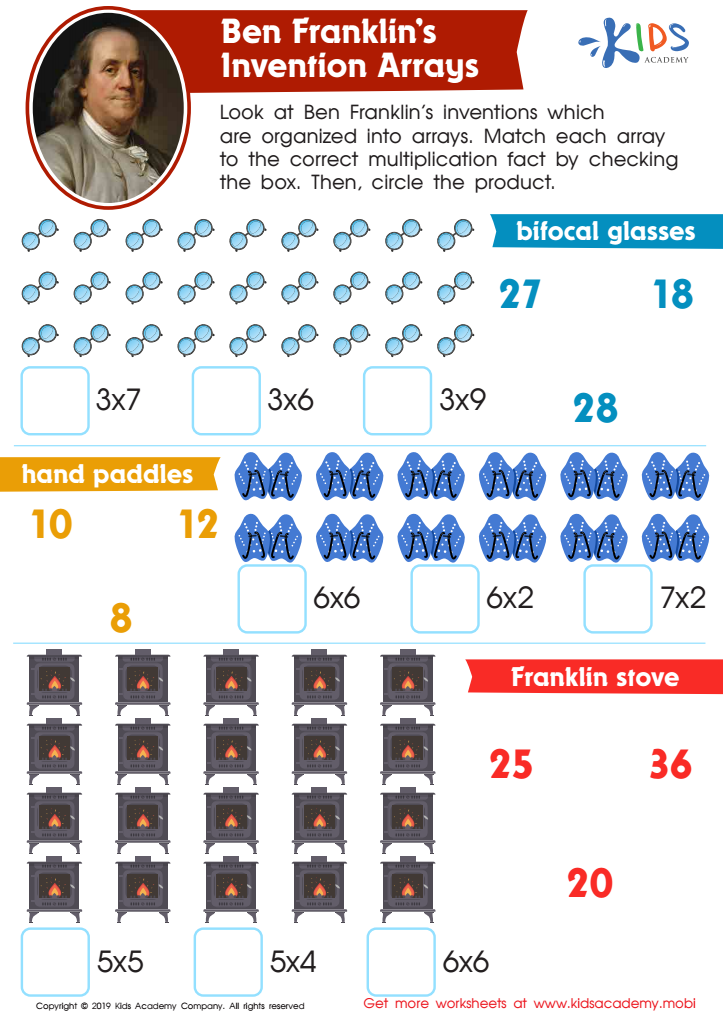
Ben Franklin’s Invention Arrays Worksheet
Have your child guess some of the inventors of the popular items we use today. For instance, the light bulb was invented by Thomas Edison. Look at Ben Franklin's inventions and help your kids match the arrays to the correct multiplication fact. Check the box and circle the product.
Ben Franklin’s Invention Arrays Worksheet
Worksheet
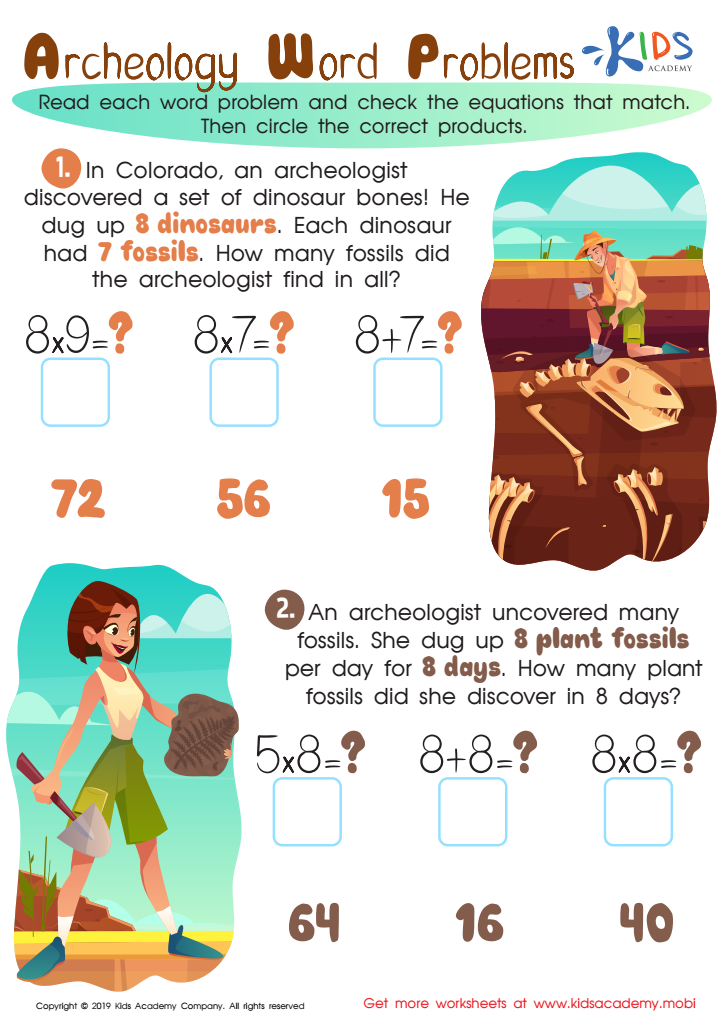
Archeology Word Problems Worksheet
Encourage your child to explore their career options! Show them an archeologist's job with this worksheet - featuring a picture of a dinosaur bone discovery. Read the accompanying text, then solve the word problems. Help your kids circle the correct answers to better understand this profession.
Archeology Word Problems Worksheet
Worksheet
Join Kids Academy for Free
Who is primarily going to use this learning content?





Parents and teachers should care about historical knowledge in the context of normal science for ages 4-9 because it lays the foundation for children's understanding of the world around them. At this early age, children are naturally curious and eager to learn about how things work and how societies have evolved. Introducing them to historical knowledge can spark their interest in scientific principles and critical thinking skills.
When children learn historical scientific discoveries, they begin to appreciate the process of inquiry – how questions are posed, hypotheses are tested, and theories are developed. This not only enhances their scientific understanding but also fosters a mindset geared towards exploration and discovery. Learning about notable scientists, their experiments, and the impact of their work on society helps children recognize science as a human endeavor, promoting respect for diverse perspectives and innovations.
Additionally, combining stories of history with science can engage children emotionally and socially, making the educational experience richer. Understanding scientific achievements in context equips young learners with the tools to engage in discussions, imagine possibilities, and develop problem-solving skills. Ultimately, nurturing a historical knowledge of normal science in young learners paves the way for informed, inquisitive future citizens.







