Knowledge application Normal Science Worksheets for Ages 4-9
5 filtered results
-
From - To
Our "Knowledge Application Normal Science Worksheets for Ages 4-9" offer young learners an engaging way to explore scientific concepts. These worksheets encourage hands-on activities and critical thinking, helping children combine theoretical knowledge with practical application. Topics range from basic principles to more advanced ideas suited for their age group. Designed to be both fun and educational, these worksheets foster a love for science through interactive experiments, observations, and problem-solving tasks. Ideal for at-home learning or as a classroom supplement, they enable kids to build foundational science skills while igniting their curiosity and passion for discovery.
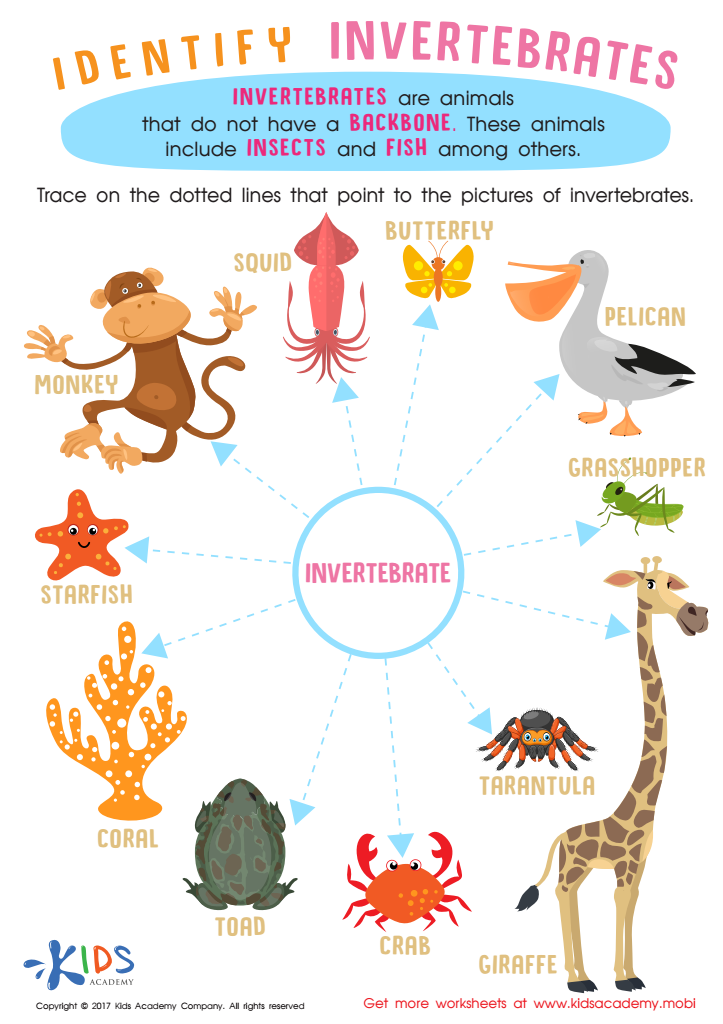
Invertebrates Worksheet for Grade 3
 Assign to My Students
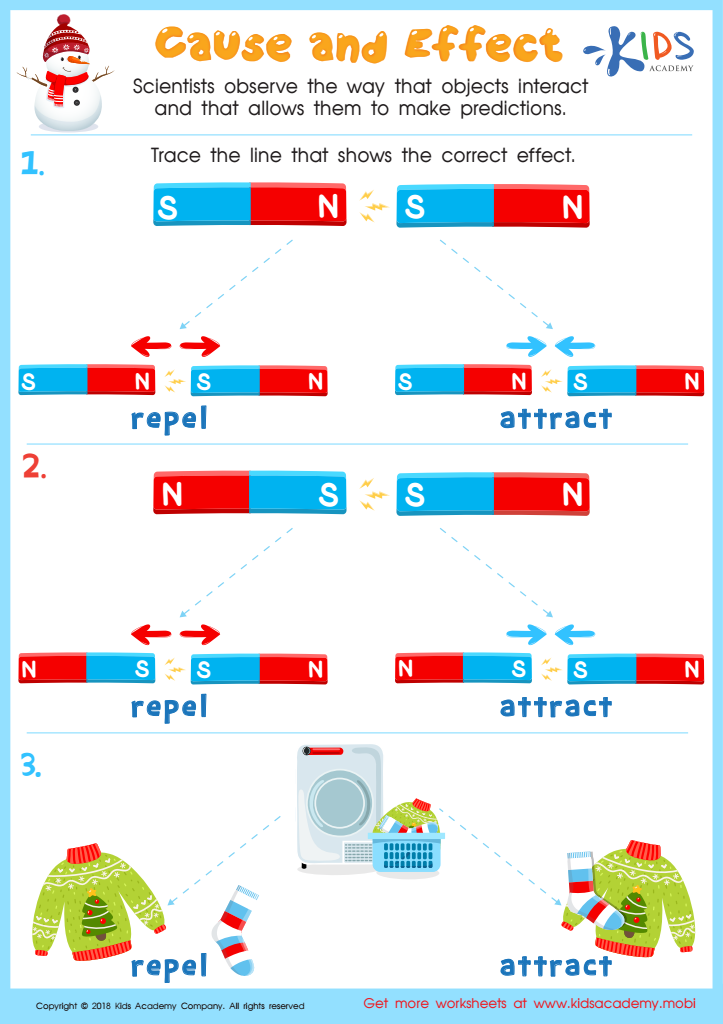
Repel and Attract Magnet Worksheet
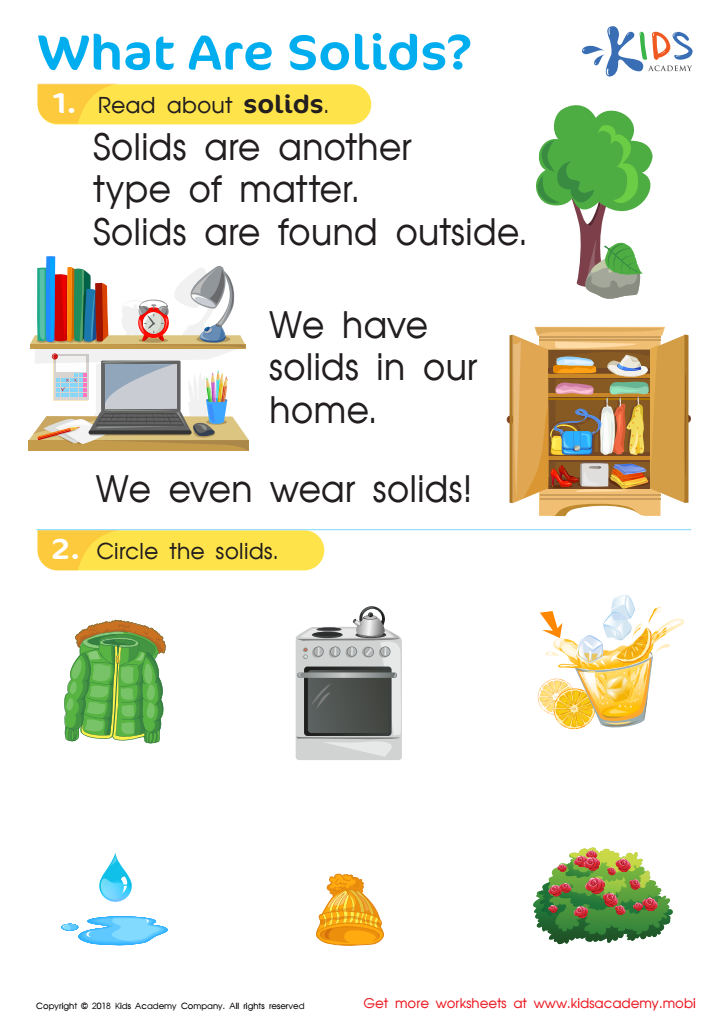
What Are Solids? Worksheet
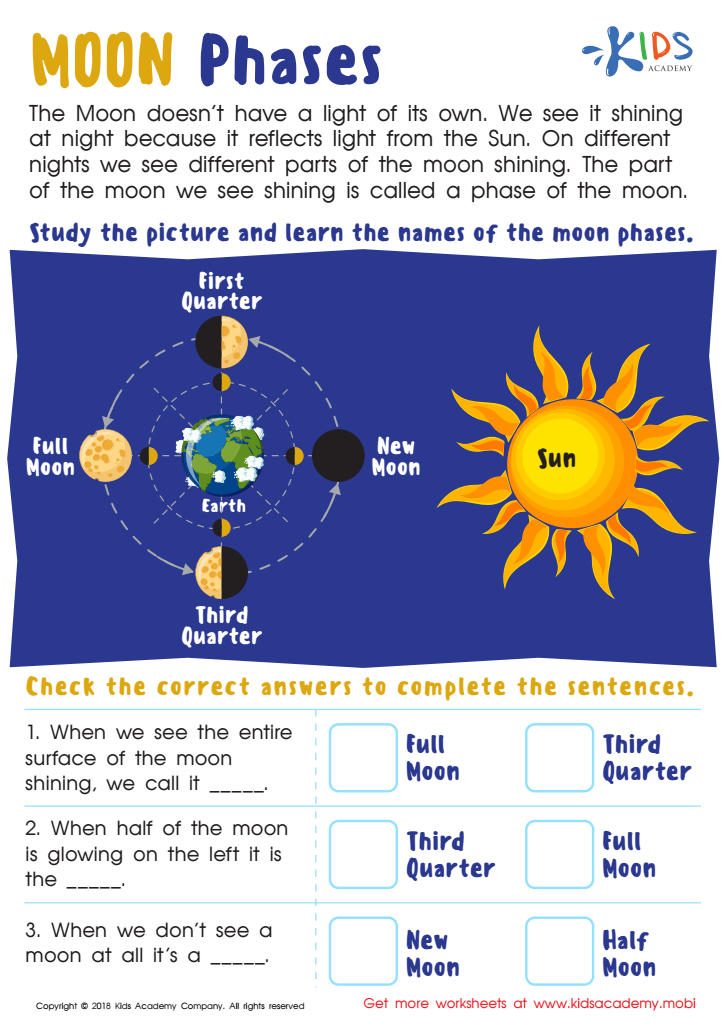
Moon Phases Worksheet
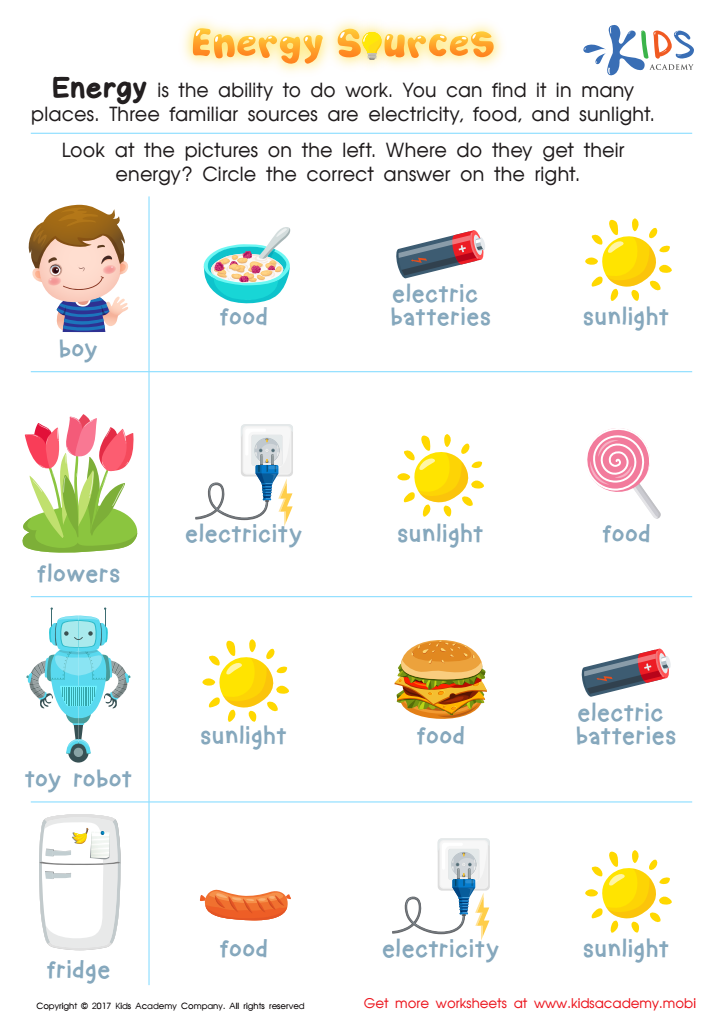
Energy Sources Printable








Parents and teachers should care about the application of normal science (the consistent and methodical practice of scientific principles) for ages 4-9 because this foundational period is when children's cognitive abilities are rapidly developing. Engaging young minds in scientific exploration fosters curiosity, critical thinking, and problem-solving skills, all of which are crucial for lifelong learning.
Introducing science early helps children understand the world around them, encouraging them to ask questions, make observations, and understand basic concepts of cause and effect. Practical activities like simple experiments, nature walks, and interactive simulations can demystify science, making it less intimidating and more accessible. Such experiences lay the groundwork for later, more complex scientific learning by integrating enjoyable, hands-on activities that illustrate core principles.
Furthermore, early exposure to science can help bridge educational gaps and inspire future interest in STEM (Science, Technology, Engineering, and Mathematics) careers. It combats stereotypes and promotes diversity within these fields by reaching children from all backgrounds at a formative age.
In summary, embedding normal science into early education equips children with necessary skills, nurtures a sense of inquiry, and establishes a positive relationship with learning and discovery that extends well beyond the classroom.







