Science vocabulary expansion Normal Science Worksheets for Ages 4-9
4 filtered results
-
From - To
Boost your child's science vocabulary with our engaging "Normal Science Worksheets for Ages 4-9." Designed to foster learning and curiosity, these worksheets cover various topics, from basic biology to everyday chemistry. Each activity is crafted to make scientific concepts accessible and fun, encouraging young students to explore and understand the world around them. With colorful illustrations and interactive exercises, kids will love diving into exciting experiments, learning new terms, and building a strong foundation for future science studies. Ideal for both classroom use and homeschooling, our science vocabulary worksheets are the perfect resource for young, budding scientists.
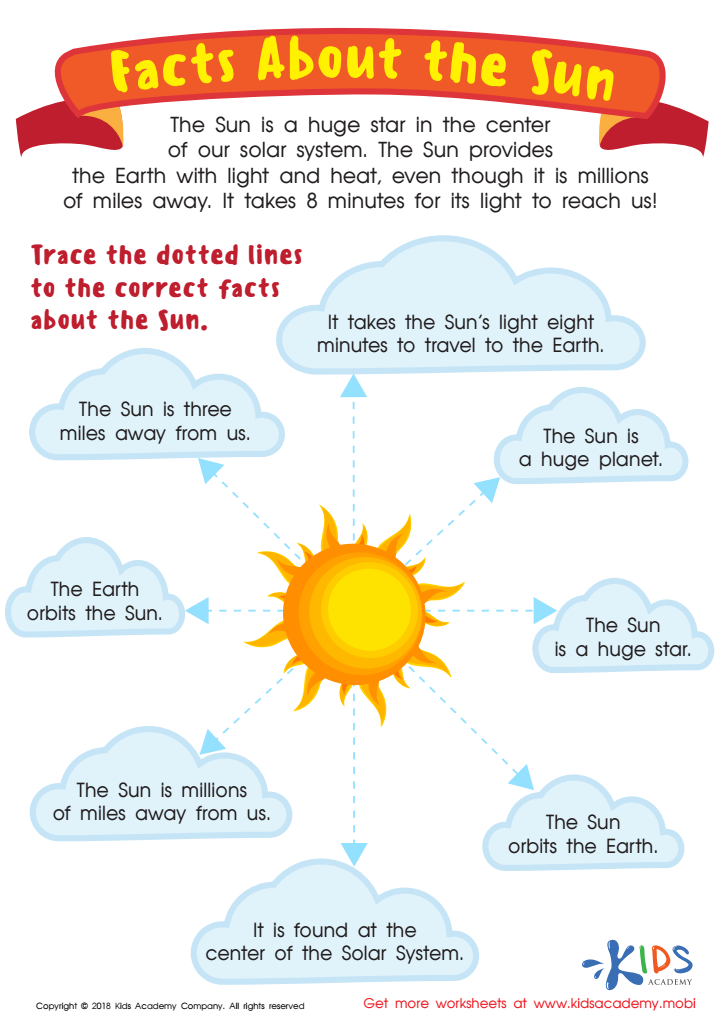
Facts About the Sun Worksheet
 Assign to My Students
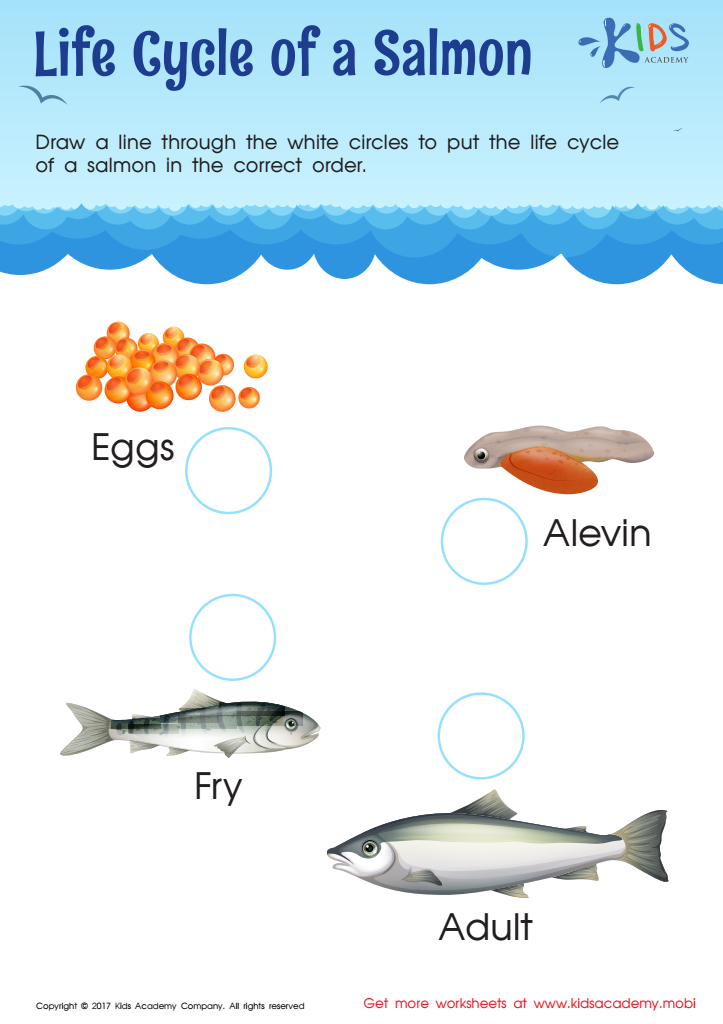
Cycle Of Salmon Worksheet
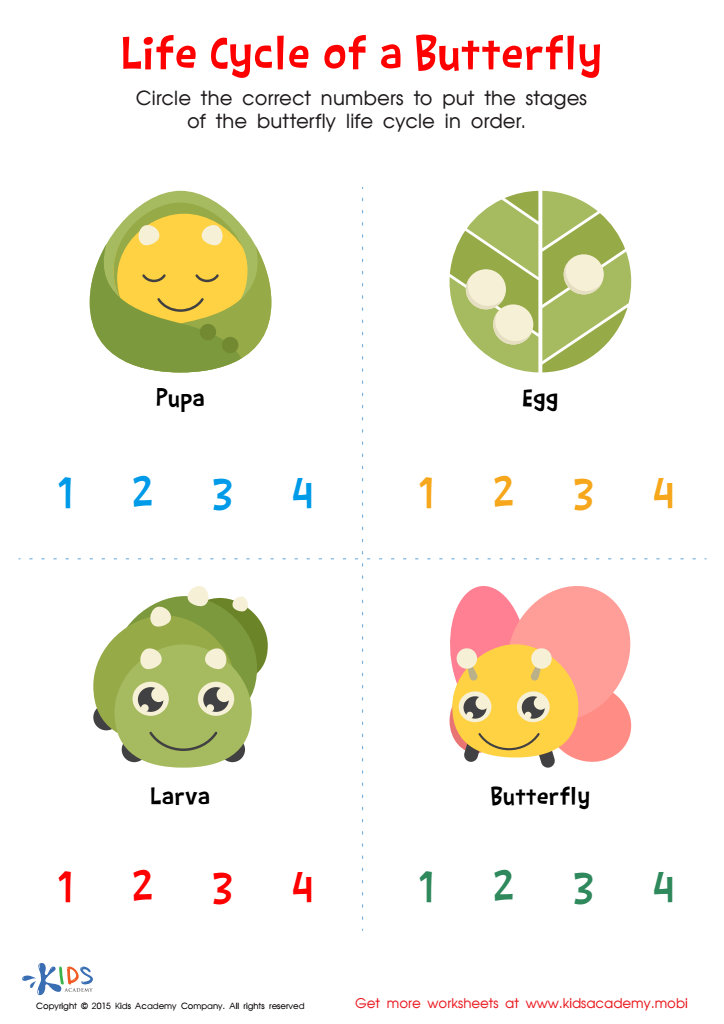
Life Cycle of Butterfly Printable
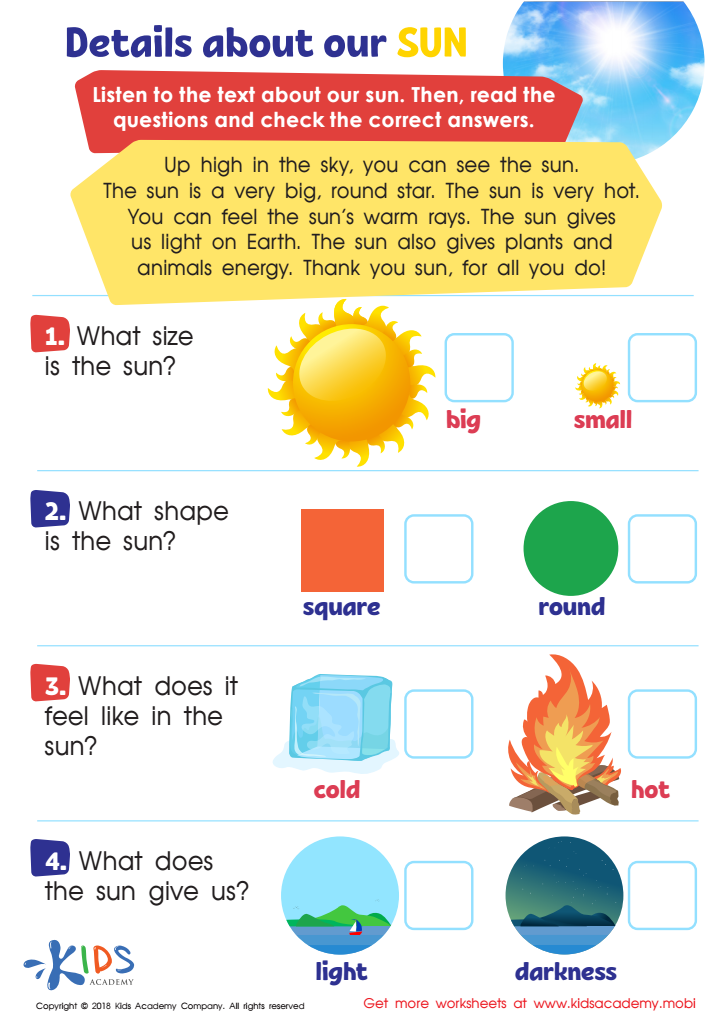
Details About Our Sun Worksheet







Expanding science vocabulary for children ages 4-9 is crucial for several reasons. First, this age range represents a period of rapid cognitive development, where children are naturally curious and eager to explore the world. Introducing scientific terms at this stage leverages their inquisitiveness and lays a strong foundation for future learning.
Secondly, early science vocabulary expansion helps in building critical thinking skills. When children understand specific terms like "observe," "experiment," or "classify," they can engage more deeply with scientific concepts and processes. This encourages them to think logically and systematically, skills that are invaluable across all areas of life.
Moreover, a strong science vocabulary aids in literacy development. Understanding complex concepts and terms enhances reading comprehension and verbal skills. Children who can articulate scientific ideas clearly are better prepared for academic success.
Additionally, fostering an interest in science from a young age can spark lifelong curiosity and passion. With a solid vocabulary, children are more likely to pursue science-related subjects in school and beyond, potentially leading to careers in science, technology, engineering, or mathematics (STEM).
Lastly, imparting scientific knowledge and vocabulary also empowers children to make informed decisions about the world. They become more knowledgeable about topics like health, the environment, and technology, contributing to society as informed and responsible citizens.







