Understanding moon phases Normal Science Worksheets for Ages 4-9
3 filtered results
-
From - To
Explore the fascinating world of moon phases with our engaging normal science worksheets designed for children aged 4-9. These interactive sheets help young learners understand the different phases of the moon, from the New Moon to the Full Moon, through fun visuals and hands-on activities. Each worksheet is tailored to develop critical thinking and observational skills, promoting a love for science and the wonders of the night sky. Perfect for home schooling or classroom use, these resources make learning about the moon both enjoyable and educational, inspiring kids to explore astronomy in a creative way. Discover our moon phase worksheets today!
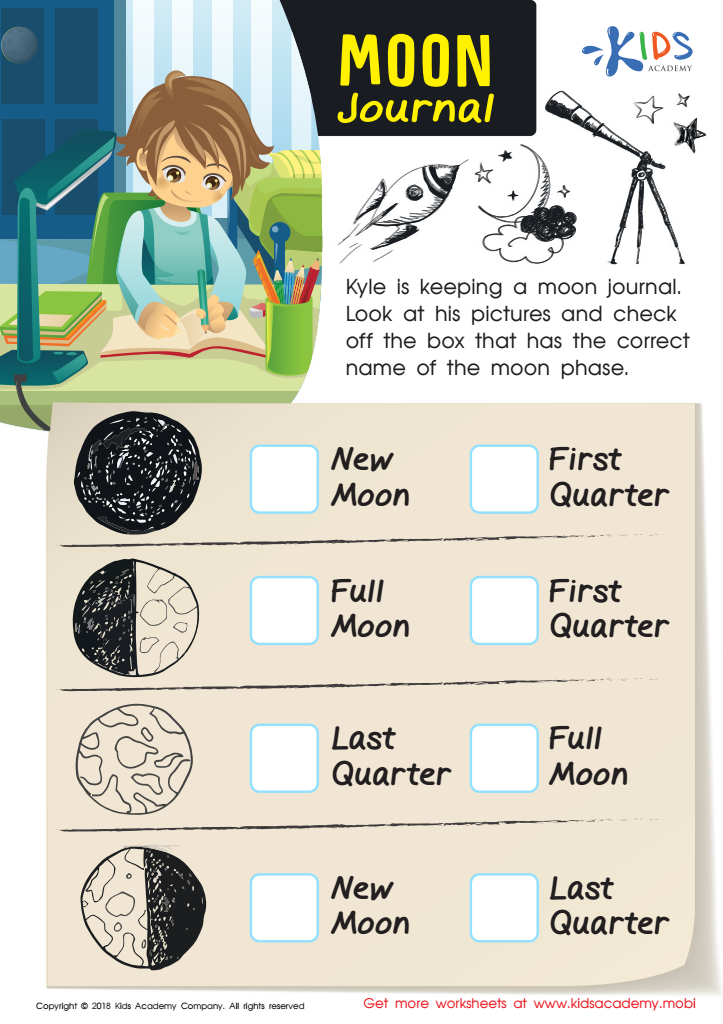
Moon Journal Worksheet
 Assign to My Students
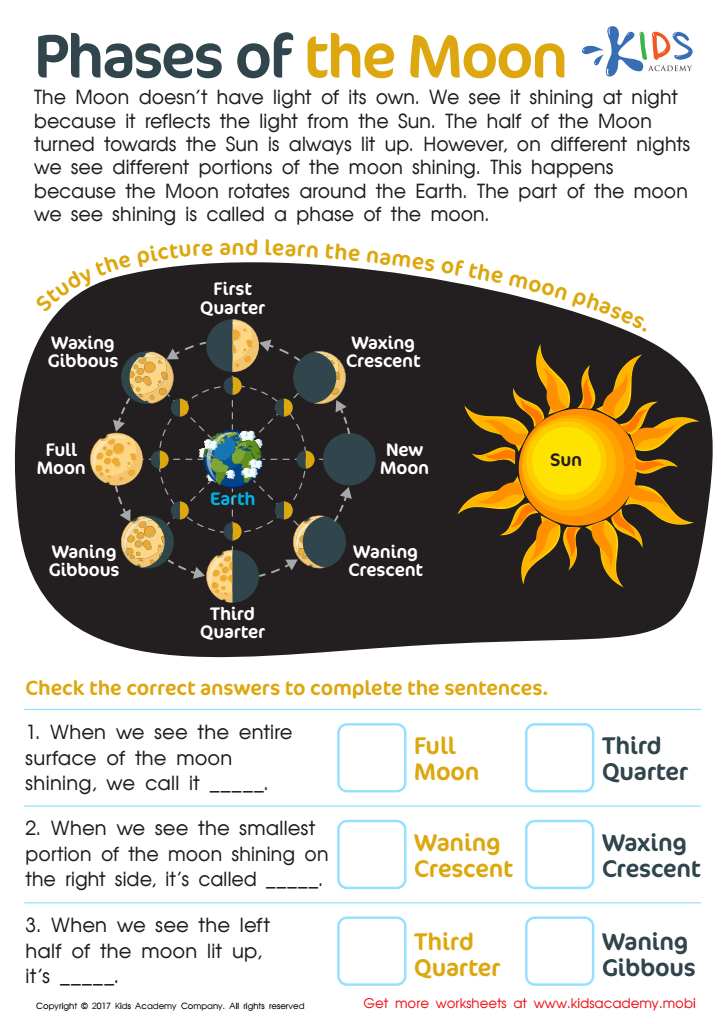
Phases of The Moon Worksheet
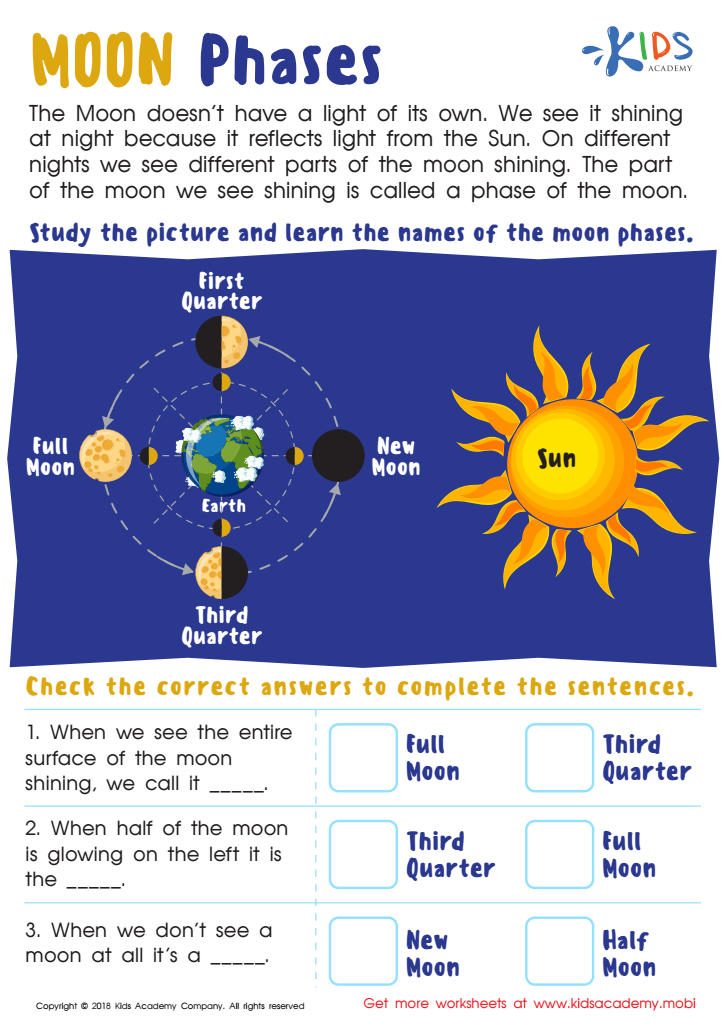
Moon Phases Worksheet







Understanding moon phases is essential for parents and teachers of children aged 4-9 as it lays the groundwork for scientific literacy and curiosity. Teaching children about the moon not only exposes them to fundamental concepts of astronomy but also encourages exploration and imagination. Moon phases offer a tangible way for young learners to comprehend the cycles and patterns of nature, promoting observation skills that resonate with their everyday experiences.
Highlighting moon phases can enhance learning across various subjects. For example, it links to art through creative projects like moon phase crafts, while also weaving in concepts from mathematics such as fractions, when depicting the varying amounts of moon visible. Additionally, the nightly sky can become an exciting discussion point about time, seasons, and changes, enriching children’s knowledge about the world.
Moreover, caring about moon phases fosters emotional and social skills by initiating conversations and family activities like moon watching, creating a dynamic backdrop for bonding. Cultivating an appreciation for the moon and its phases nurtures a sense of wonder, prompting questions and further exploration into science, fostering both critical thinking and a love for knowledge. It ultimately equips children with foundational tools that illuminate their understanding of the broader universe.







