Animal Classification Normal Plants and Animals Worksheets for Ages 4-9
6 filtered results
-
From - To
Discover our engaging "Animal Classification Worksheets" designed for children aged 4-9! These interactive worksheets make learning about plants and animals fun, providing kids with essential skills in scientific classification. Through colorful diagrams and simple tasks, young learners will explore various animal groups, understand their characteristics, and recognize their habitats. This resource promotes critical thinking and observational skills while fostering a love for nature and wildlife. Perfect for classrooms or at-home learning, our worksheets ensure that children grasp fundamental scientific concepts in an enjoyable and age-appropriate way. Enhance your curriculum today with these exciting resources and inspire the next generation of young scientists!
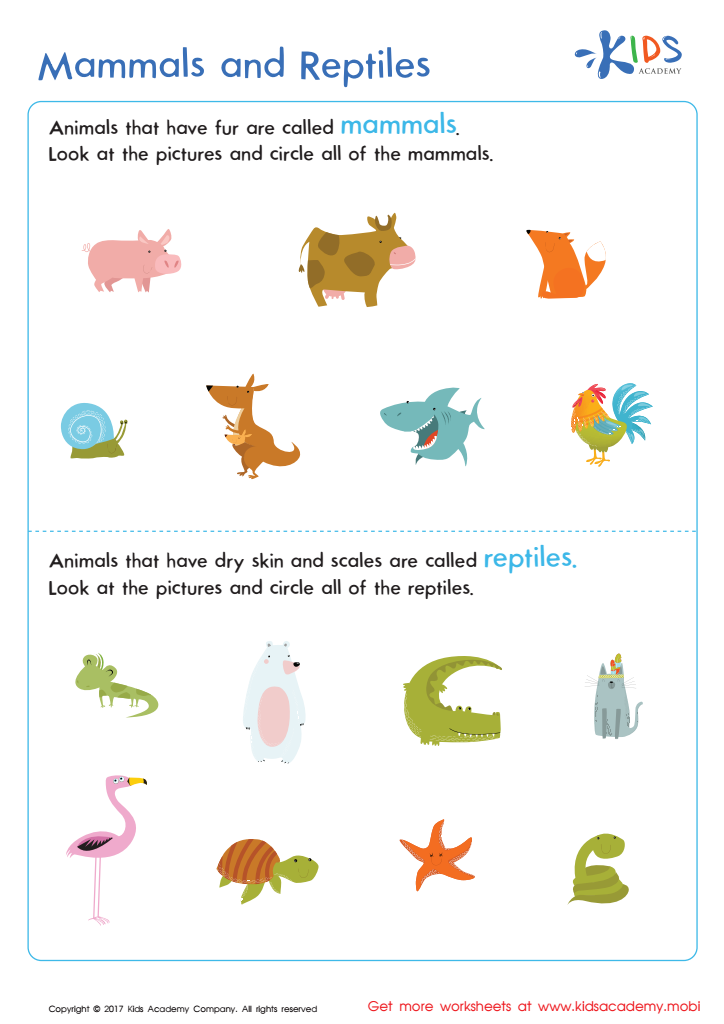
Mammals and Reptiles Worksheet
 Assign to My Students











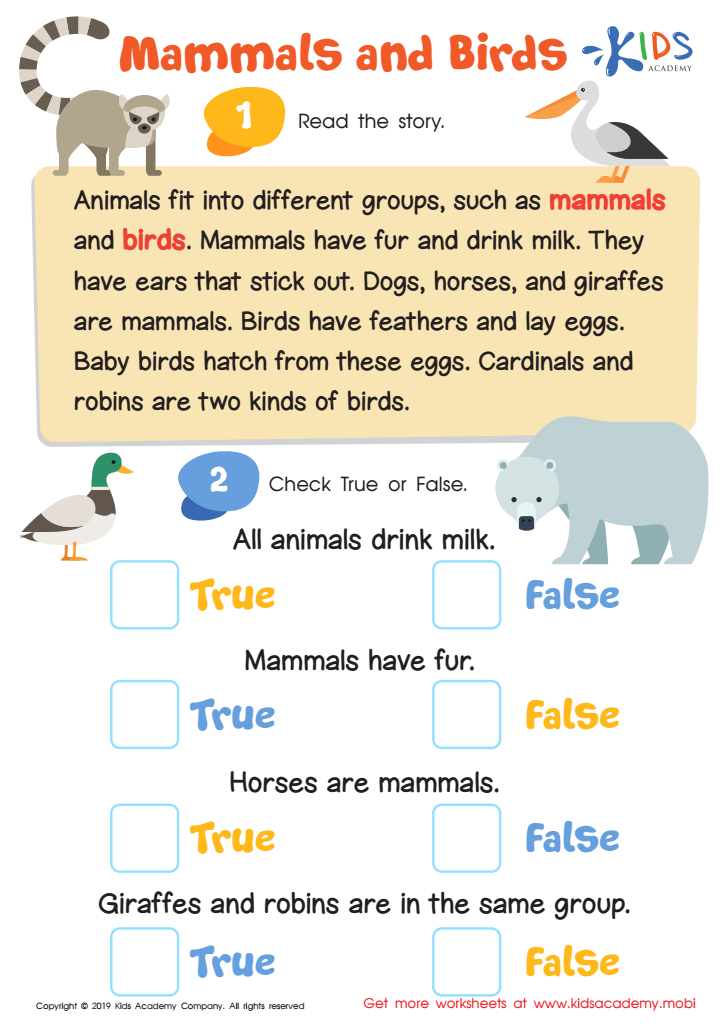
Mammals and Birds Worksheet
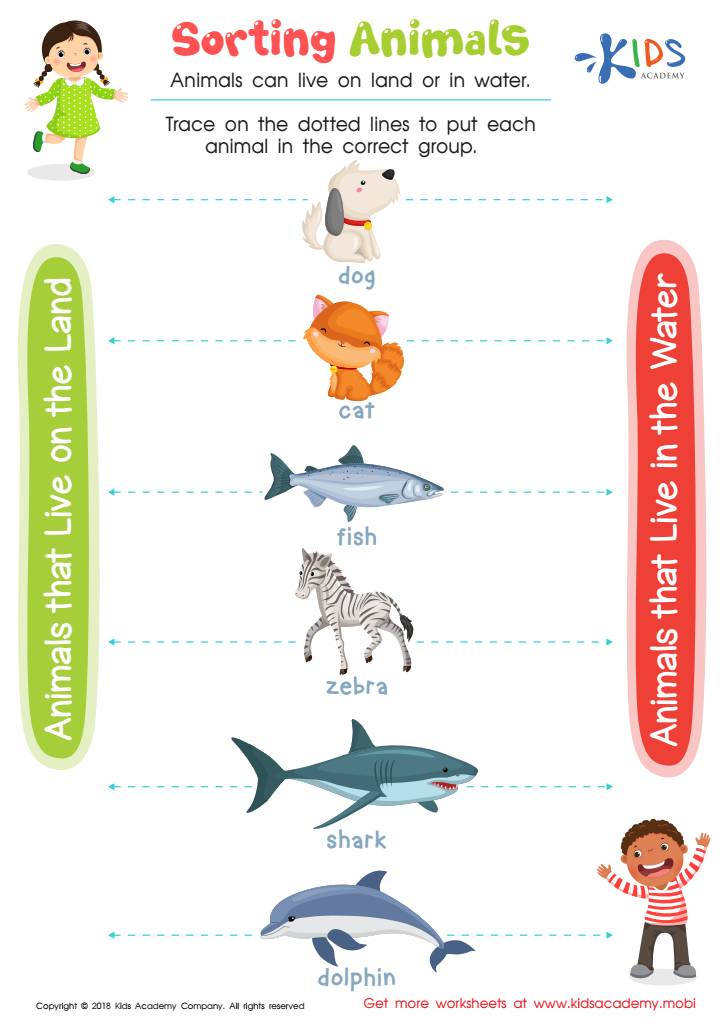
Sorting Animals Worksheet
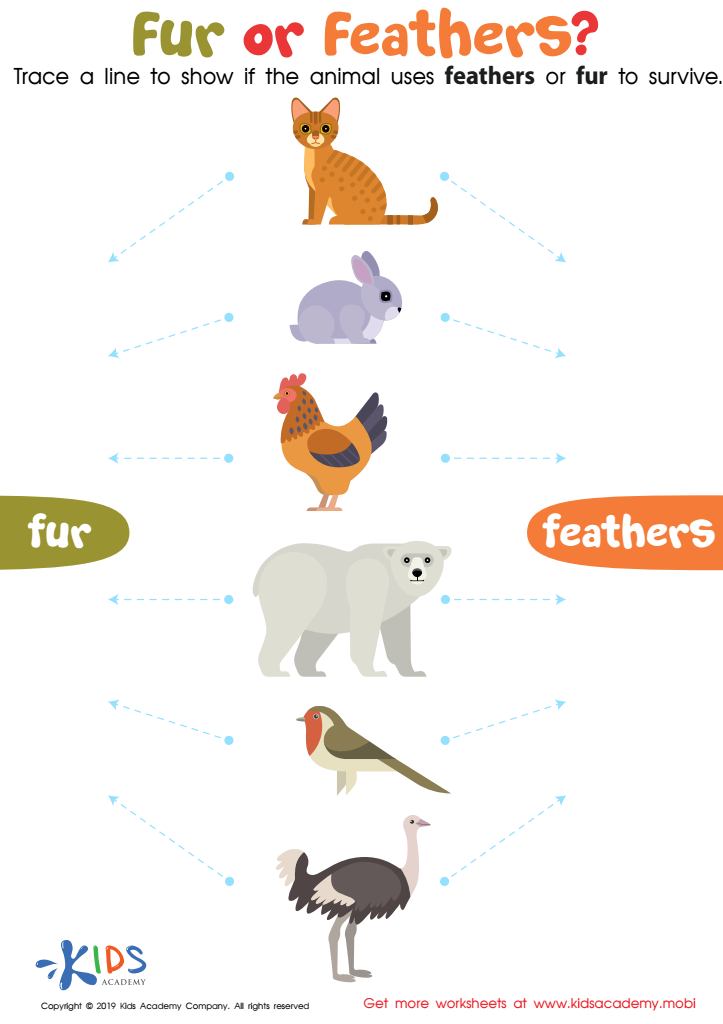
Fur or Feathers? Worksheet
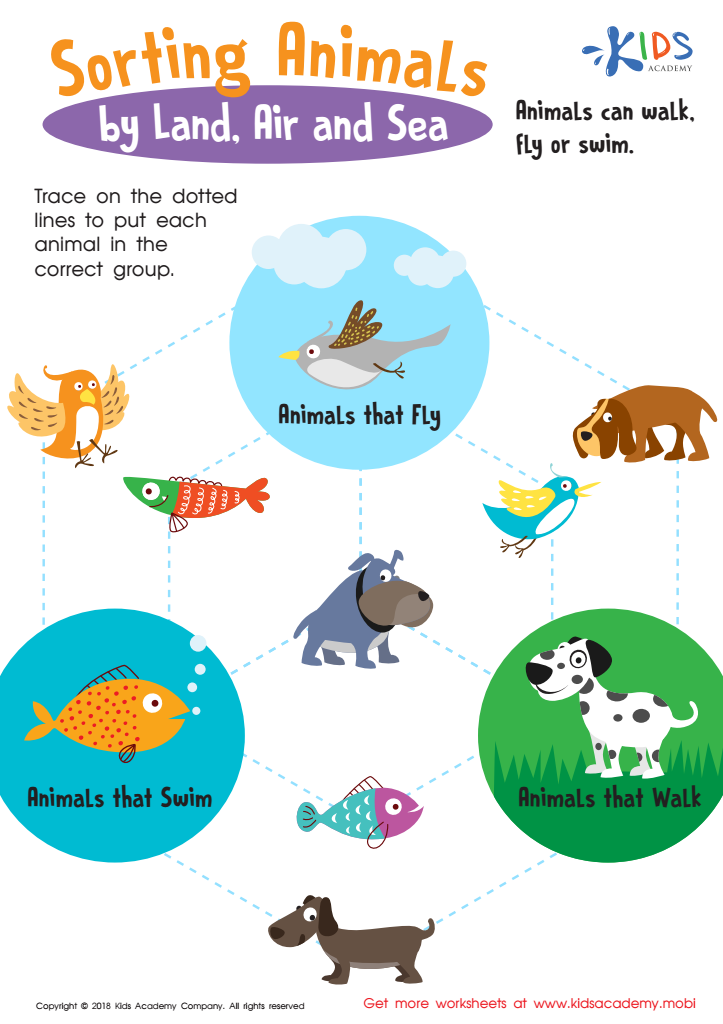
Sorting Animals by Land, Air and Sea Worksheet
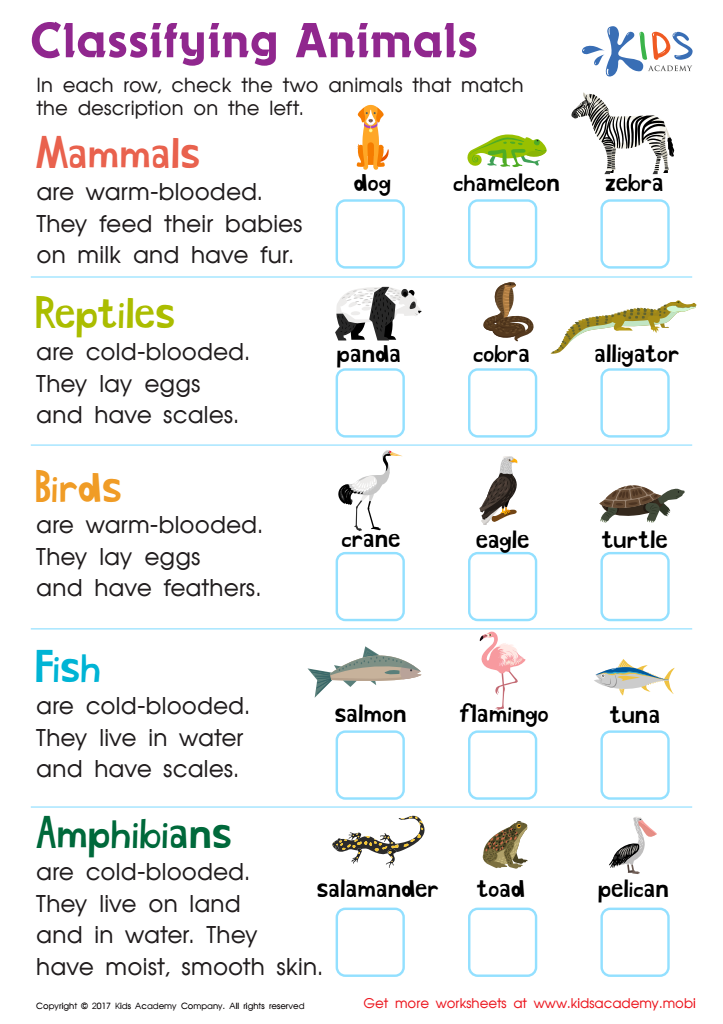
Classifying Animals Worksheet







Understanding animal classification, specifically the differences between mammals, birds, reptiles, amphibians, and fish, is crucial for children aged 4-9. Learning about these categories not only fuels a child's curiosity about the natural world but also fosters critical thinking and observation skills. Parents and teachers should care because this foundational knowledge helps children categorize and make sense of the environment around them.
Studying plants and animals develops a child’s communication skills through discussions and storytelling about various species. It also enhances their vocabulary as they learn terminology related to habitats, diets, and characteristics. Furthermore, this knowledge promotes environmental awareness, teaching children about biodiversity and the importance of conservation from an early age.
Engaging with nature and understanding animal classification can also solidify children's problem-solving abilities. As they observe animals and their behaviors, they learn to think analytically about the world.
Ultimately, fostering an interest in animals and plants supports children's overall educational development, instilling a sense of responsibility towards nature and encouraging lifelong learning. The early years are a vital stage for building this appreciation, and adults play an essential role in guiding these explorations.







