Critical Thinking Normal Geography Worksheets for Ages 4-9
4 filtered results
-
From - To
Enhance your child's learning experience with our "Critical Thinking Normal Geography Worksheets" designed for ages 4-9. These worksheets foster essential cognitive skills by encouraging young learners to analyze, compare, and interpret geographical concepts. Each exercise promotes curiosity about the world, challenging children to think critically about maps, landforms, and cultural diversity. Ideal for at-home learning or classroom use, our engaging content ensures that kids grasp foundational geography while developing problem-solving skills. With vibrant illustrations and age-appropriate challenges, these worksheets make learning fun and interactive, helping your child build confidence in their critical thinking and geography knowledge! Start exploring today!
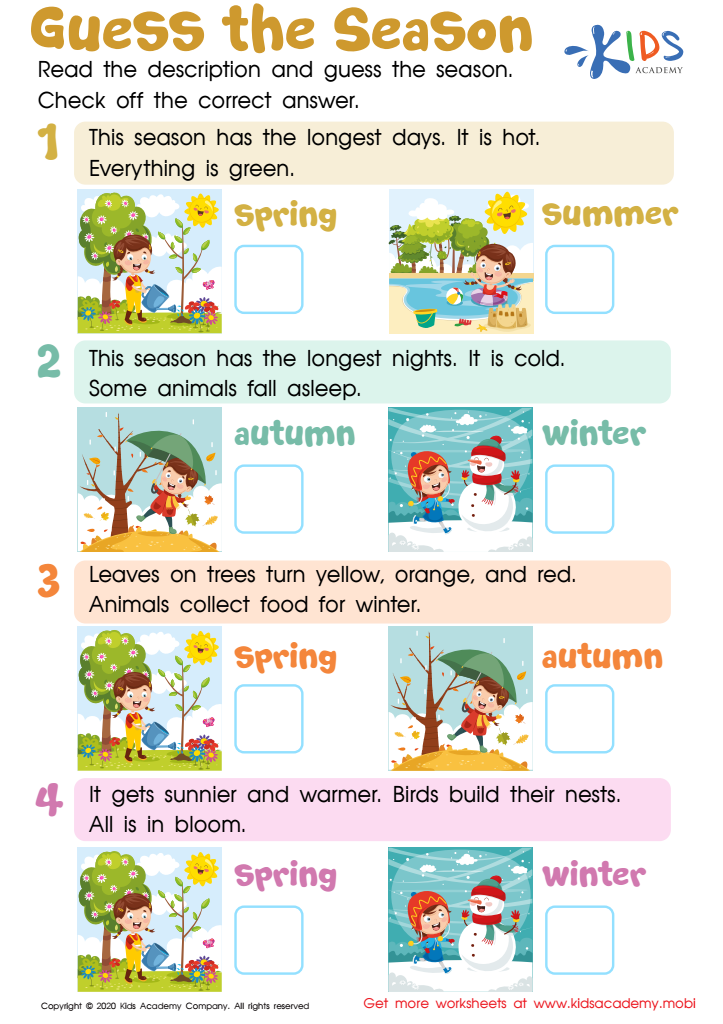
Guess the Season Worksheet
 Assign to My Students
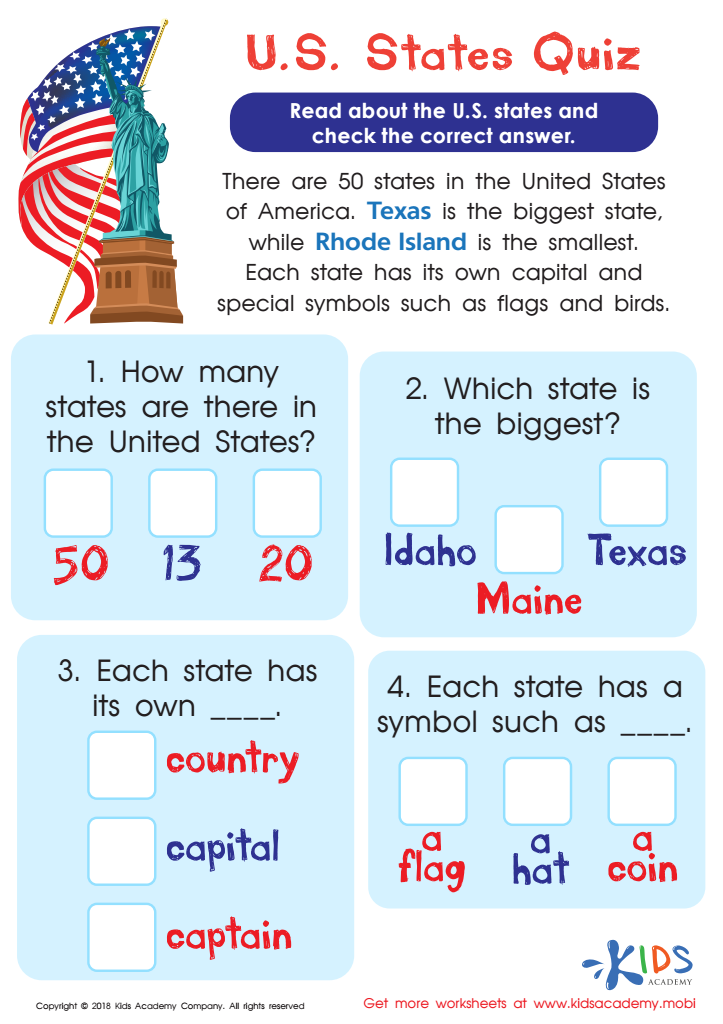
U.S. States Quiz Worksheet
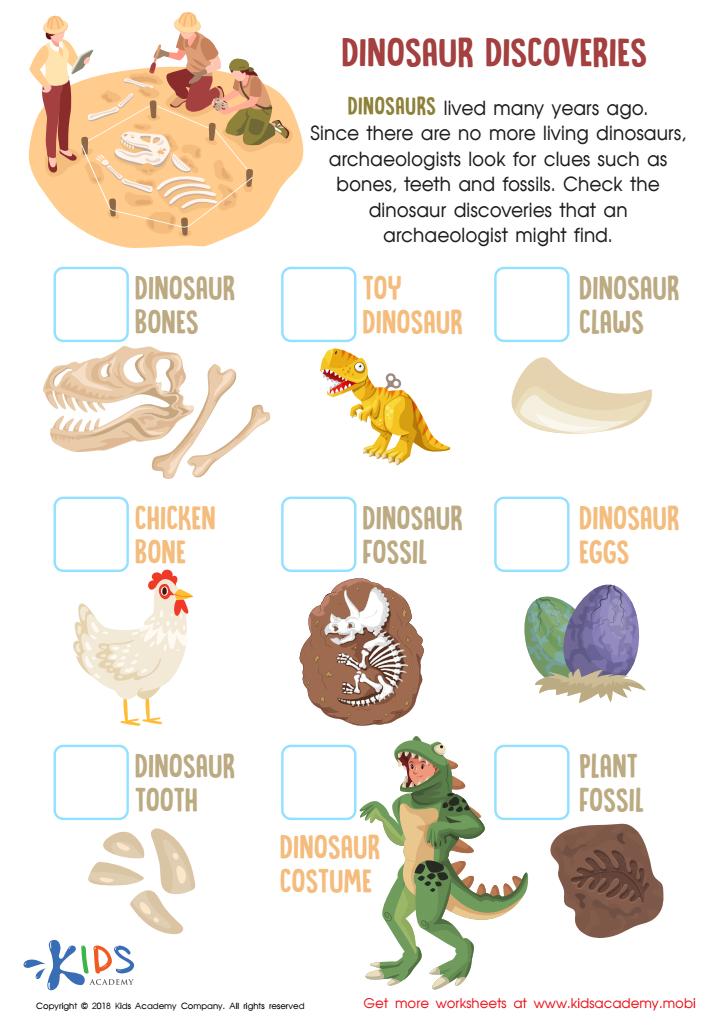
Dinosaur Discoveries Worksheet
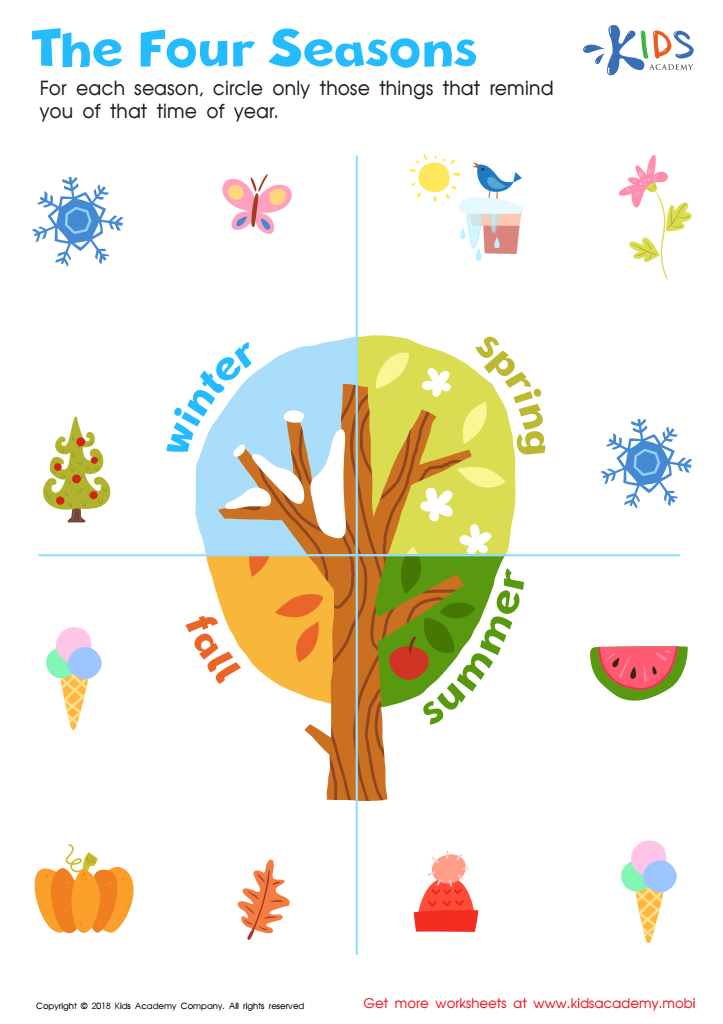
The Four Seasons Worksheet






Parents and teachers should prioritize critical thinking in normal geography for children aged 4-9, as it fosters essential cognitive skills that support lifelong learning. During this developmental stage, children are naturally curious about their environment and the world around them. By engaging them in critical thinking activities related to geography, such as analyzing maps, understanding ecosystems, or exploring cultures, we enable them to ask questions, make connections, and draw conclusions.
Encouraging critical thinking helps children develop problem-solving abilities and enhances their creativity. Rather than simply memorizing facts or rote learning, engaging with geographical concepts allows children to explore scenarios, evaluate evidence, and reason through challenges. This active engagement cultivates a sense of agency and encourages children to think independently.
Furthermore, critical thinking in geography correlates with broader educational goals. It aligns with developing social awareness and empathy as children learn about diverse cultures and environments, promoting global citizenship. When children understand the complexities of the world, they are better equipped to face societal issues. Therefore, integrating critical thinking in early geography education not only enriches children’s knowledge but also prepares them to navigate the complexities of the world as informed, thoughtful individuals.