Geography skills Normal Geography Worksheets for Ages 4-9
3 filtered results
-
From - To
Explore our "Geography Skills Normal Geography Worksheets" designed for children aged 4-9! These engaging and interactive worksheets help young learners develop essential geography skills in a fun and approachable way. From identifying continents and countries to understanding maps and natural features, these resources make learning enjoyable. Our worksheets are tailored to different learning levels, ensuring every child can thrive as they discover the world around them. Perfect for classroom or home education, our Geography Skills worksheets foster a love for social studies while building foundational knowledge. Download and enhance your child's geography skills today!
 Assign to My Students
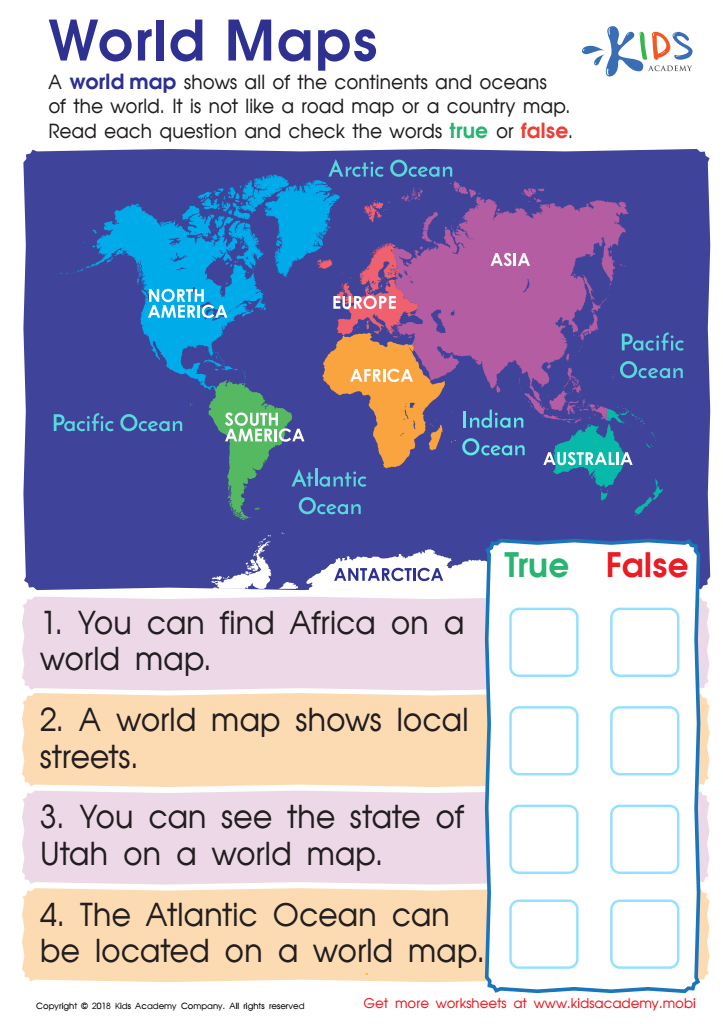
World Maps Worksheet
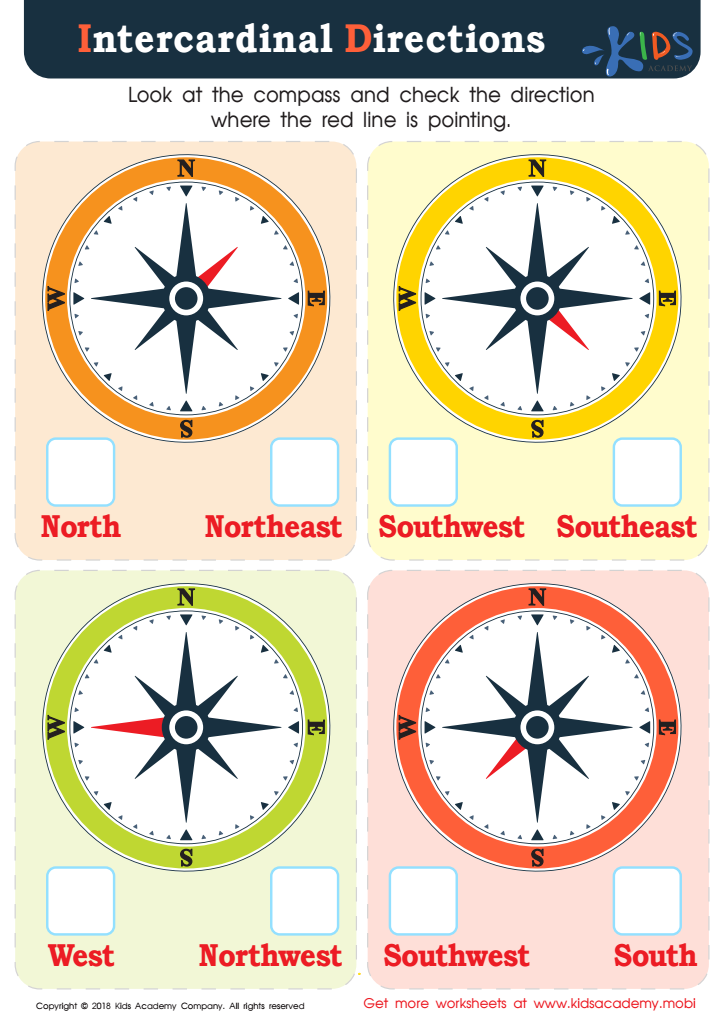
Intercardinal Directions Worksheet





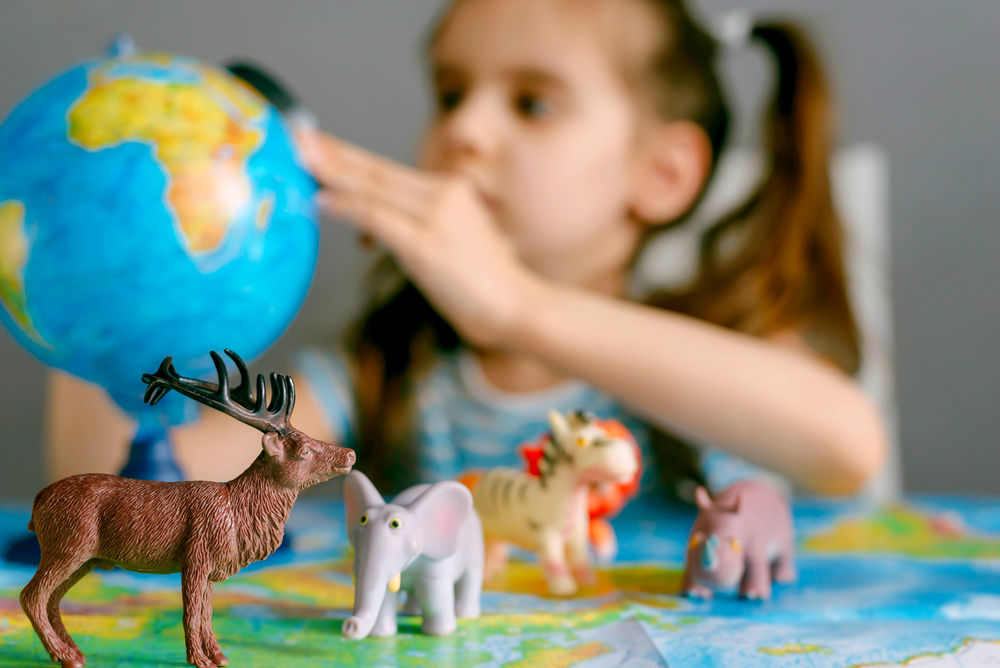

Parents and teachers should prioritize geography skills for children aged 4-9 because they lay the foundation for critical thinking, cultural awareness, and environmental understanding. At this formative age, children are naturally curious about their surroundings. Exploring geography can ignite their interest in the world, nurturing a sense of wonder and adventure.
Learning basic geography helps children develop spatial awareness, enabling them to navigate their environment and understand how places relate to one another. This skill is crucial not only for academic success but also for fostering independence and confidence in daily life. As children learn about different countries, cultures, and traditions, they build empathy and appreciation for diversity, promoting social cohesion in our increasingly globalized society.
Furthermore, geography education encourages environmental stewardship. By understanding concepts like ecosystems and natural resources, children realize their connection to the planet and the importance of sustainability. These insights can motivate them to become responsible citizens who care for their local and global communities.
In sum, geography skills empower young learners with essential life tools and knowledge, shaping them into informed individuals ready to engage with the complex world around them. The development of these skills is crucial at an early age, fostering lifelong curiosity and empathy.