Vocabulary expansion Normal Geography Worksheets for Ages 4-9
3 filtered results
-
From - To
Enhance your child's understanding of geography with our engaging Vocabulary Expansion Normal Geography Worksheets, tailored for ages 4-9! These worksheets offer a fun and interactive way for young learners to build their vocabulary while exploring key geographical concepts. Each activity is designed to stimulate curiosity and comprehension, featuring colorful illustrations and age-appropriate language. By incorporating essential terminology related to maps, continents, and cultures, children will develop a solid foundation in geography. Perfect for parents and educators alike, these worksheets encourage learning through play and creativity, making geography an exciting adventure for every child. Unlock their potential and promote a love for learning today!
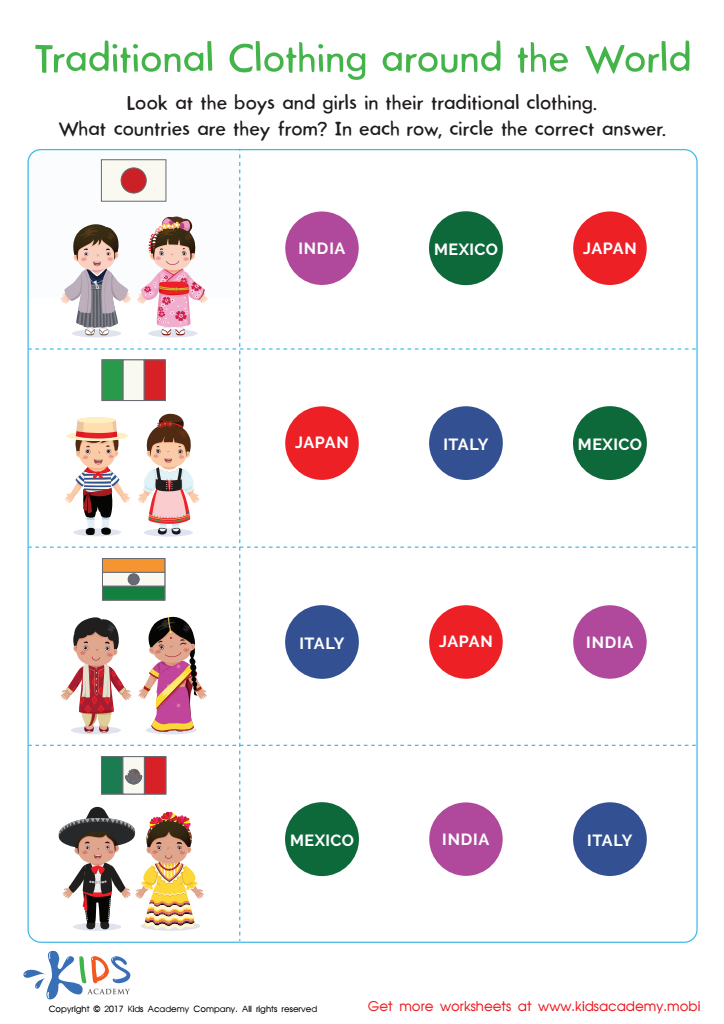
Traditional Clothing Worksheet
 Assign to My Students
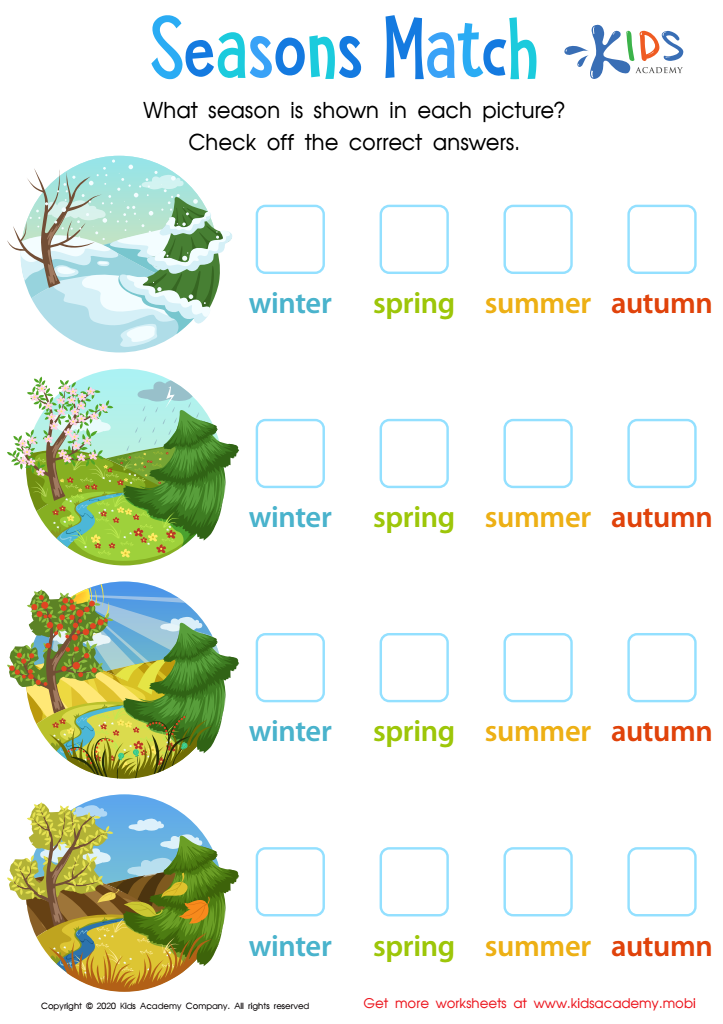
Seasons Match Worksheet
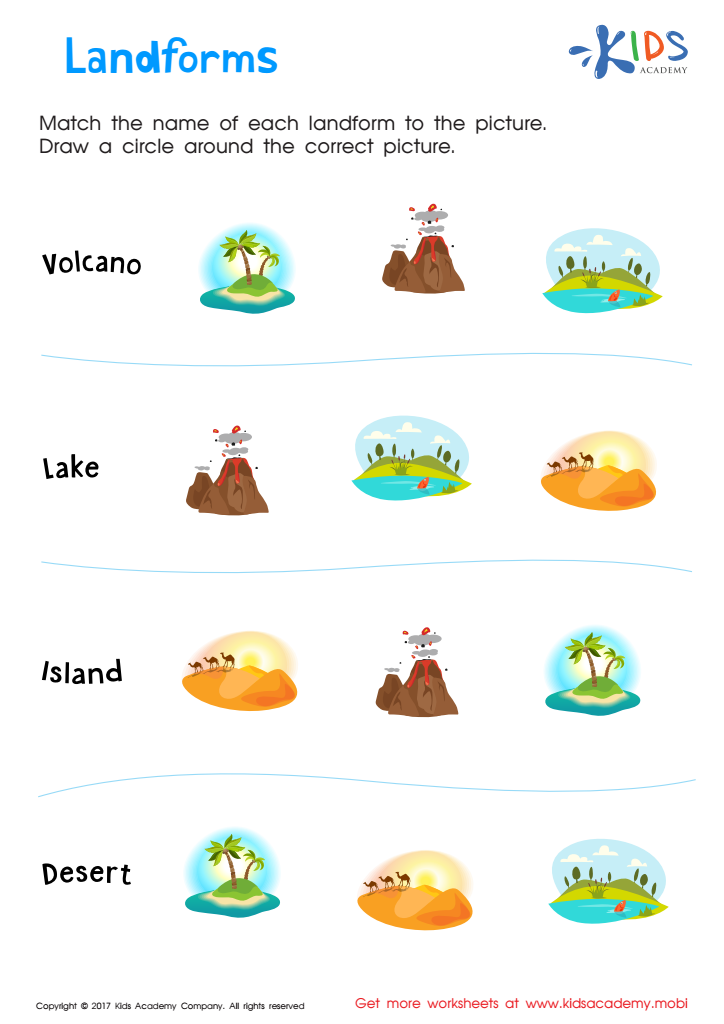
Landforms Printable






Vocabulary expansion in geography for children aged 4-9 is crucial for several reasons. First, a well-developed vocabulary enhances children's ability to describe the world around them. As they learn geographical terms, they become more adept at expressing ideas related to locations, features, and cultures, thus improving their overall communication skills.
Moreover, a rich vocabulary supports literacy. Children who understand geographic language are more likely to comprehend texts, which fosters a love for reading and learning. This, in turn, helps build a strong foundation for future academic success.
Teaching geographical vocabulary also encourages curiosity about the world. With an expanded vocabulary, children are equipped to engage with diverse topics, fostering critical thinking and problem-solving skills. They learn to appreciate different cultures and environments, which enhances empathy and global awareness.
Furthermore, early exposure to geographical terms can spark interest in subjects like science, history, and environmental studies. This cross-disciplinary understanding is essential for developing informed, conscientious citizens.
In summary, vocabulary expansion in geography empowers children not only academically but also socially and culturally. Parents and teachers have a vital role in facilitating this learning, ensuring that children grow into informed individuals ready to navigate an increasingly globalized world.