Cultural awareness Normal Governance and Civics Worksheets for Ages 4-9
3 filtered results
-
From - To
Explore our engaging "Cultural Awareness Normal Governance and Civics Worksheets" designed for children aged 4-9. These thoughtfully crafted worksheets introduce young learners to essential concepts of governance, civics, and cultural awareness. Through fun activities, kids will discover the importance of empathy, respect, and understanding different cultures. Our resources promote critical thinking and help children recognize their roles within a community. Perfect for classrooms or at-home learning, these worksheets encourage interactive learning experiences while fostering a sense of belonging and civic responsibility. Dive into our collection and equip your child with knowledge about our diverse world!
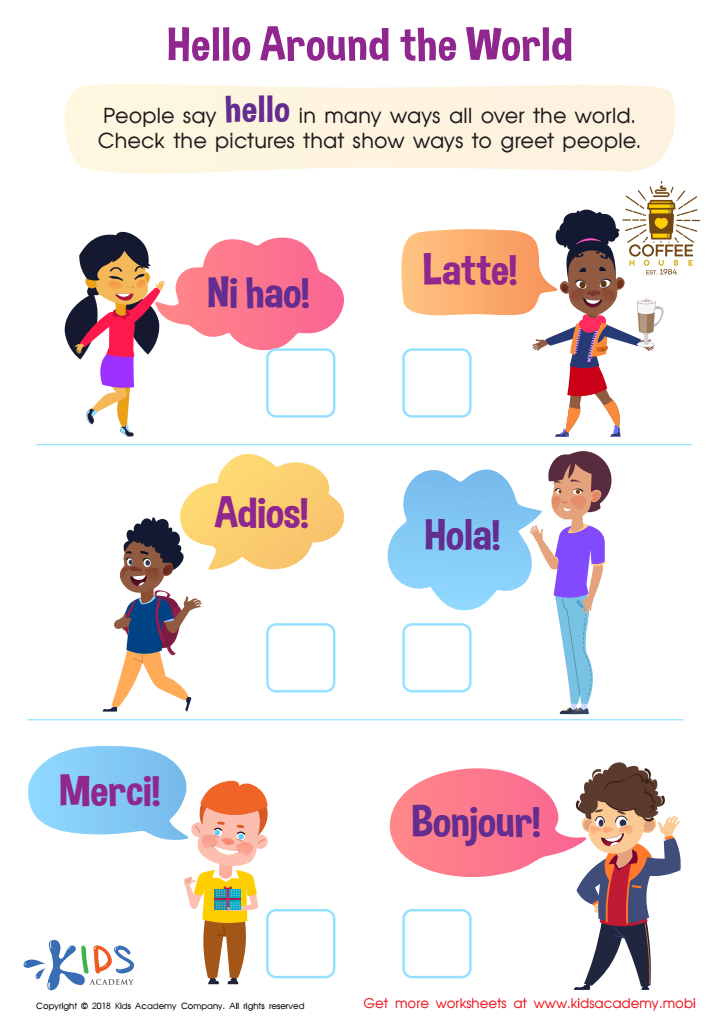
Hello Around the World Worksheet
 Assign to My Students
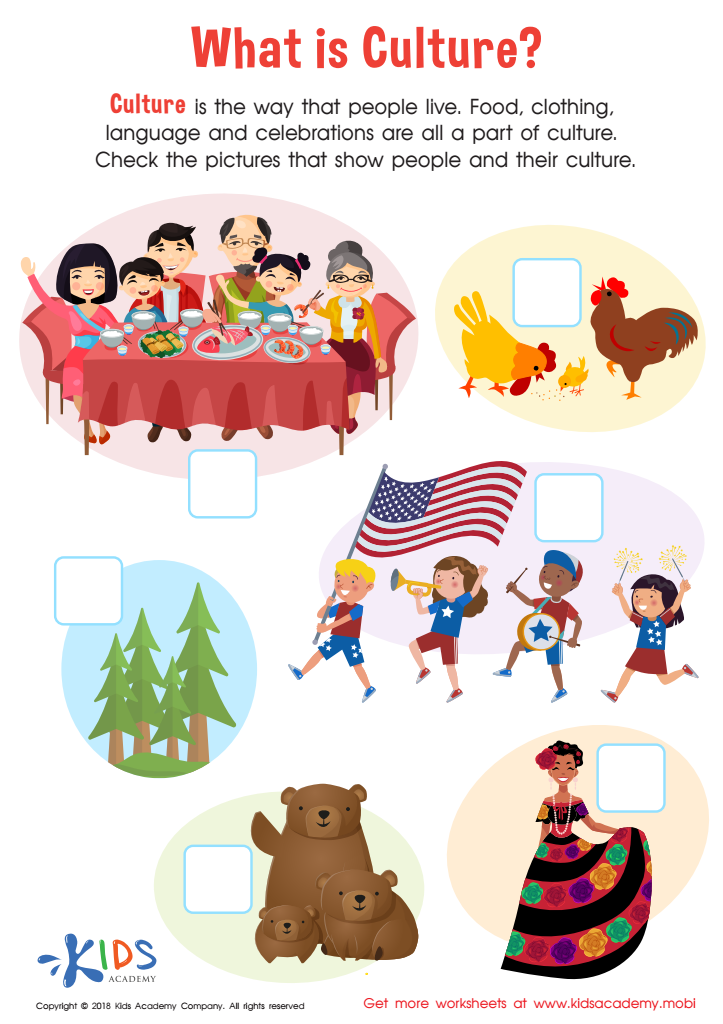
What Is Culture? Worksheet
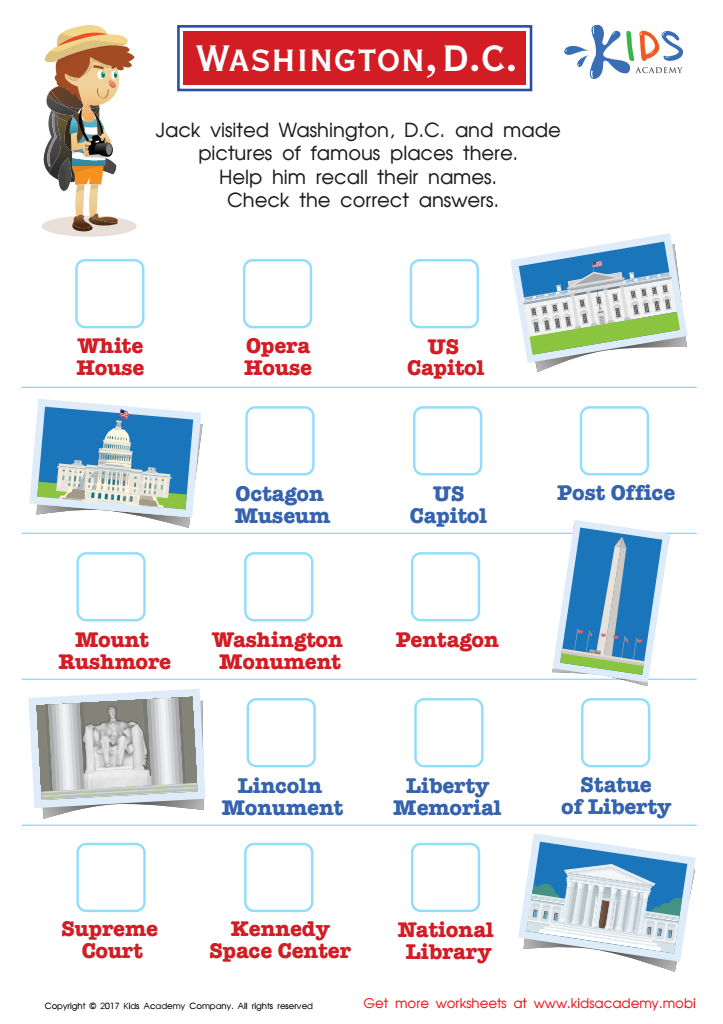
Washington D.C. Printable Worksheet


Cultural awareness, normal governance, and civics are essential components of a well-rounded education for children aged 4-9. At this developmental stage, children are curious and eager to understand the world around them. Teaching them about different cultures fosters respect, empathy, and appreciation for diversity, which can help combat prejudice and stereotypes from an early age. Understanding various cultural practices encourages children to engage meaningfully with peers from different backgrounds.
Incorporating normal governance introduces young learners to the basic principles of community and cooperation. By understanding rules, rights, and responsibilities, children begin to develop essential decision-making skills and moral reasoning. This foundation not only helps them navigate social environments but also sets the stage for positive civic engagement later in life.
Civics education nurtures active participation; it instills a sense of community involvement and responsibility. When children learn about community helpers, voting, and civic responsibilities, they are more likely to grow into conscientious citizens.
Overall, parents and teachers should prioritize cultural awareness, governance, and civics to equip children with the tools they need for respectful collaboration, informed decision-making, and active participation in a diverse society. This holistic approach contributes to their social, emotional, and intellectual development.








