Understanding seasons Normal Social Studies Worksheets for Ages 4-9
4 filtered results
-
From - To
Discover our "Understanding Seasons" social studies worksheets designed specifically for children aged 4-9. These engaging activities help young learners explore the four seasons—spring, summer, fall, and winter—through fun and interactive exercises. Each worksheet promotes critical thinking and creativity, allowing kids to identify seasonal changes, weather patterns, and related vocabulary. Perfect for home or classroom use, our materials foster an appreciation for the natural world while reinforcing essential social studies skills. With colorful illustrations and age-appropriate challenges, your students will enjoy developing their knowledge about seasons in a playful and educational way. Start exploring the wonders of nature today!
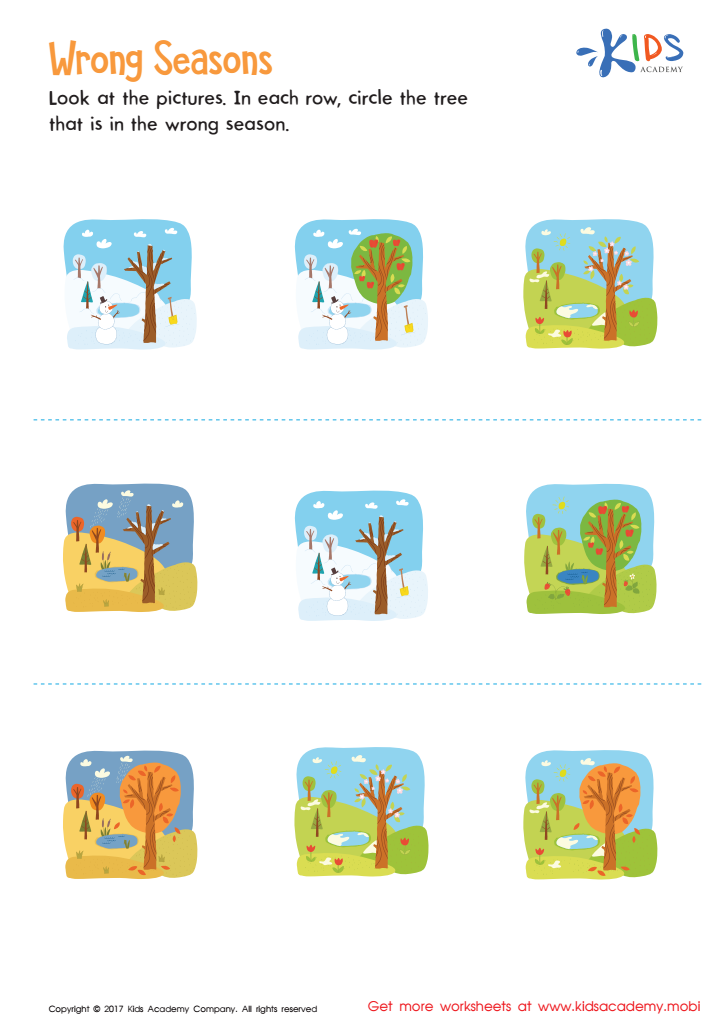
Wrong Seasons Worksheet
 Assign to My Students
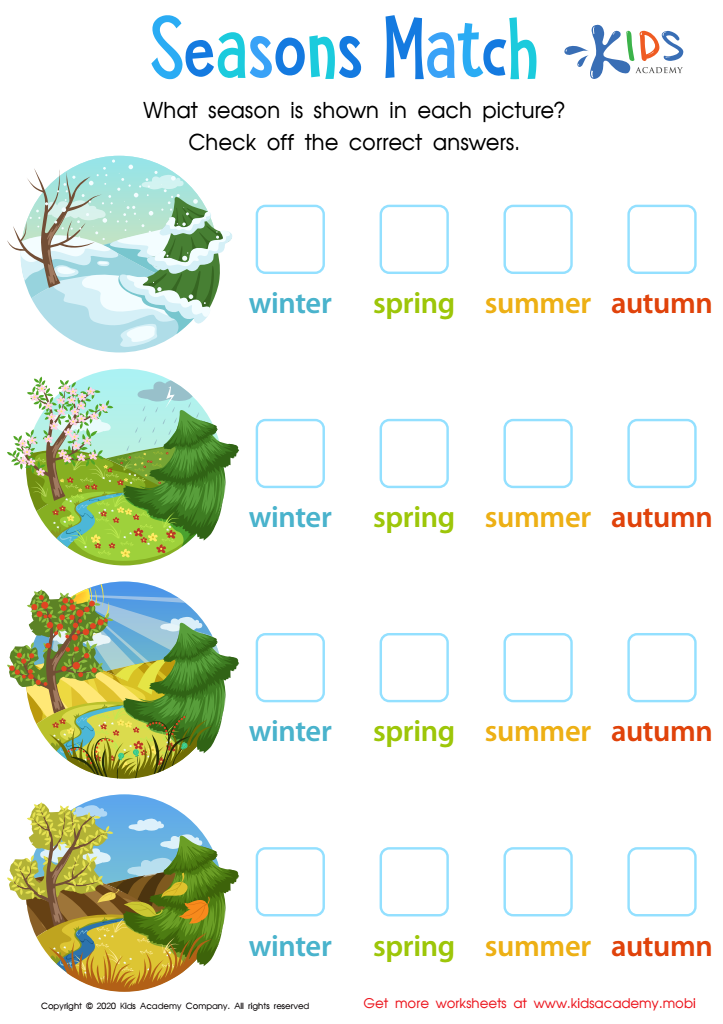
Seasons Match Worksheet
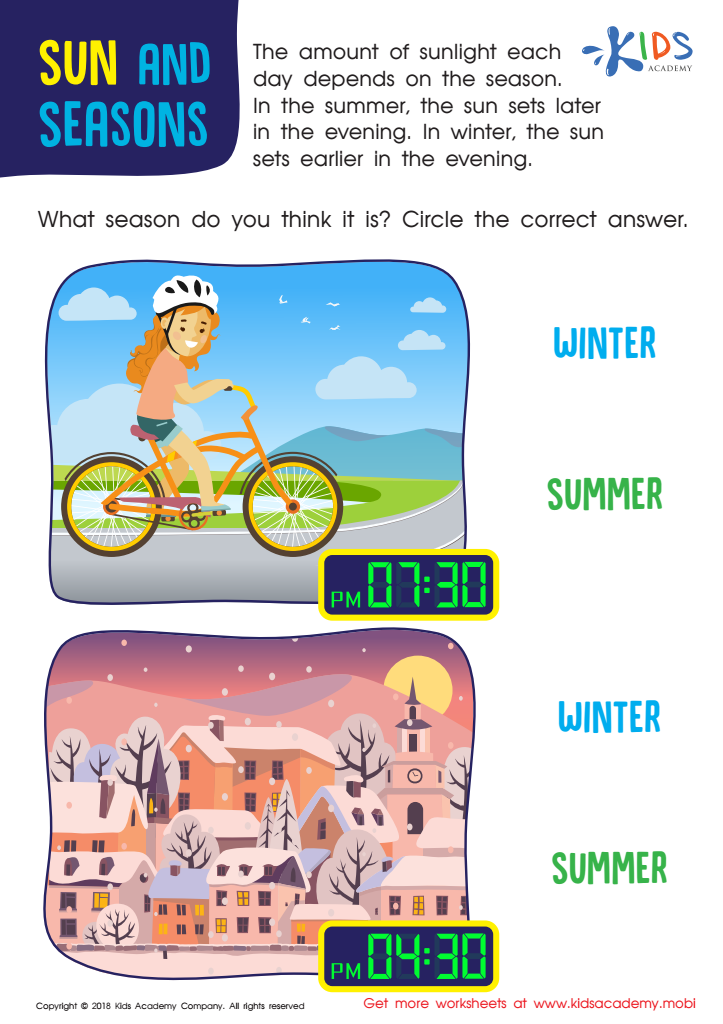
Sun and Seasons Worksheet
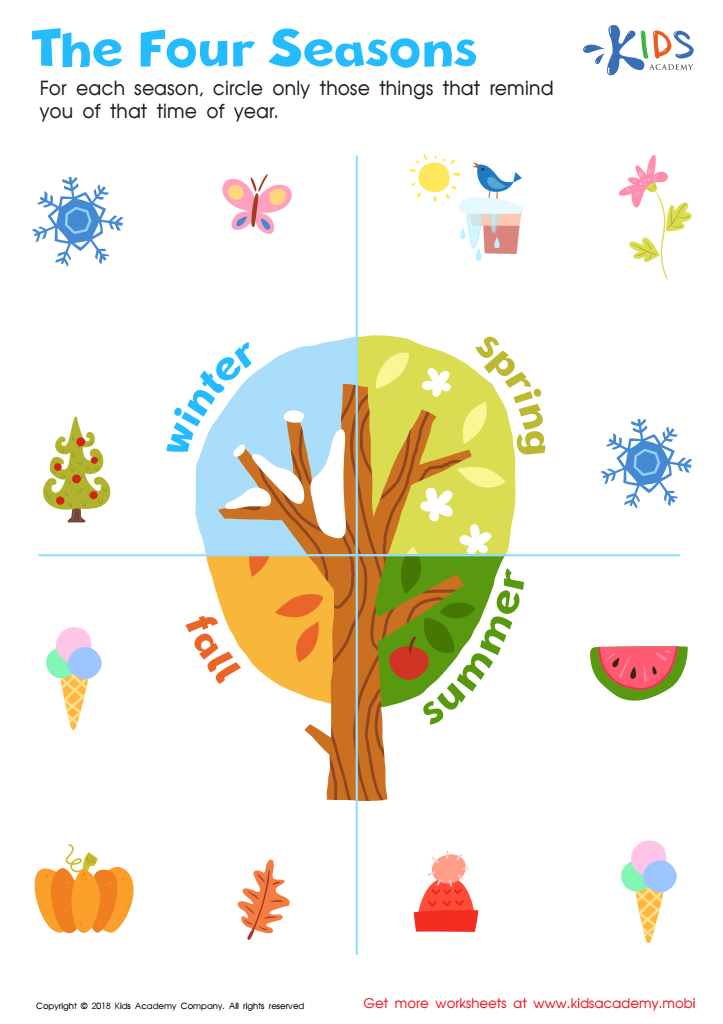
The Four Seasons Worksheet







Understanding seasons is crucial for young learners aged 4-9, as it shapes their awareness of the world around them. In early education, sociocultural development plays a significant role, and seasons are integral to this learning. They offer a way for parents and teachers to introduce children to fundamental concepts of time, change, and the environment in an engaging manner.
Pre-schoolers and early elementary students exhibit curiosity, making this a prime opportunity to teach them about the cyclical nature of seasons—spring, summer, fall, and winter. By highlighting seasonal changes, educators can foster observations that enhance scientific thinking and reasoning. Discussing how various activities, clothing choices, and foods change with the seasons encourages cultural awareness and helps students appreciate diversity.
Moreover, seasonal themes integrate effortlessly into cross-disciplinary learning activities involving art, stories, and science. Engaging activities—like nature walks in the fall or planting seeds in spring—make learning experiential and memorable. Parents and teachers who emphasize seasonal understanding help cultivate a well-rounded education that encourages gratitude for nature, awareness of agricultural cycles, and respect for our planet’s ecology. Ultimately, nurturing this understanding in children nurtures informed and engaged future citizens.