Weather identification Normal Weather Worksheets for Ages 4-9
3 filtered results
-
From - To
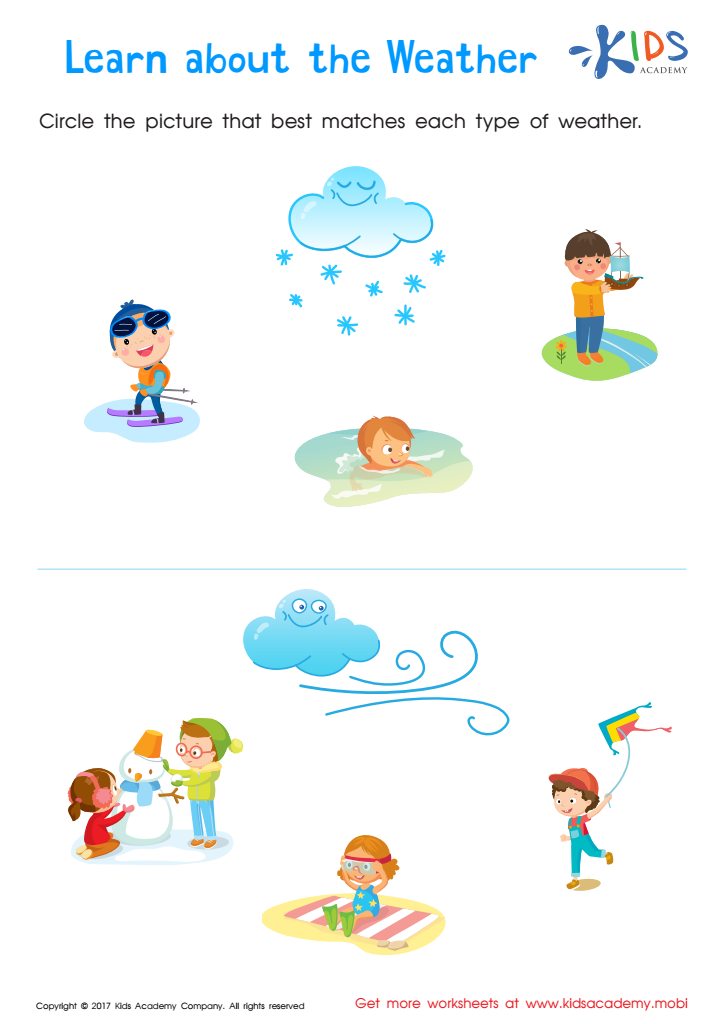
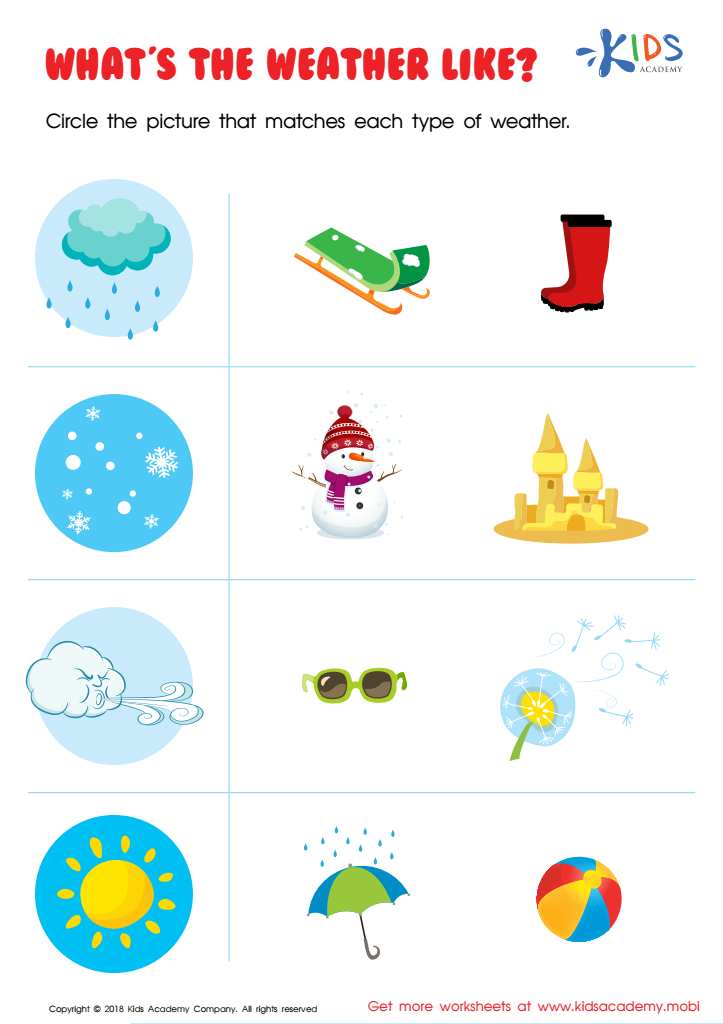
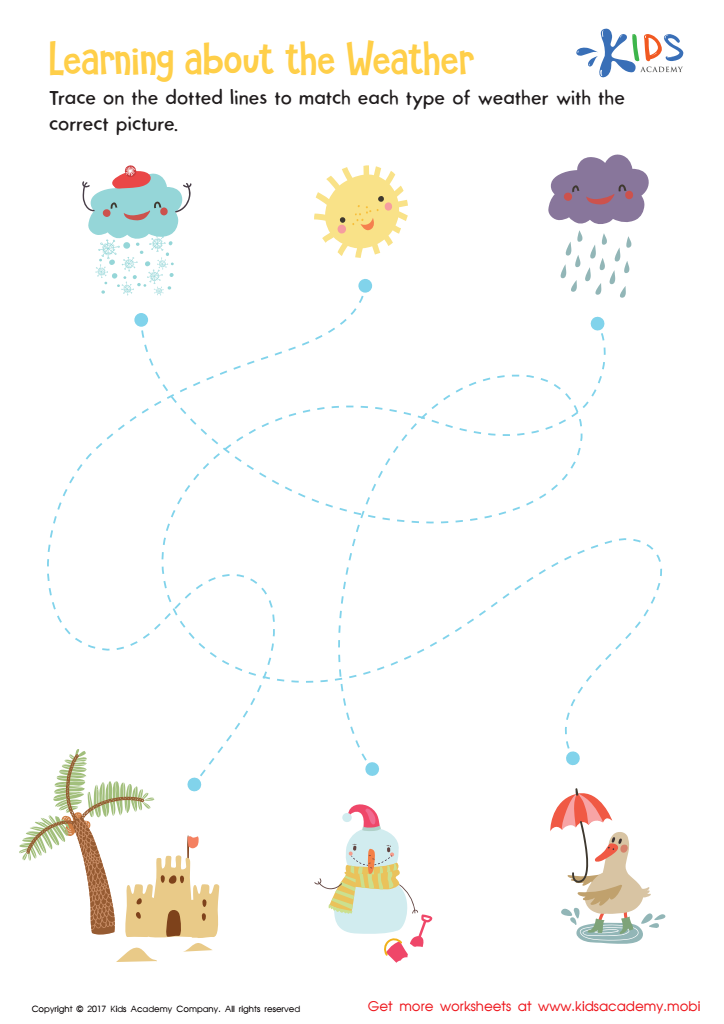
Unlock the wonders of weather with our engaging "Normal Weather Worksheets for Ages 4-9." Designed to educate and entertain, these printable resources help young learners identify and understand various weather conditions. Through fun activities, children will explore sunny, rainy, snowy, and windy days while developing essential science and observation skills. Ideal for early grades, our worksheets make learning interactive and enjoyable, fostering curiosity about the world around them. Download now and set the stage for lifelong learning about the fascinating world of weather!
About the Weather Printable
 Assign to My Students
What's the Weather Like? Worksheet


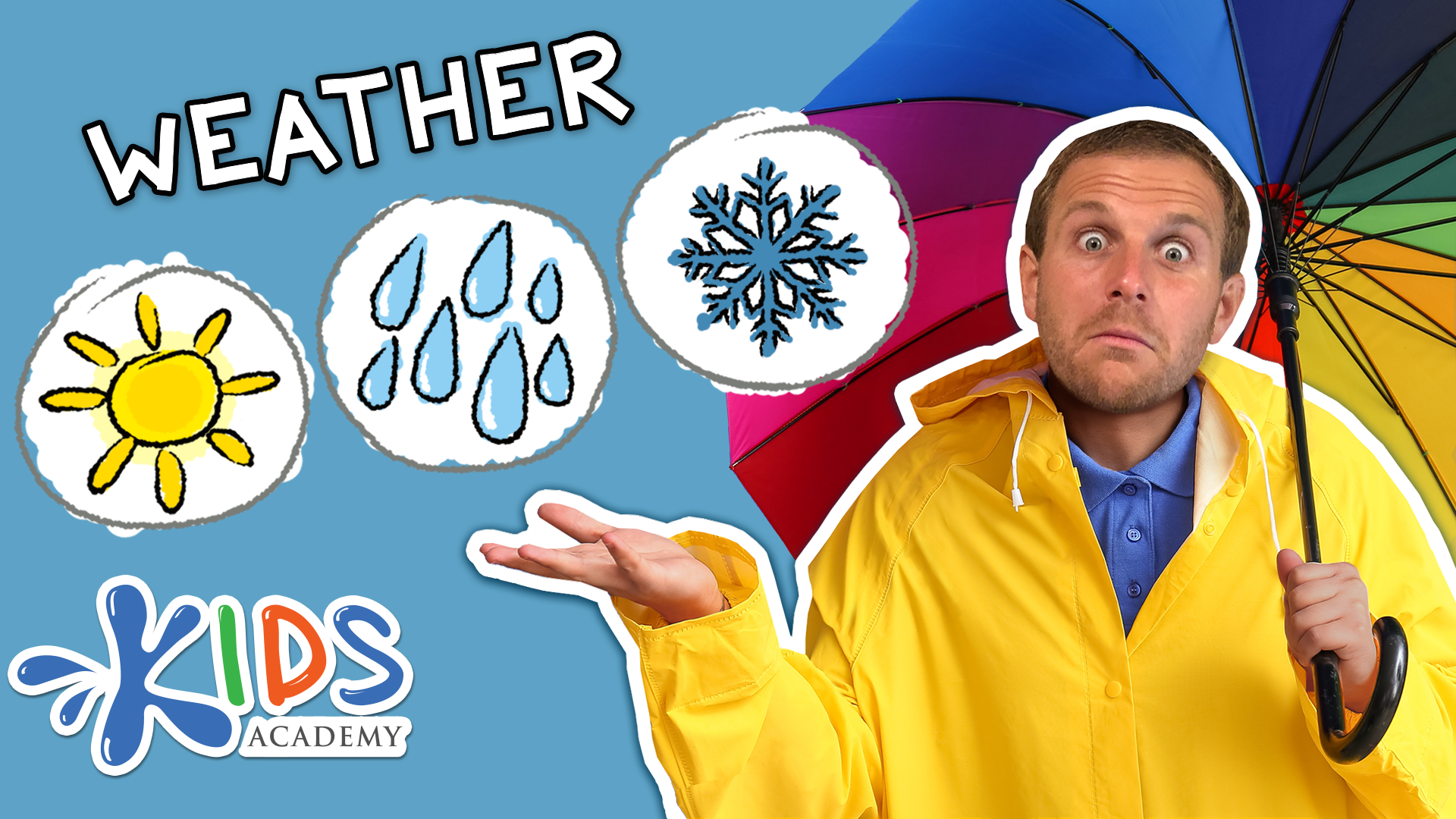





Understanding weather is important for young children because it helps them make sense of the world around them and ensure safety. For ages 4-9, recognizing normal weather patterns is not just about knowing what to wear each day—it fosters curiosity and builds foundational science knowledge.
Parents and teachers should emphasize normal weather identification because it teaches kids about daily weather changes, such as sunny, cloudy, rainy, or windy conditions. These basic observations can spark inquisitive conversations and deeper interest in the environment. Additionally, kids learn to understand and respect safety measures related to different weather conditions, like the necessity of wearing raincoats in a downpour or seeking shade on a sunny day.
From an educational perspective, weather exploration enhances vocabulary, promotes critical thinking, and integrates subjects such as math and reading. For instance, charting daily weather helps develop counting skills and recognizing patterns. It also aligns with broader curricular goals in early education, like social studies, by connecting children's immediate experiences to larger environmental systems.
Emotionally, discussing weather can offer comfort. Knowing how to identify and prepare for different types of weather reduces uncertainties, ensuring children feel more secure and attentive, whether they're playing outside during recess or traveling with their families. Thus, weather identification is a vital and enriching component of early childhood education.