Noun identification Normal Grammar Worksheets for Ages 4-9
3 filtered results
-
From - To
Discover our engaging Noun Identification Normal Grammar Worksheets designed for children ages 4-9. Our fun and interactive worksheets help young learners recognize and categorize nouns through captivating exercises and colorful illustrations. Tailored to align with early education standards, each worksheet facilitates skill development in language arts, enhancing vocabulary, comprehension, and writing abilities. Perfect for classroom activities or homeschooling, these resources make grammar lessons enjoyable and effective. Encourage your child's love for language with these thoughtfully crafted worksheets, ensuring a strong grammar foundation. Explore our collection and support your child’s learning journey today!
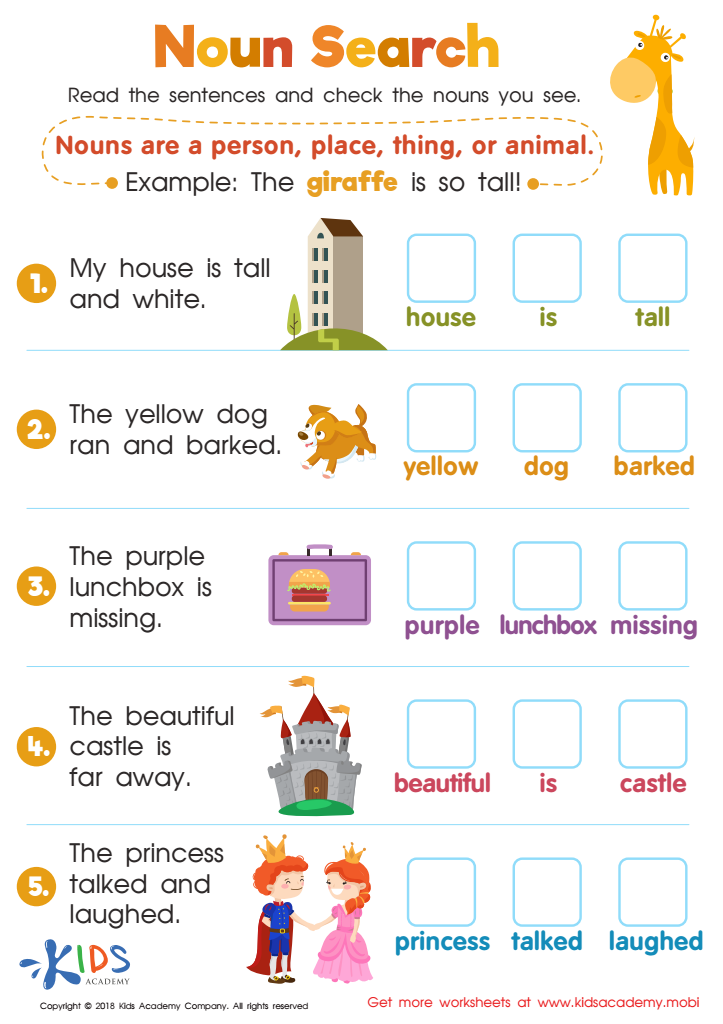
Noun Search Worksheet
 Assign to My Students
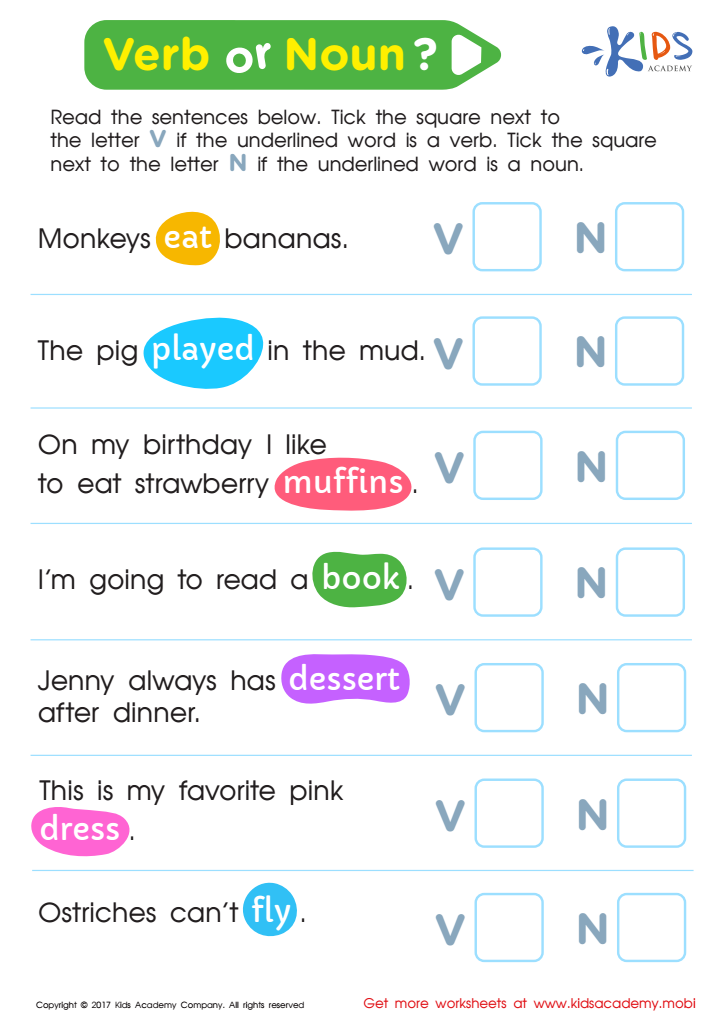
Verb or Noun Worksheet
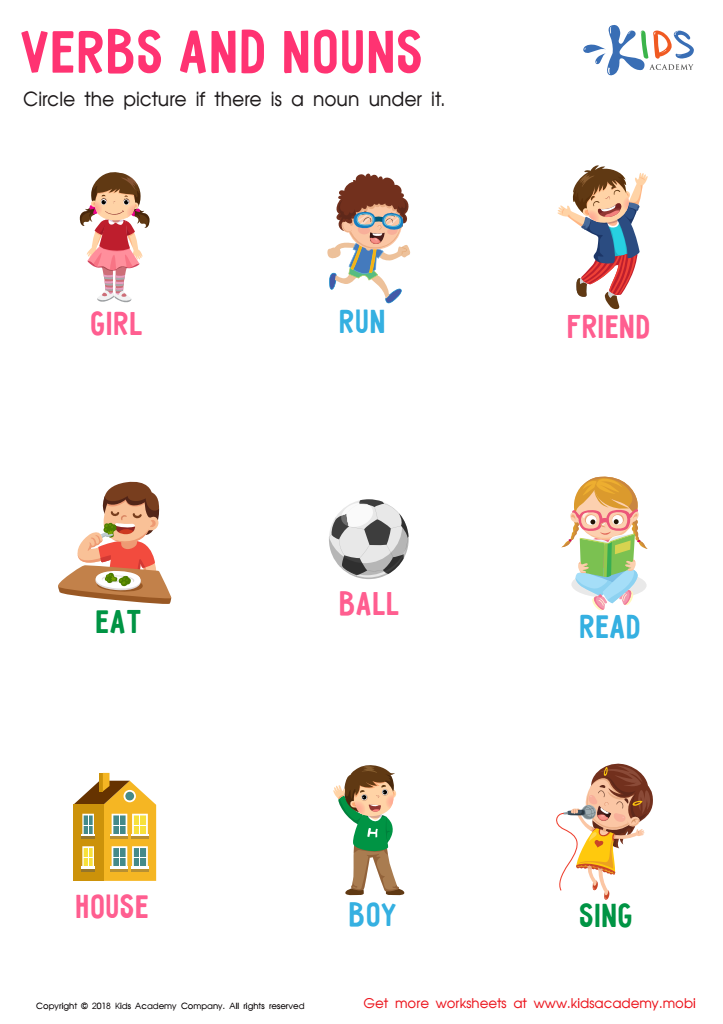
Verbs and Nouns Worksheet



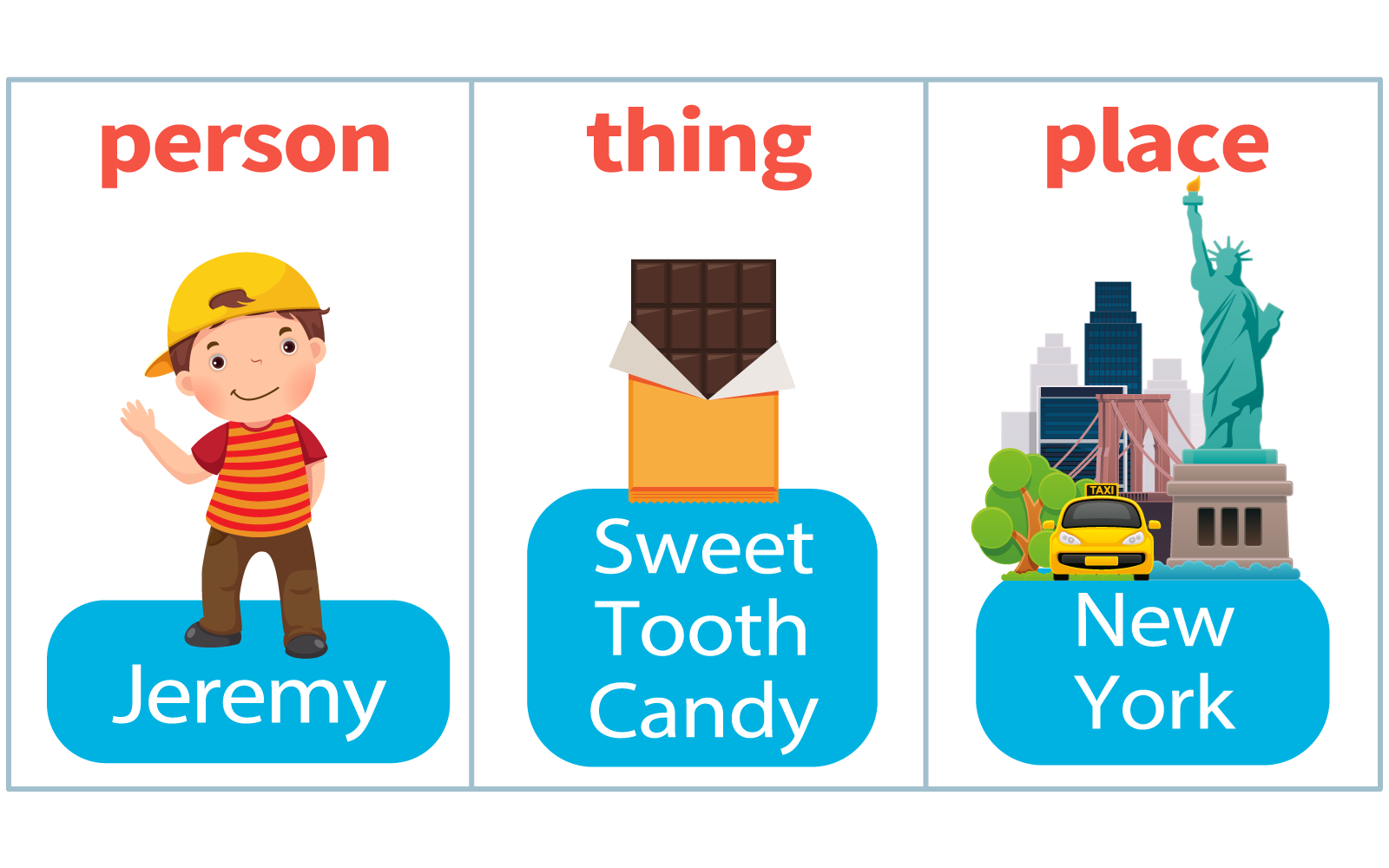

.jpg)


Understanding and identifying nouns is a fundamental aspect of grammar that lays the groundwork for effective communication and literacy in early childhood. For children aged 4-9, mastering noun identification equips them with the building blocks needed to construct meaningful sentences. This is crucial not only for their language skills but also for overall cognitive development.
When parents and teachers emphasize noun identification, they help children improve their vocabulary by recognizing and naming the people, places, things, and ideas that make up their world. Knowing nouns also aids in reading comprehension. As children learn to identify key words in sentences, they can understand and follow stories more easily.
Additionally, a solid grasp of nouns enhances writing skills. When children know how to use nouns correctly, they can more effectively describe their thoughts and experiences, making their writing clearer and more engaging.
Early mastery of noun identification leads to greater confidence in communicating, both verbally and in writing. By investing time in teaching this basic grammar skill, parents and teachers set a strong linguistic foundation that supports academic success across all subjects. Fostering these skills in early childhood builds a trajectory toward strong language abilities and better scholastic achievements.