Understanding adjectives Normal Writing Worksheets for Ages 4-9
3 filtered results
-
From - To
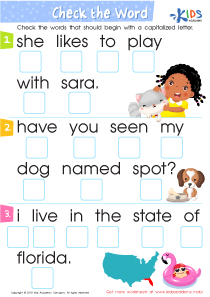
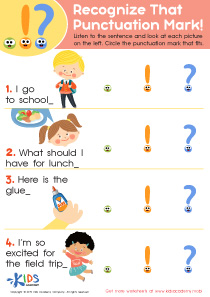
Welcome to our "Understanding Adjectives Normal Writing Worksheets" for children aged 4-9! These engaging worksheets are designed to help young learners grasp the concept of adjectives, which are essential for enhancing their writing and communication skills. Through fun activities, children will explore descriptive words, learning how to characterize nouns effectively. Our printable materials promote creativity and vocabulary expansion, making learning enjoyable. With a focus on interactive and age-appropriate exercises, these worksheets will guide your child in identifying and using adjectives in sentences. Perfect for classroom use or homeschooling, these resources will spark your child's love for language!
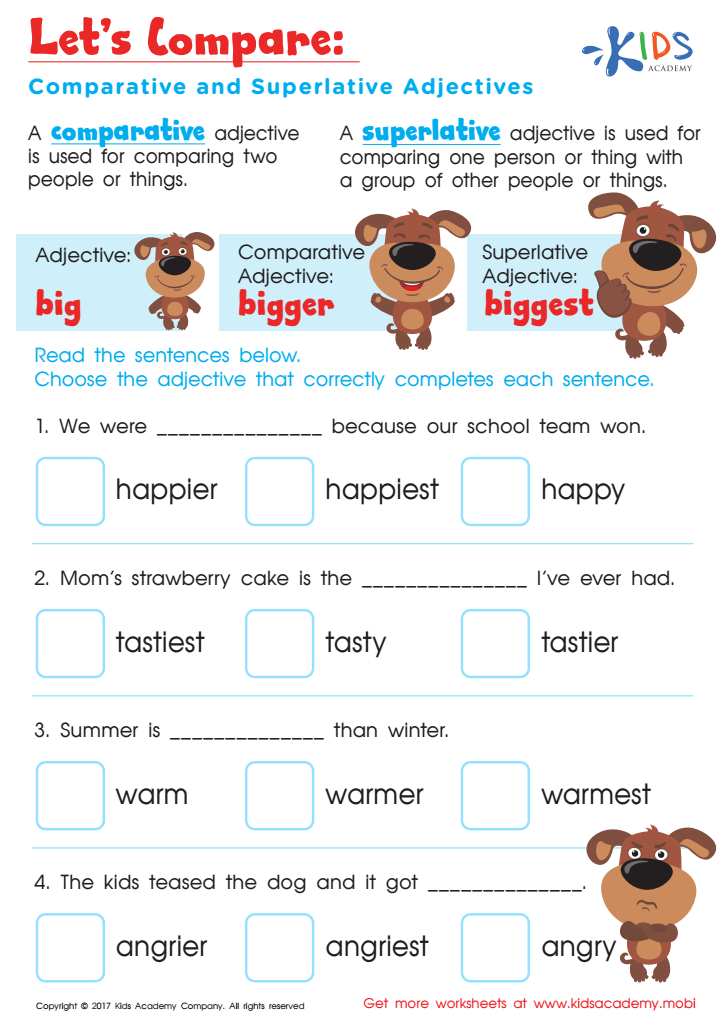
Comparative and Superlative Worksheet
 Assign to My Students
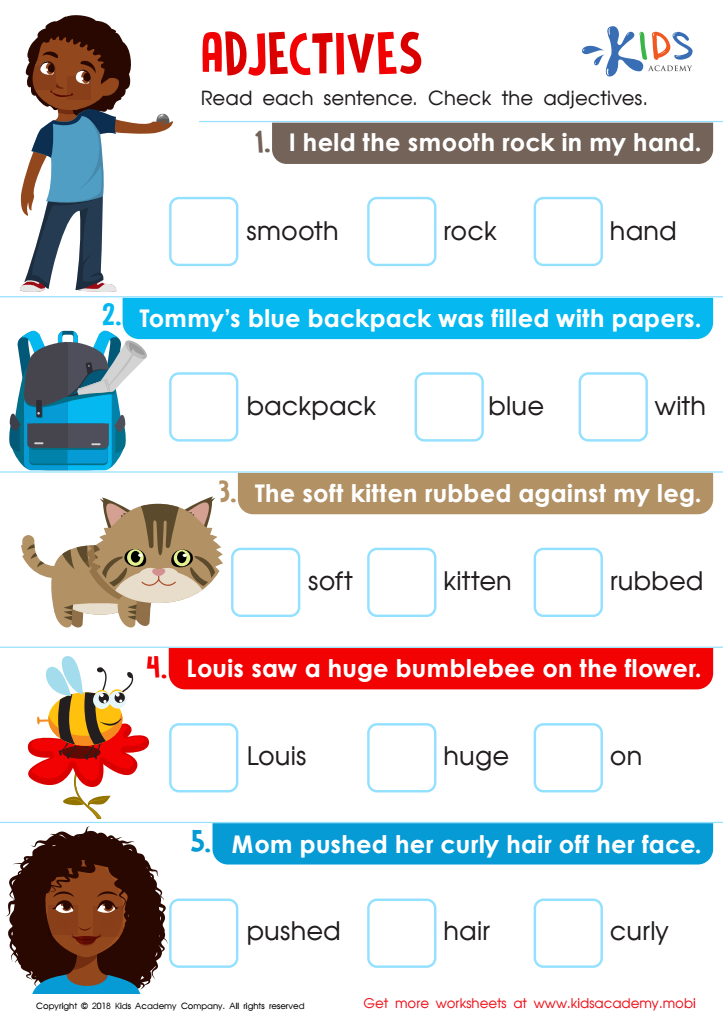
Adjectives Worksheet
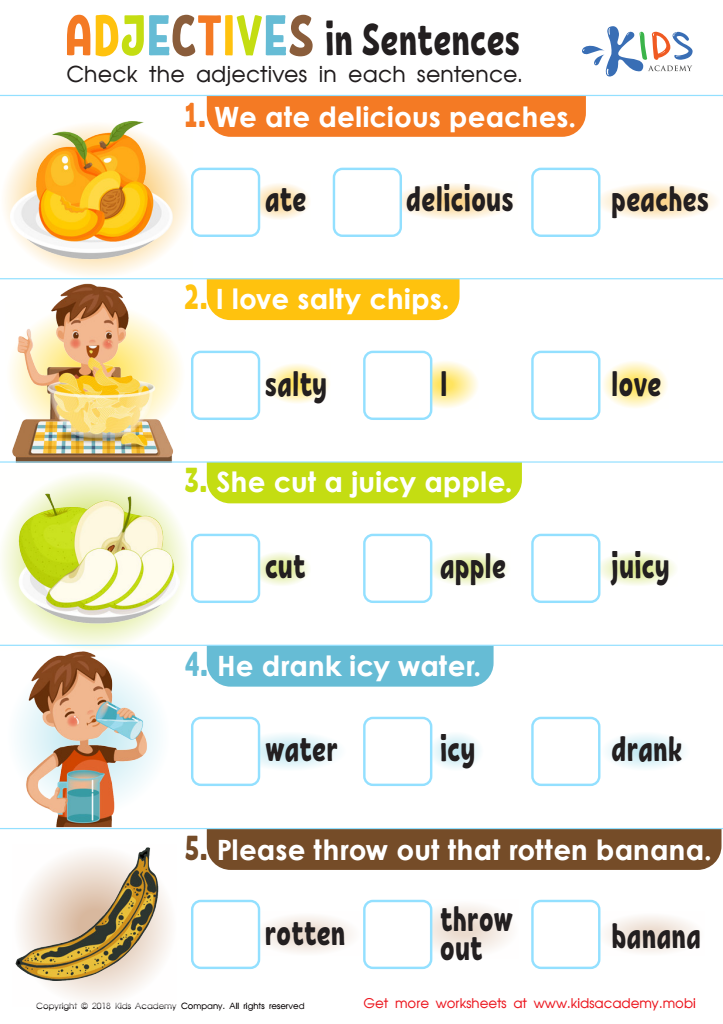
Adjectives in Sentences Worksheet








Understanding adjectives is crucial for young learners aged 4-9 as they form a vital foundation for their language development and communication skills. Adjectives help children describe and articulate their thoughts, enhancing their ability to express emotions, opinions, and narrative details more vividly. When parents and teachers nurture skills related to adjectives, they empower children to become effective communicators who can share their ideas and experiences with clarity.
Moreover, teaching adjectives encourages creativity in storytelling and imaginative play, fostering cognitive development. Children will begin to think critically about how they describe the world around them, which enhances their observation skills and comprehension ability. As they engage with literature, recognizing and using adjectives can significantly improve reading comprehension, enabling them to better analyze and understand characters, settings, and plot developments.
Additionally, teaching adjectives supports vocabulary growth, which is essential for reading and writing proficiency. A rich vocabulary is directly linked to academic success, particularly in early education, where language skills are still developing. Therefore, parents and teachers should focus on adjectives to promote language richness and enhance children's overall learning experience, paving the way for their future educational journey.