Lowercase identification Normal Alphabet Worksheets for 4-Year-Olds
4 filtered results
-
From - To
Discover our engaging Lowercase Identification Normal Alphabet Worksheets designed specifically for 4-year-olds. These worksheets provide a fun and interactive way for young learners to recognize and differentiate lowercase letters. Each activity is thoughtfully crafted to help children build early literacy skills, enhancing their ability to identify and use letters in everyday communication. From tracing to matching, our varied exercises stimulate cognitive growth while making learning enjoyable. Perfect for preschool and home use, these worksheets ensure that your little ones embark on a delightful journey into the world of letters. Start your child's alphabet adventure today with our easy-to-use, printable resources!
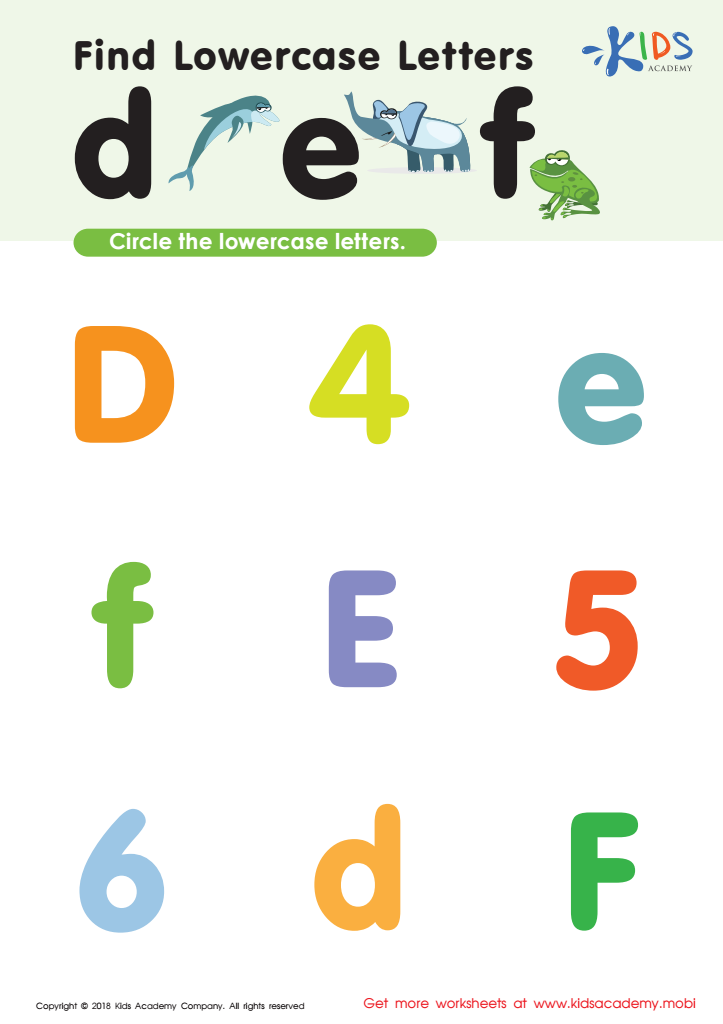
Find Lowercase Letters d e f Worksheet
 Assign to My Students
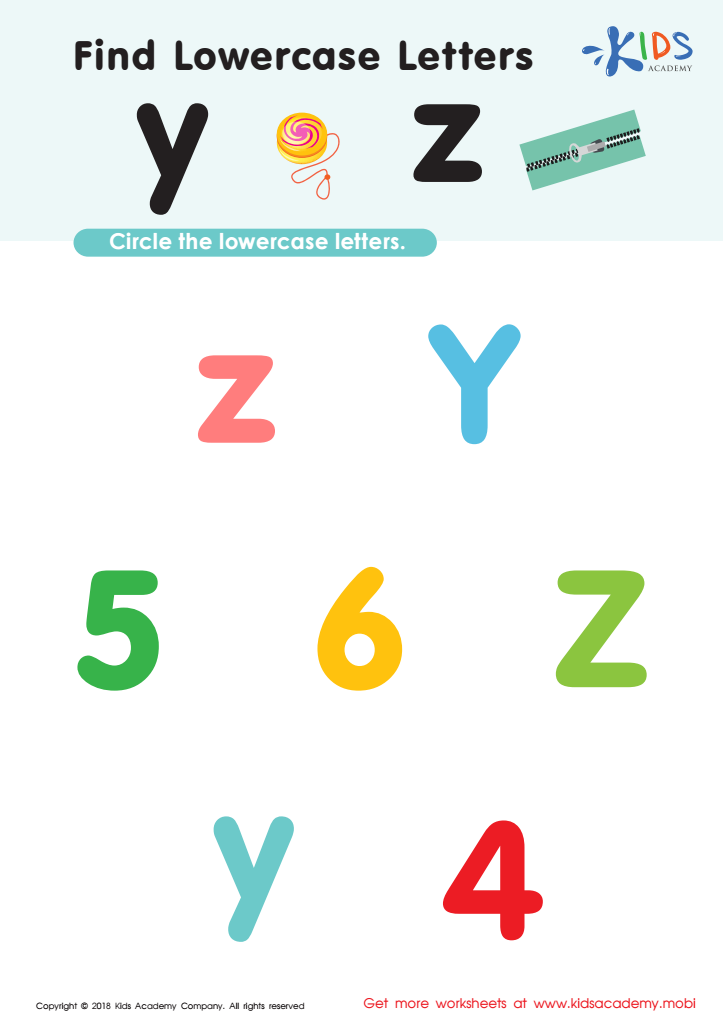
Find Lowercase Letters y z Worksheet
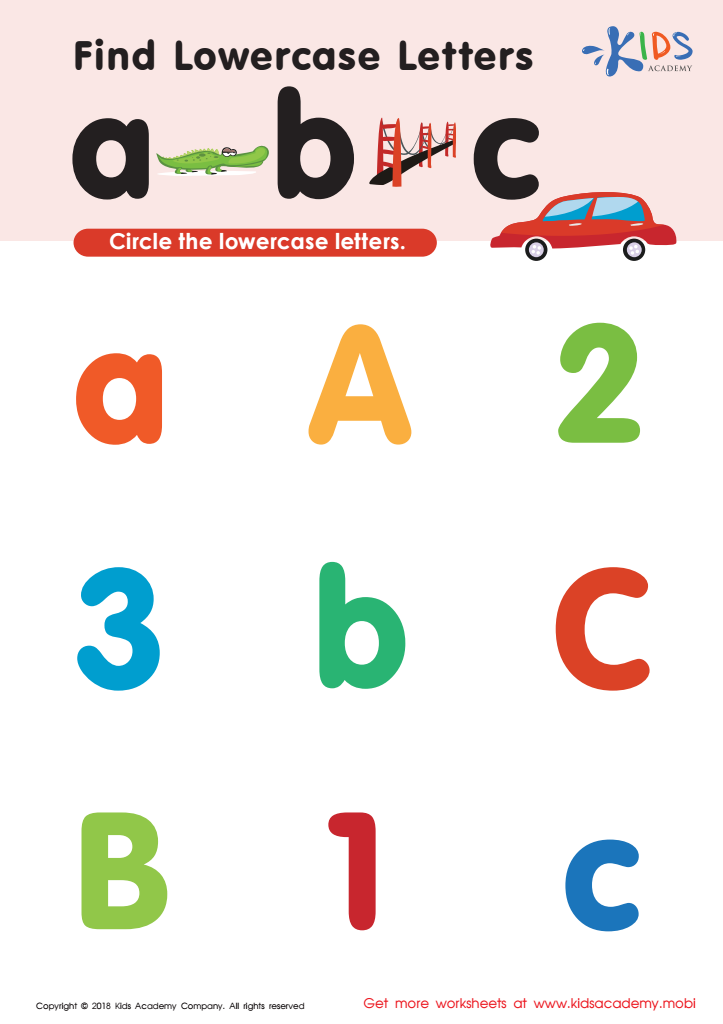
Find lowercase letters a b c Worksheet
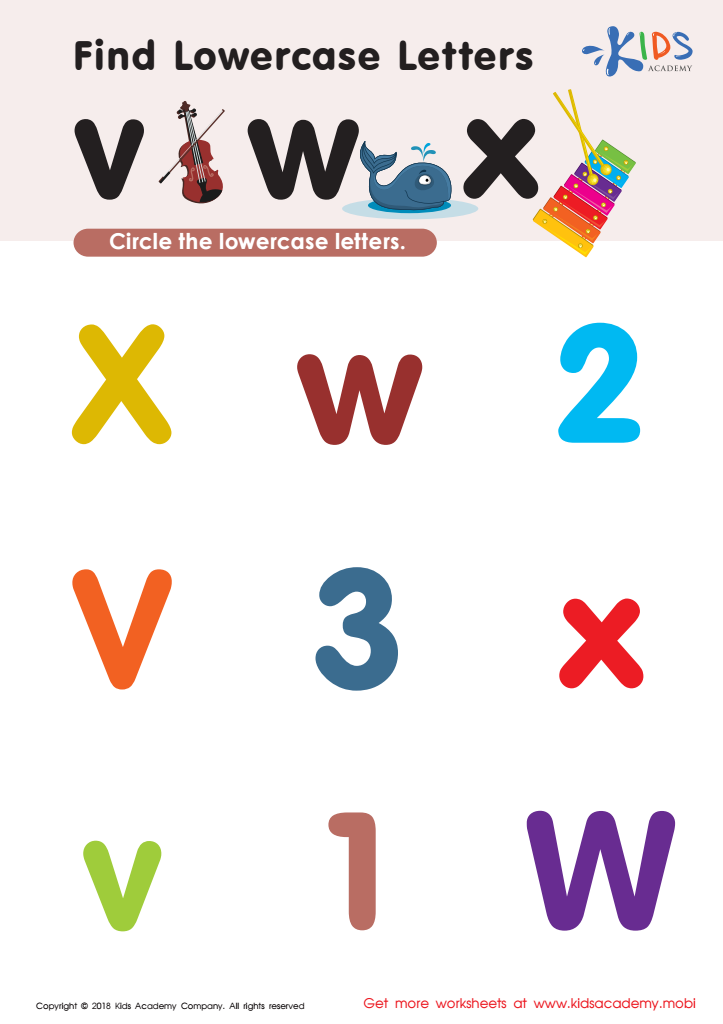
Find Lowercase Letters v w x Worksheet







Parents and teachers should prioritize lowercase letter identification for 4-year-olds because it forms a foundational skill essential for literacy development. Familiarity with lowercase letters aids young children in reading and writing, as most texts they encounter use these letters predominantly. Understanding and recognizing these letters fosters their ability to decode words, leading to increased confidence and competence in reading.
Additionally, lowercase identification supports phonemic awareness, helping children connect sounds to letters. This skill is crucial for spelling and promotes literacy proficiency. When children can identify lowercase letters, they are better equipped to explore the world of print, making the transition to more complex reading and writing tasks smoother.
Furthermore, mastering lowercase letter recognition nurtures a sense of achievement and motivates children to engage with books and written materials. It encourages participation in writing activities, enhancing fine motor skills through spelling and letter formation practice.
Ultimately, when parents and teachers focus on lower case letter identification, they equip young learners with the tools they need for future academic progress, laying the groundwork for effective communication and a lifelong interest in reading. Thus, prioritizing this skill is essential for holistic childhood development.







