
Comparison Skills Normal Worksheets for 4-Year-Olds
4 filtered results
Difficulty Level
Grade
Age
-
From - To
Subject
Activity
Standards
Enhance your 4-year-old's learning with our engaging Comparison Skills Normal Worksheets! Designed to promote critical thinking, these fun worksheets introduce essential concepts like bigger vs. smaller, more vs. less, and same vs. different. Children will enjoy colorful illustrations and relatable scenarios that make learning enjoyable. Our worksheets help develop vital comparative skills, boosting early math foundations while fostering creativity and problem-solving abilities. These resources are perfect for both classroom and home use, allowing little learners to explore the world around them through the lens of comparison. Download now and watch your child's confidence grow as they master these important skills!
Favorites
With answer key
Interactive
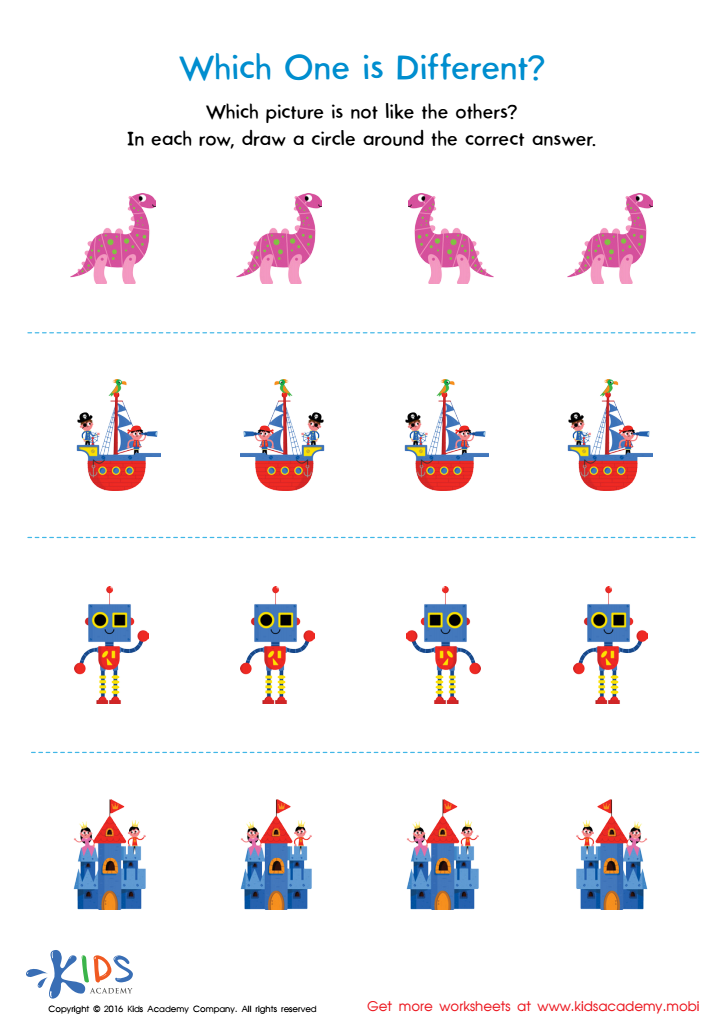
Which One Is Different Worksheet
Preschoolers can hone logical reasoning and critical analysis skills with this "Which one is Different?" worksheet. Kids must look closely and pick out unique attributes of objects and images. It's a skill that can serve them throughout their lifetime.
 Assign to My Students
Which One Is Different Worksheet
Worksheet
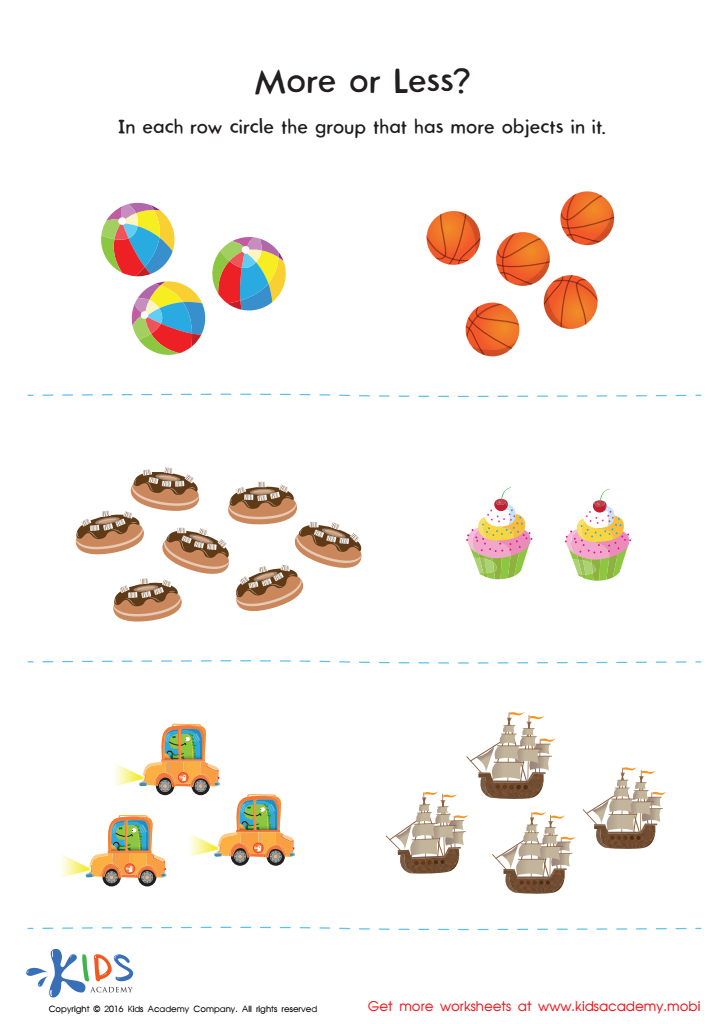
More or Less Size Worksheet
Worksheet
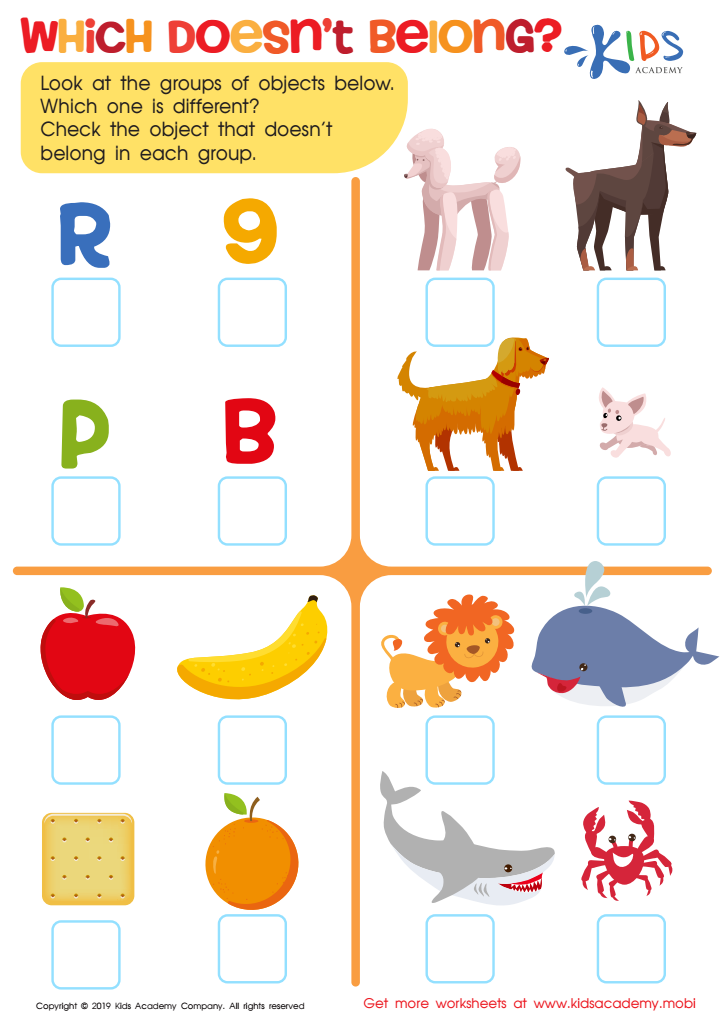
Which Doesn't Belong? Worksheet
This engaging worksheet helps preschoolers recognize similar and different attributes of common words, using brightly-colored pictures. They analyze the items in each category and check off what is different. For extra practice, have them explain their reasoning verbally! Sorting and classifying are important skills to learn.
Which Doesn't Belong? Worksheet
Worksheet
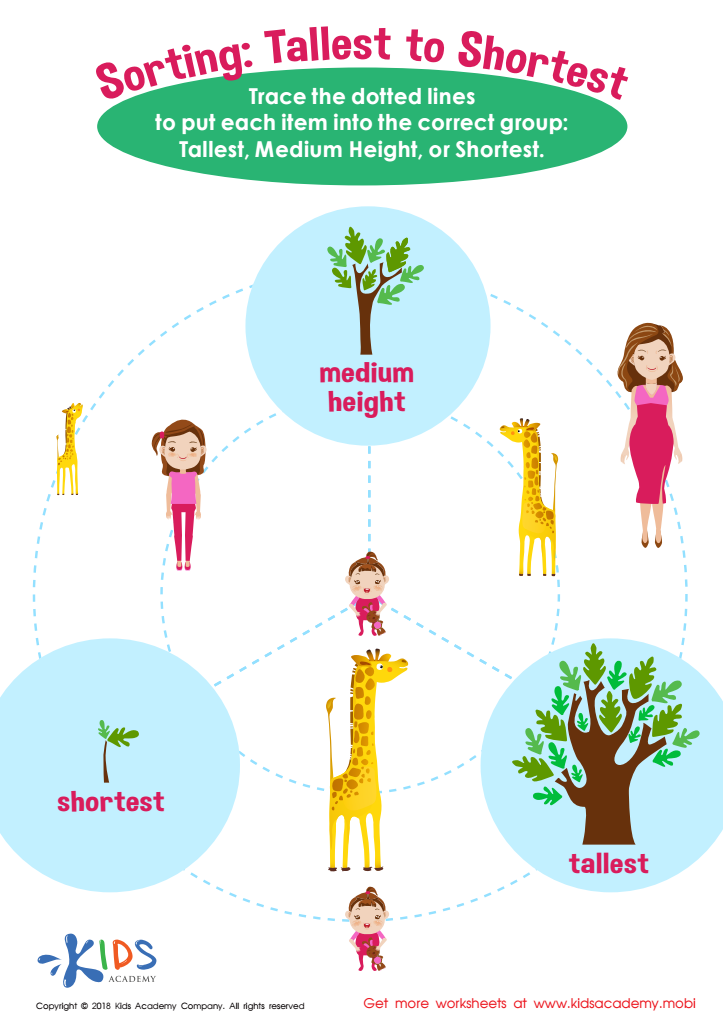
Sorting: Tallest to Shortest Worksheet
This worksheet is great for preschoolers to practice foundational measurement skills. Traceable lines help them sort pictures into Tallest, Shortest and Medium categories, giving them concrete examples to compare. Fine motor skills and understanding of relationships between sizes are also developed - perfect for preparing them for larger measurement concepts.
Sorting: Tallest to Shortest Worksheet
Worksheet
Join Kids Academy for Free
Who is primarily going to use this learning content?








Comparison skills are essential for 4-year-olds as they lay the foundation for critical thinking and problem-solving abilities. At this age, children begin to understand differences and similarities among objects, experiences, and ideas, which helps them develop cognitive skills crucial for learning. As they engage in comparisons, whether through sorting toys, contrasting colors, or evaluating sizes, they enhance their observational skills and language development.
Parents and teachers should care about nurturing comparison skills because this learning enables children to make informed decisions and understand their environment better. Developing these skills early fosters curiosity and analytical thinking, allowing children to explore concepts of quantity, quality, and categorization. Moreover, comparison skills support early math development, including concepts such as greater than, less than, and equal to.
Encouraging children to express their thoughts about similarities and differences further develops their communication abilities and vocabulary. This level of engagement promotes social skills as they learn to articulate ideas and collaborate with peers. Ultimately, fostering comparison skills in early childhood contributes to a strong educational foundation, setting children up for success in school and beyond. By prioritizing these skills, parents and teachers can play a pivotal role in enhancing a child's overall cognitive development.








