Subtraction skills Normal Worksheets for 4-Year-Olds
4 filtered results
-
From - To
Our "Subtraction Skills Normal Worksheets for 4-Year-Olds" are designed to make learning fun and engaging! These worksheets provide a variety of colorful and interactive activities that help young learners grasp the concepts of subtraction in an easy and enjoyable way. Each worksheet introduces foundational subtraction skills through simple problems, counting exercises, and visual aids, making it perfect for preschoolers. The user-friendly format allows kids to practice at their own pace, boosting their confidence and readiness for future math concepts. Discover our thoughtfully crafted worksheets to support your child's early education in subtraction today!
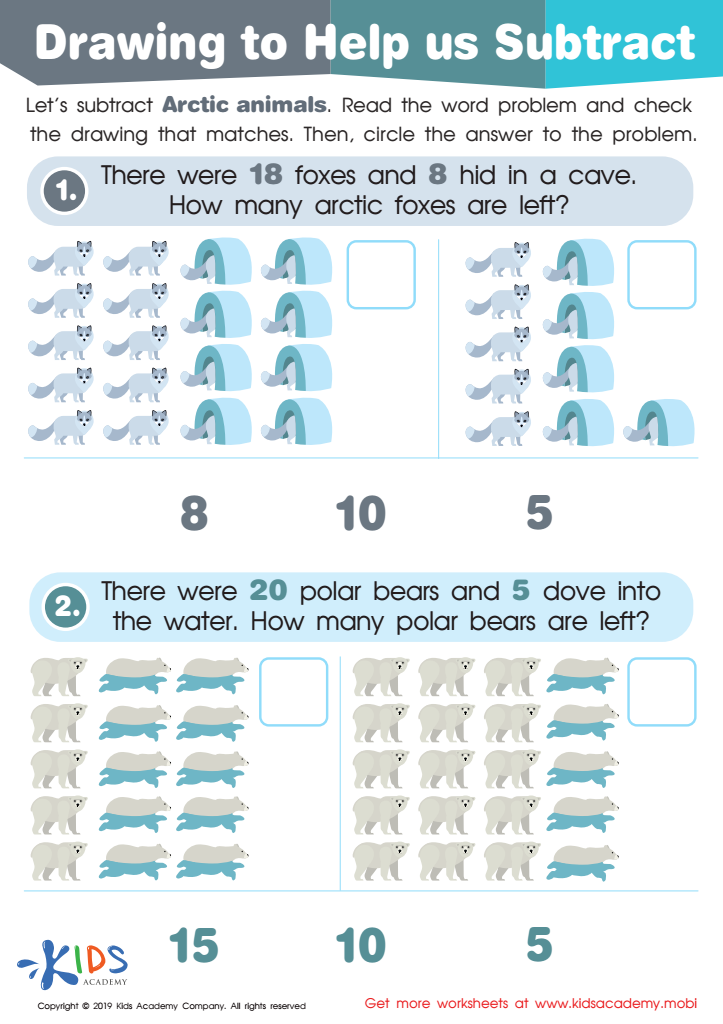
Drawing to Help Us Subtract Worksheet
 Assign to My Students
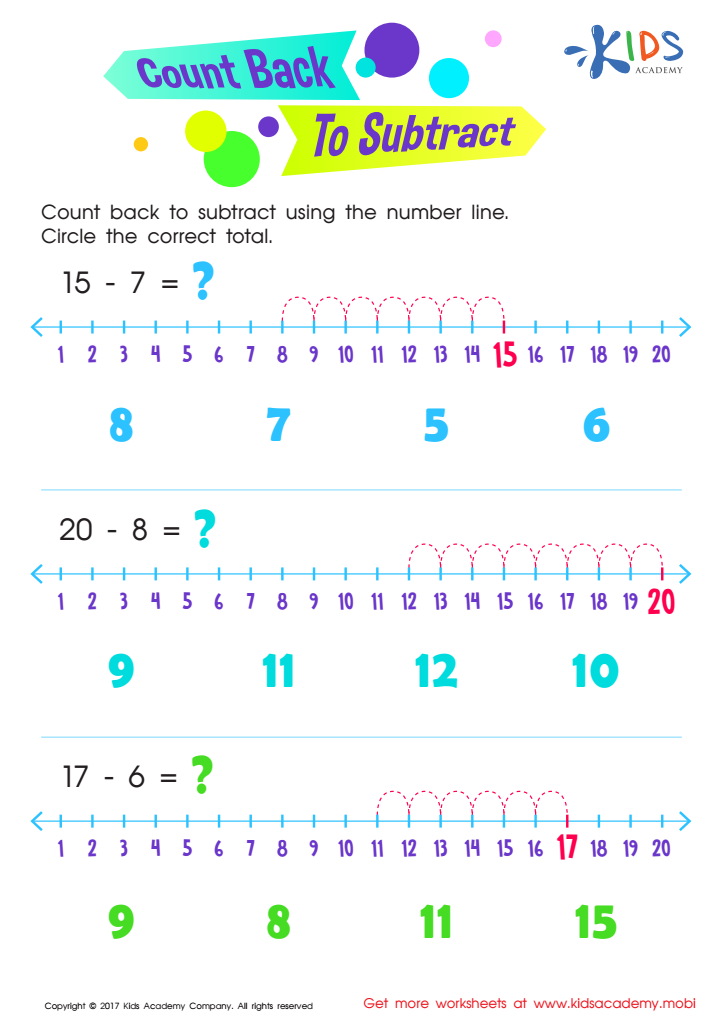
Count Back to Subtract Substraction Worksheet
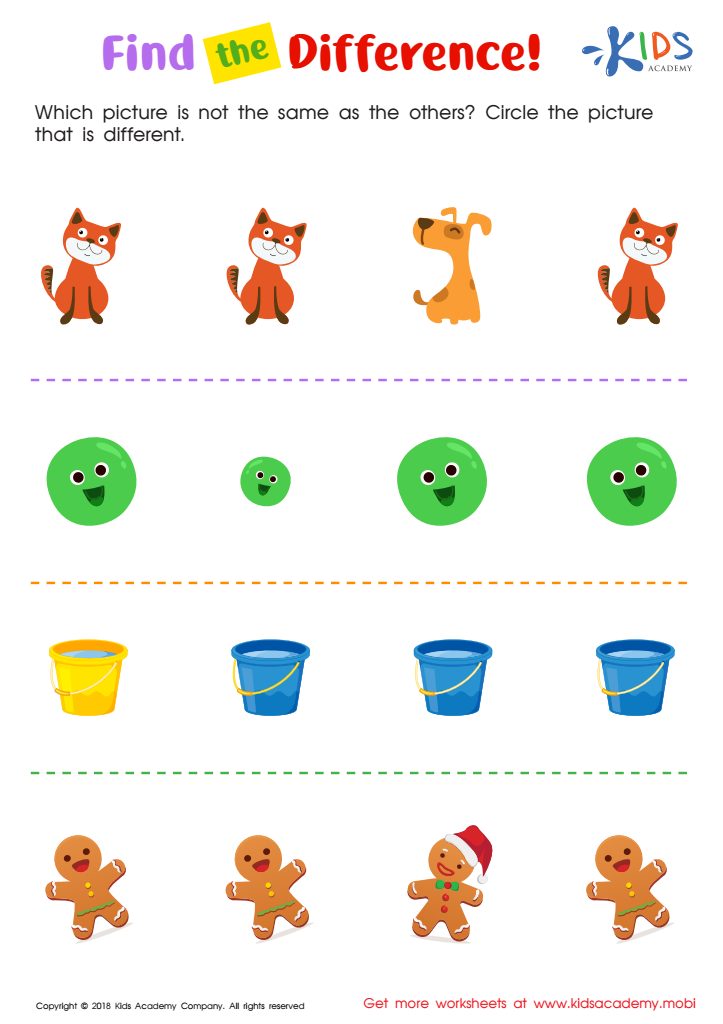
Find the Difference Worksheet
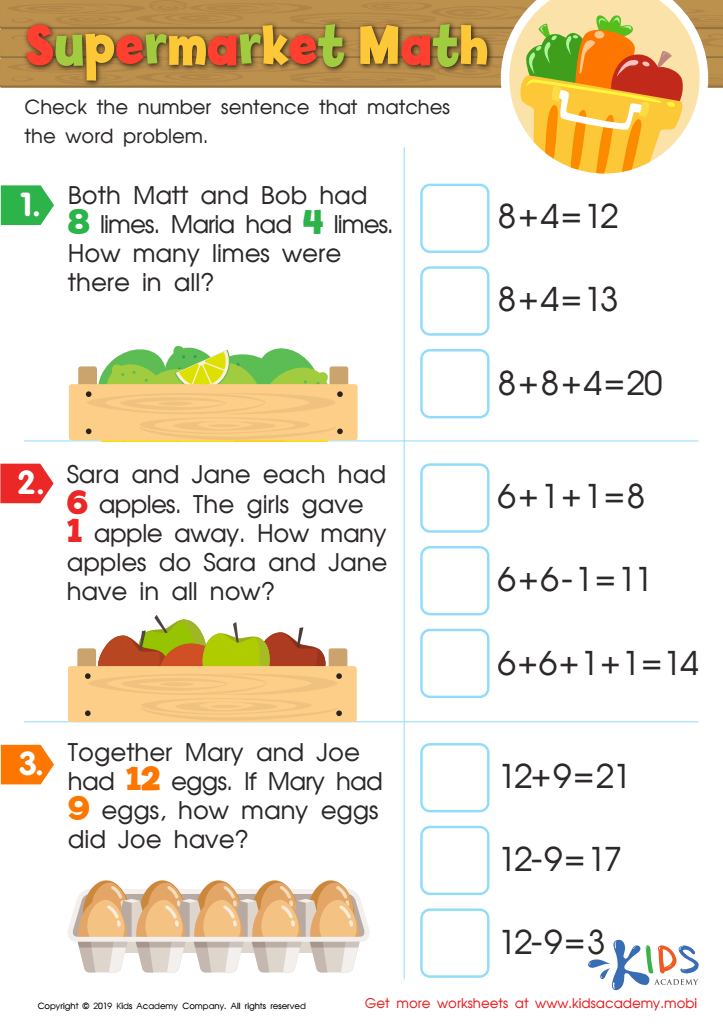
Supermarket Math Worksheet








Subtraction skills are an essential building block in a child's early math development, and it's vital for parents and teachers to foster these skills in 4-year-olds. At this age, children are naturally curious and begin to understand basic concepts of quantity and number relations. Developing subtraction skills enhances their cognitive abilities, helping them to solve problems and make sense of the world around them.
Understanding subtraction promotes logical thinking and reasoning, which are critical for more complex mathematics in later years. Moreover, incorporating subtraction into everyday activities—like sharing snacks, counting toys, or playing interactive games—makes learning fun and relevant.
When children grasp subtraction, they build confidence in their mathematical abilities and gain a sense of achievement that strengthens their overall self-esteem. It also lays a foundation for future academic success, allowing children to transition smoothly into addition, more complex calculations, and even basic algebra as they grow.
Ultimately, supporting subtraction skills at this age can lead to a more robust understanding of mathematics, better problem-solving skills, and a more enjoyable learning experience, setting children on a path for lifelong learning and curiosity. Engaging with children in these foundational skills empowers their growth in math and beyond.








