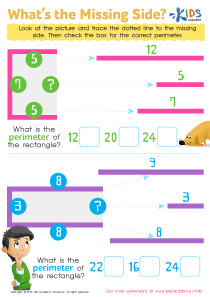
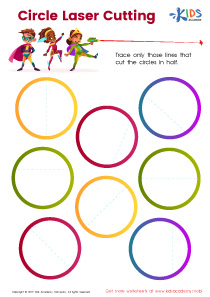
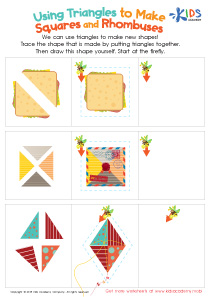
Pattern recognition Normal 2D Shapes Worksheets for 4-Year-Olds
3 filtered results
-
From - To
Enhance your child's early learning experience with our engaging Pattern Recognition Normal 2D Shapes Worksheets designed specifically for 4-year-olds. These worksheets help young learners identify and understand basic geometric shapes through fun and interactive activities. Children will explore patterns while recognizing circles, squares, triangles, and rectangles, all aimed at developing critical thinking and observational skills. Our colorful and visually appealing resources capture young children's attention, making learning enjoyable. Perfect for home or classroom use, these worksheets support foundational math skills in a playful way. Introduce your preschooler to the world of shapes and patterns with our exciting printables today!
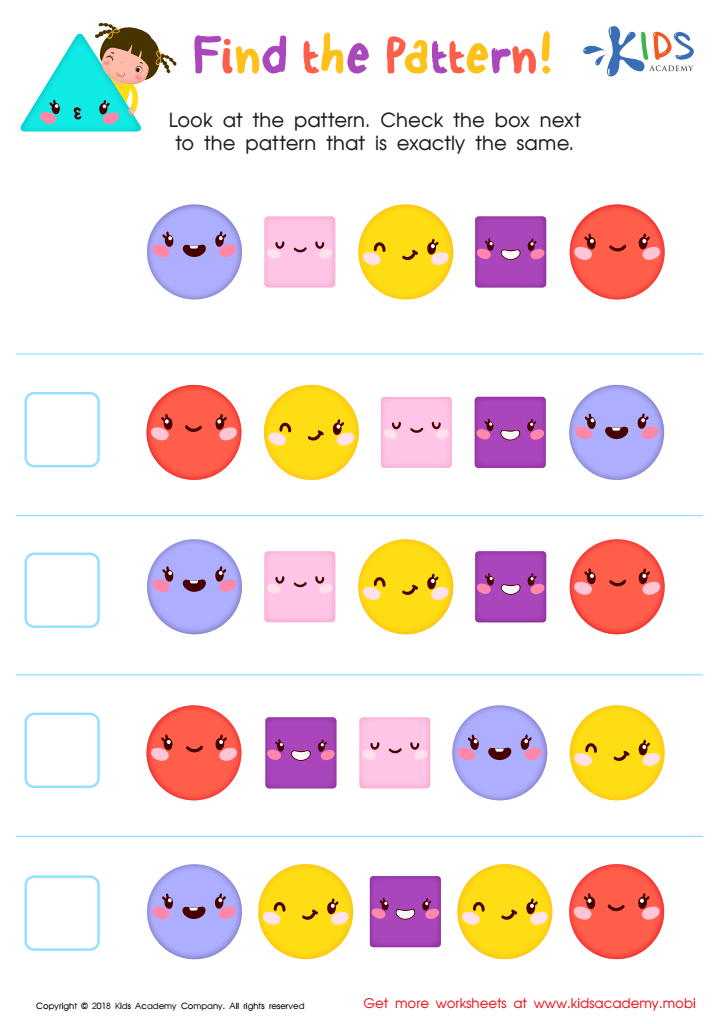
Find the Pattern Worksheet
 Assign to My Students


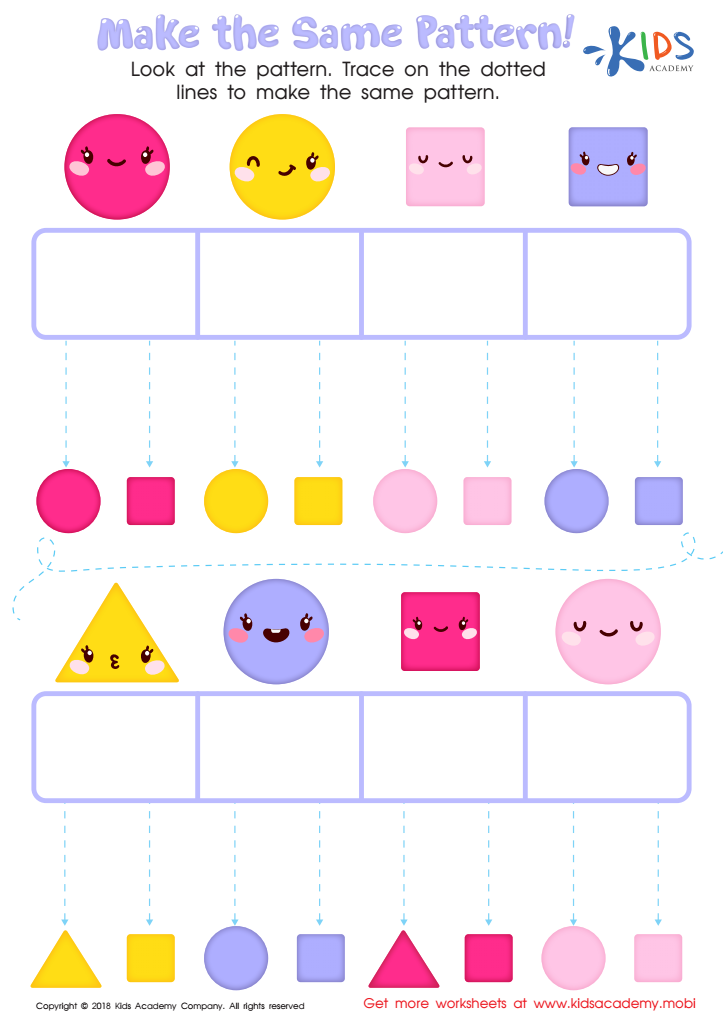
Make the Same Pattern Worksheet
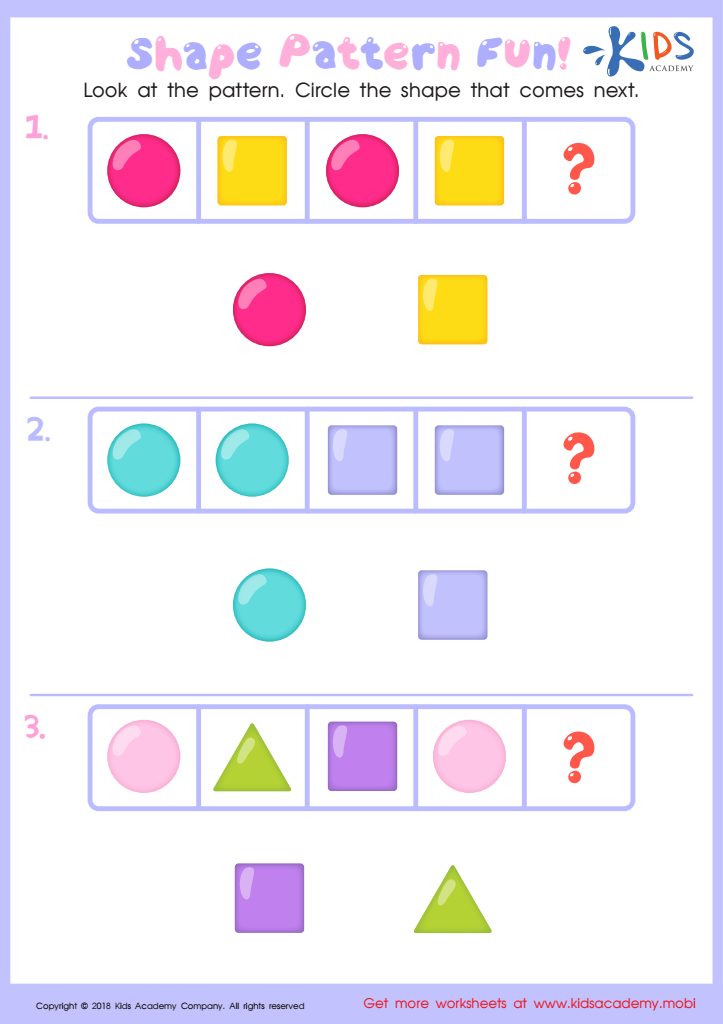
Shape Pattern Fun Worksheet








Pattern recognition and understanding normal 2D shapes are foundational skills that are crucial for a 4-year-old's cognitive development. Engaging young learners in identifying patterns and shapes lays the groundwork for several key developmental areas. First, it enhances their critical thinking and problem-solving abilities, as children learn to recognize relationships and sequences in their environment.
Moreover, identifying 2D shapes, such as circles, squares, and triangles, helps build spatial awareness. This understanding is vital not only for mathematics but also for creativity and imagination in art and play. Teachers and parents can facilitate this by integrating fun activities like shape scavenger hunts or using building blocks to create patterns, making learning enjoyable and interactive.
Additionally, these skills are aligned with early learning standards and prepare children for future academic success. Exposure to pattern recognition and shapes can also aid in the development of fine motor skills as children engage in activities like drawing, cutting, and pasting.
Ultimately, fostering these skills in early childhood enhances children's confidence in their abilities, instills a love for learning, and sets a strong foundation for their future educational journey. Thus, it is essential for parents and teachers to prioritize these activities in their interactions with young learners.