Differentiating shapes Normal Geometry Worksheets for 4-Year-Olds
3 filtered results
-
From - To
Discover engaging differentiating shapes worksheets designed specifically for 4-year-olds! Our normal geometry worksheets help young learners recognize, compare, and differentiate various shapes. Featuring colorful visuals and age-appropriate activities, these worksheets encourage critical thinking and shape identification in a fun and interactive way. Your child will enjoy practical tasks that promote fine motor skills while enhancing their understanding of essential geometric concepts. Perfect for preschool or at-home learning, these resources provide a strong foundation in geometry and shape recognition, setting the stage for future success in mathematics. Explore our collection of worksheets that ignite curiosity and foster a love for learning!
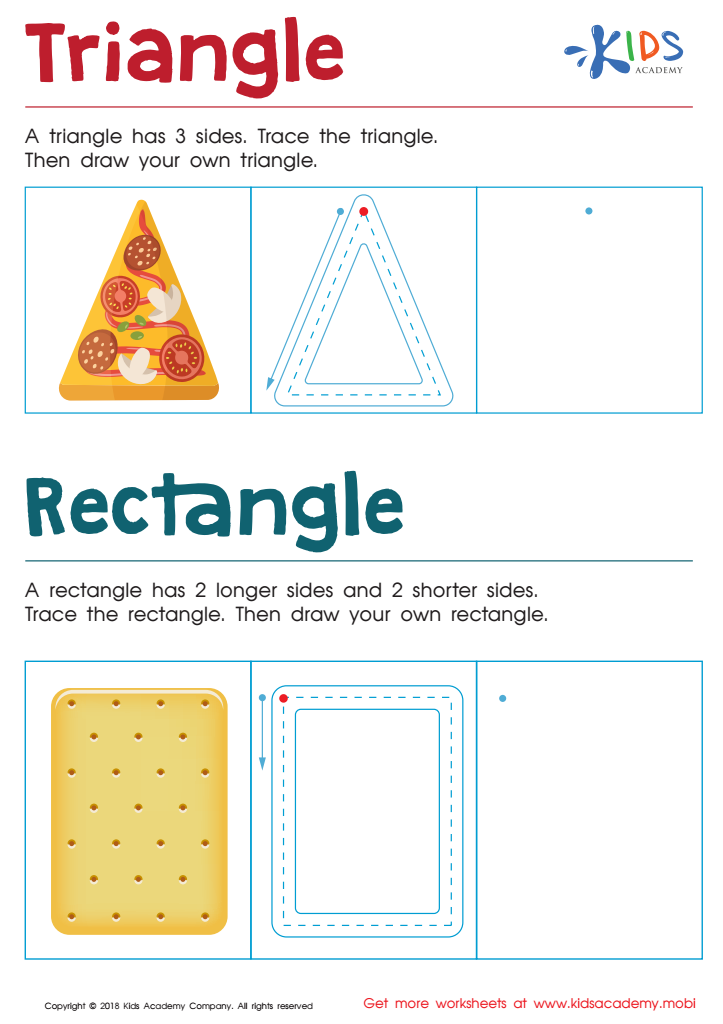
Triangle Rectangle Worksheet
 Assign to My Students











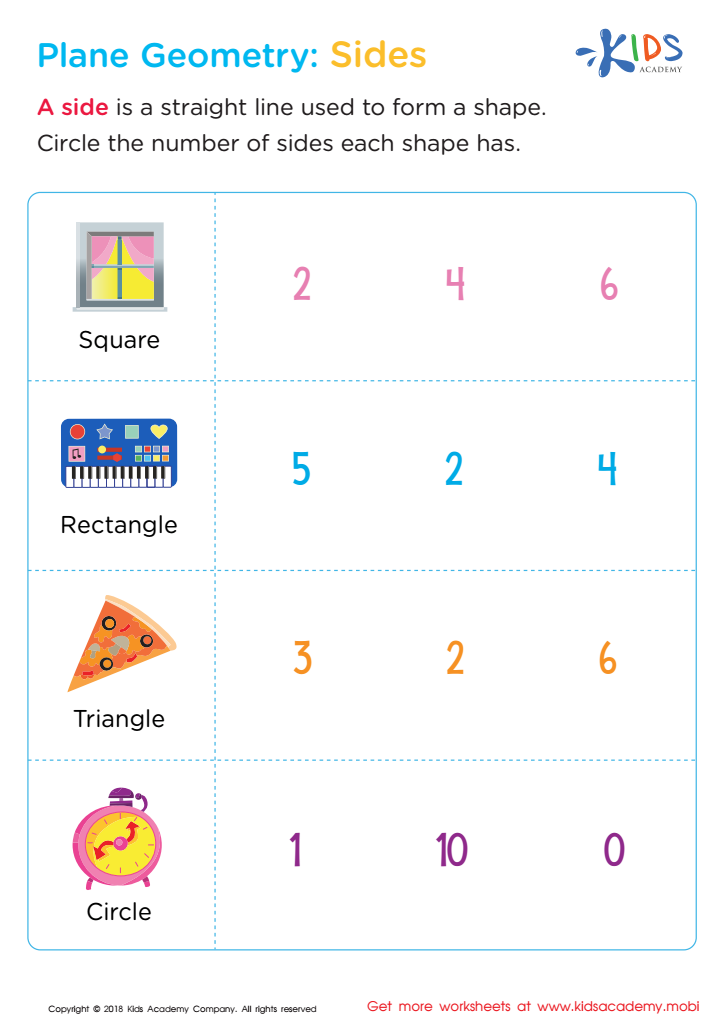
Plane Geometry: Sides Worksheet
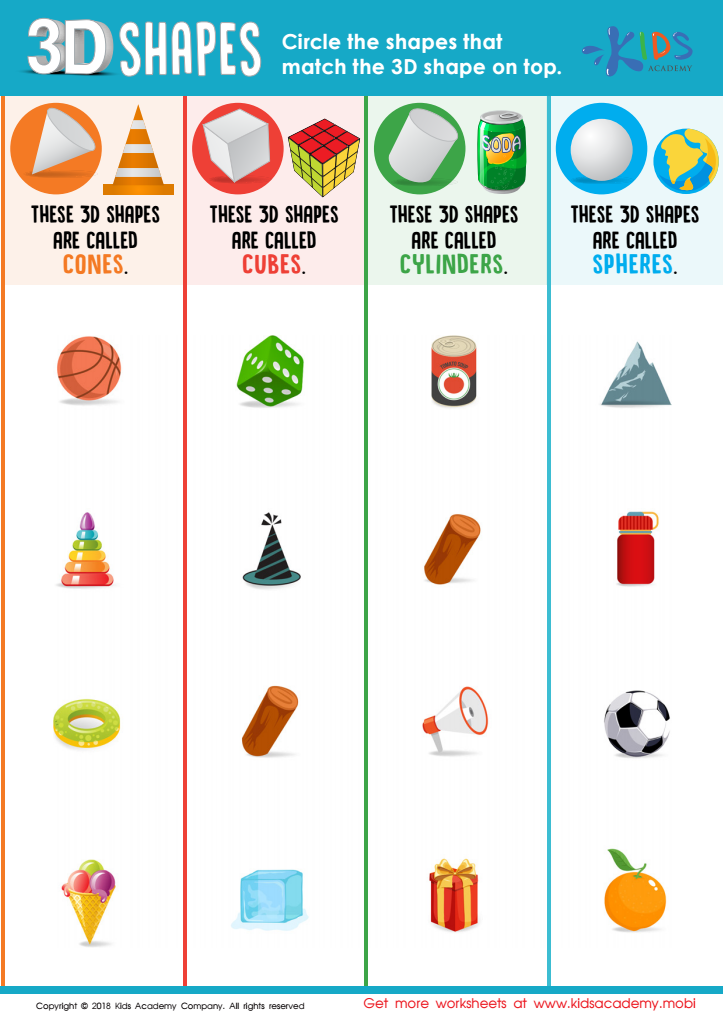
3D Shapes Worksheet








Differentiating shapes and engaging in normal geometry with 4-year-olds is crucial for several reasons. First, early exposure to shapes and spatial awareness lays a vital foundation for mathematical understanding. By learning to differentiate between shapes such as circles, squares, and triangles, children develop critical thinking and problem-solving skills that will benefit them throughout their education.
Additionally, recognizing and naming shapes fosters language development. Teachers and parents can encourage vocabulary expansion as children describe and compare different shapes, enhancing both their communication skills and cognitive abilities.
Moreover, incorporating geometry into play-based learning can make the experience enjoyable, helping young children stay engaged and curious. Activities such as sorting, building, and drawing shapes can be integrated into everyday experiences, promoting hands-on learning that is fundamental at this age.
Finally, shaping an understanding of geometry in early childhood aligns with the broader goal of cultivating a love for learning. It nurtures creativity and exploration, thus setting the stage for a more advanced understanding of mathematics as children age. By caring about and actively differentiating shapes, parents and teachers can significantly enrich a child's learning experience and build essential skills for future academic success.








