Spatial reasoning Normal Geometry Worksheets for 4-Year-Olds
3 filtered results
-
From - To
Nurture your child's spatial awareness with our engaging Spatial Reasoning Normal Geometry Worksheets tailored for 4-year-olds. These fun and interactive worksheets from Kids Academy are designed to bolster your child's understanding of fundamental geometric concepts, spatial relationships, and critical thinking skills. Suitable for preschoolers, our worksheets use colorful illustrations and playful activities, making learning both accessible and enjoyable. Each worksheet encourages hands-on practice, assisting children in recognizing shapes, sorting objects, and building their problem-solving abilities. Equip your little learner with the foundational tools they need to excel in geometry and beyond. Explore our comprehensive collection today!
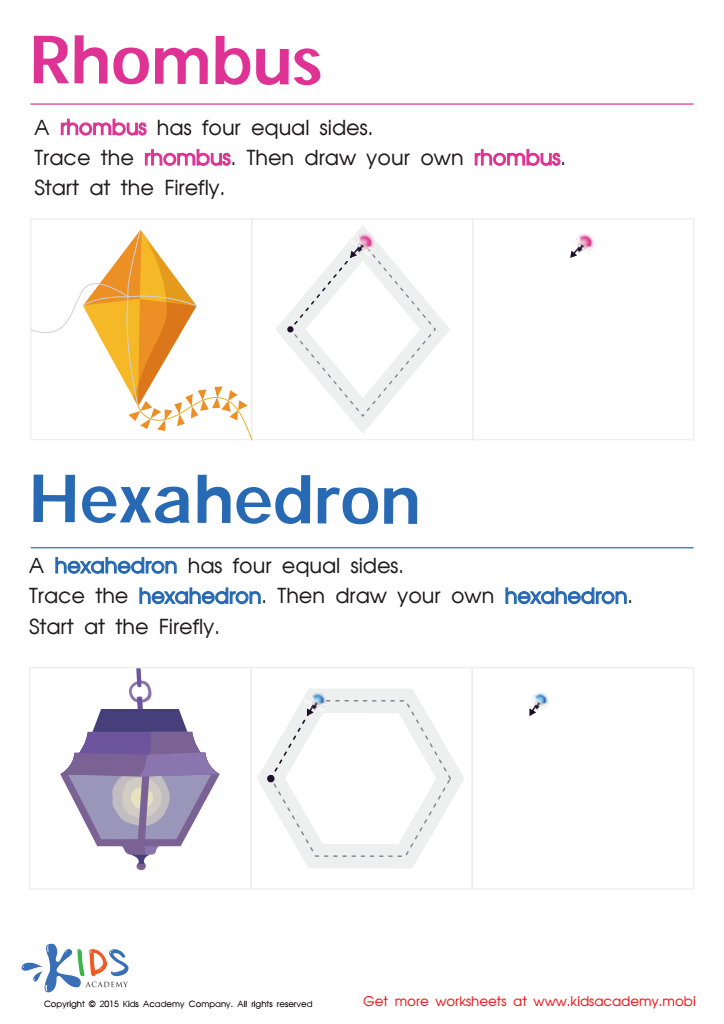
Draw a Rhombus And a Hexahedron Printable
 Assign to My Students











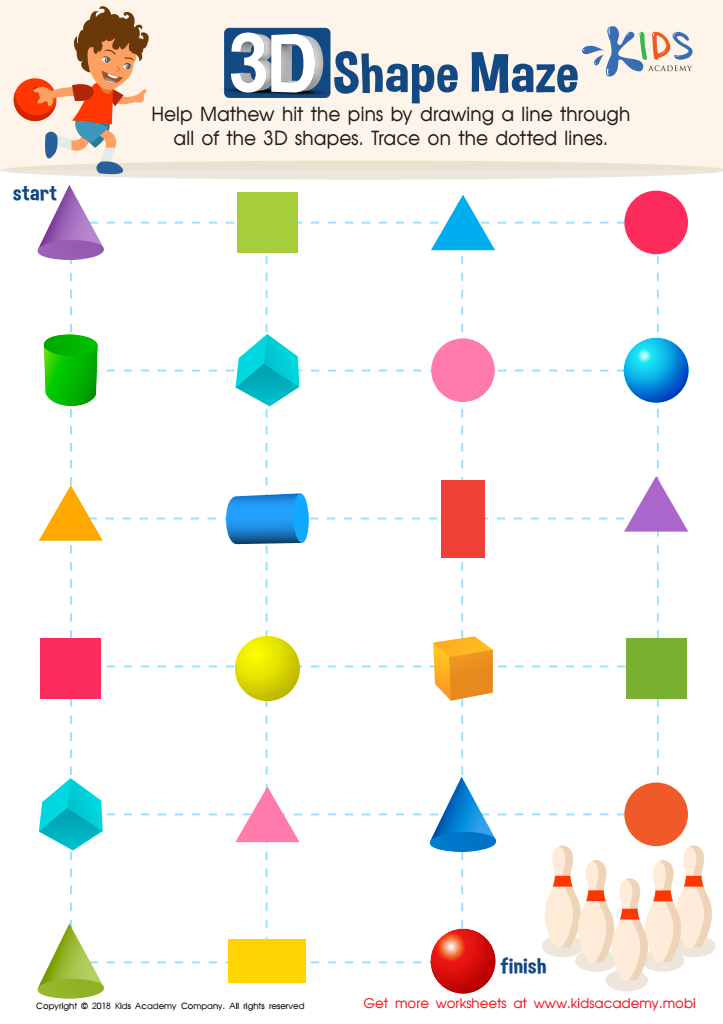
Shapes Maze Geometry Worksheet
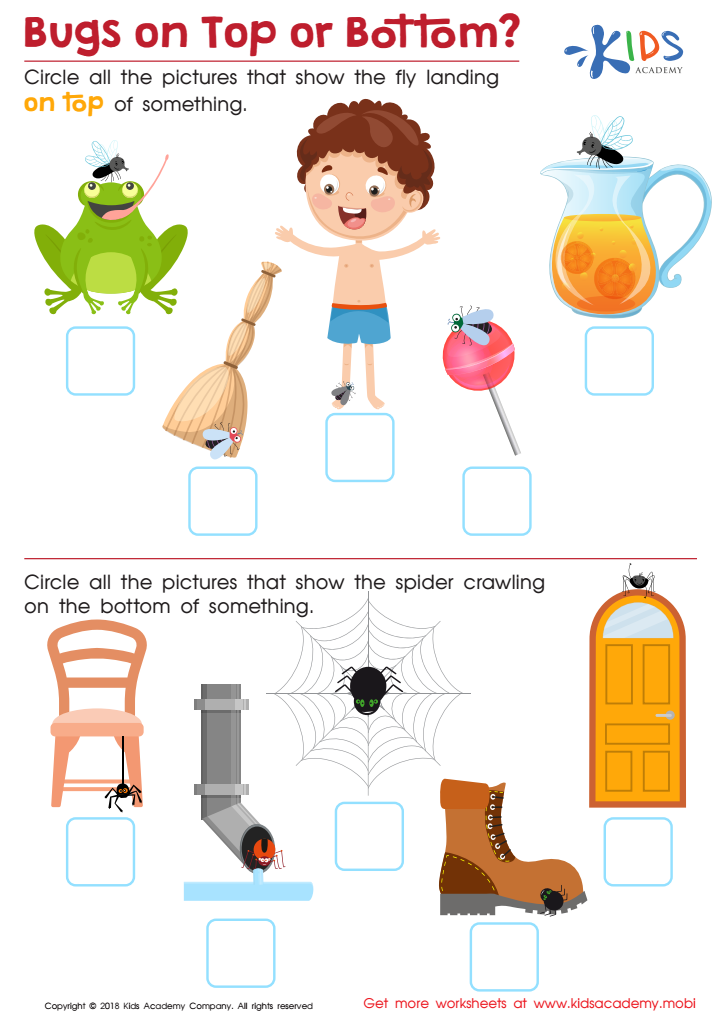
Bugs on Top or Bottom? Worksheet








Spatial reasoning is crucial for a child's development, and focusing on this area even at the age of four can have significant benefits. Parents and teachers should prioritize spatial reasoning activities because they lay the groundwork for understanding complex mathematical concepts later on. Spatial reasoning involves the ability to visualize, manipulate, and reason about objects and shapes in space. This skill is essential not only for geometry but also for other subjects, including science, technology, engineering, and mathematics (STEM).
For instance, when children play with blocks or solve simple jigsaw puzzles, they are unknowingly honing their spatial abilities. These activities enhance their ability to gauge distance, differentiate shapes, and understand the relationships between different objects. Such experiences develop their problem-solving and critical-thinking skills, making it easier for them to grasp more abstract mathematical concepts as they grow older.
Moreover, strong spatial reasoning is linked to improved navigation skills, which are beneficial for everyday tasks. It also fosters creativity, as children envision different ways to put things together or solve spatial problems. Engaging four-year-olds in spatial reasoning activities can make learning fun and dynamic, encouraging a natural curiosity towards their environment, and setting a solid foundation for academic and real-world success.








