Understanding directions Normal Math Worksheets for 4-Year-Olds
3 filtered results
-
From - To
Welcome to our "Understanding Directions Normal Math Worksheets for 4-Year-Olds" page! These educational worksheets are designed to help young learners grasp basic directional concepts essential for early math skills. Using fun and engaging activities, children will explore navigating positions like left, right, up, and down through interactive exercises. Our worksheets encourage comprehension and improve visual-spatial awareness, while reinforcing critical thinking in a playful manner. Perfect for parents and educators, these resources foster a love for learning and help prepare children for future mathematical success. Dive into our collection and watch your child confidently understand directions in no time!
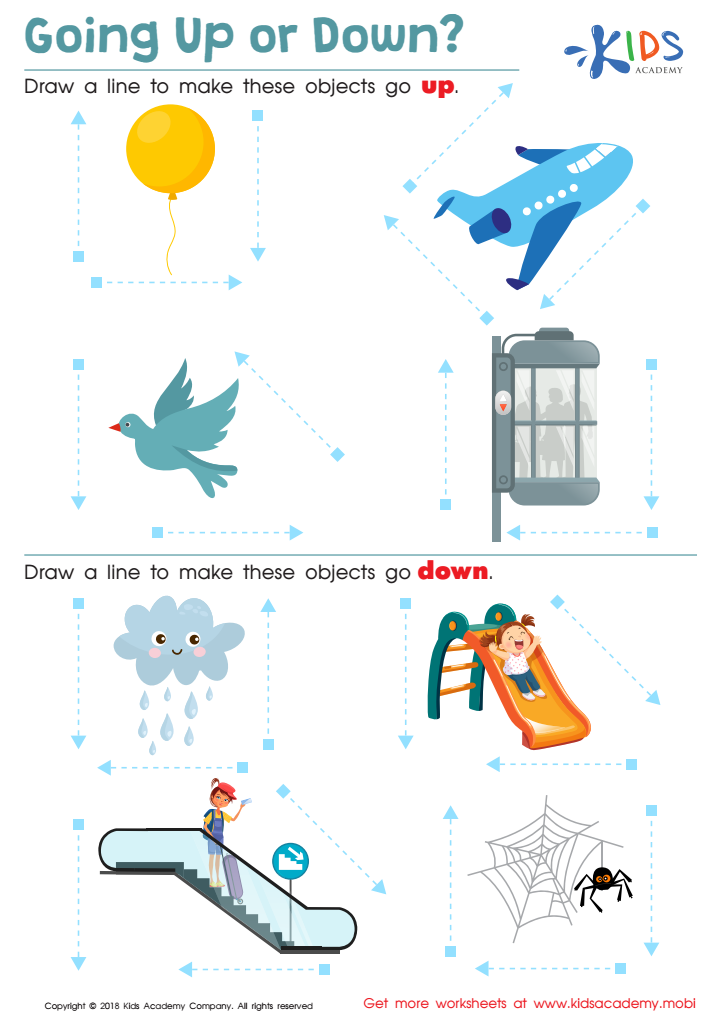
Going up or Down? Worksheet
 Assign to My Students
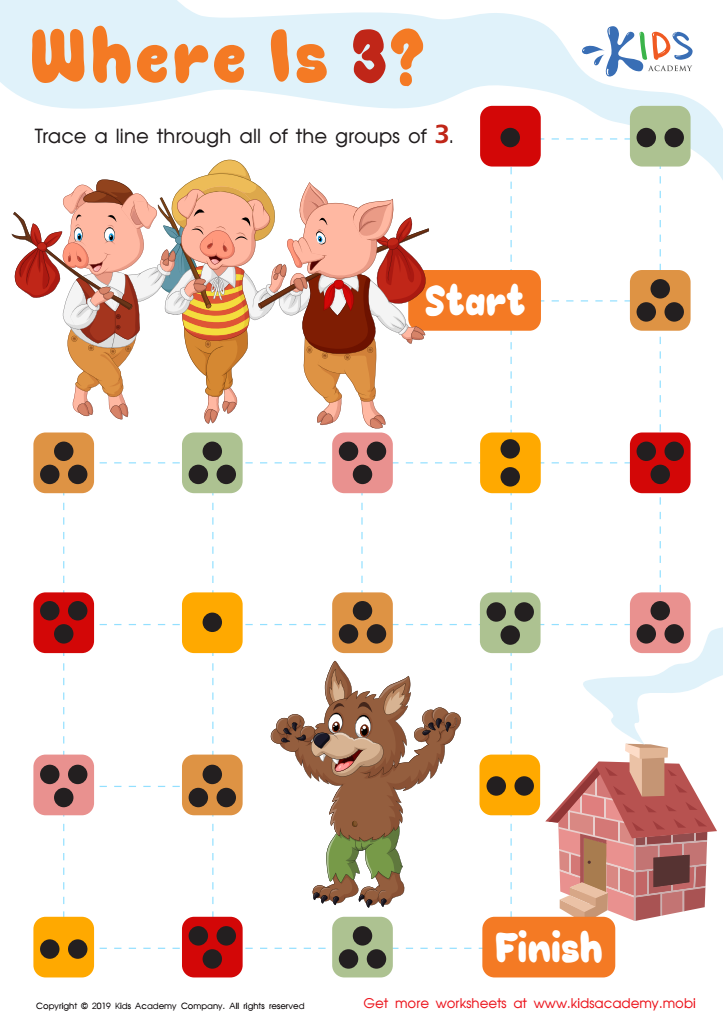
Where Is 3? Worksheet
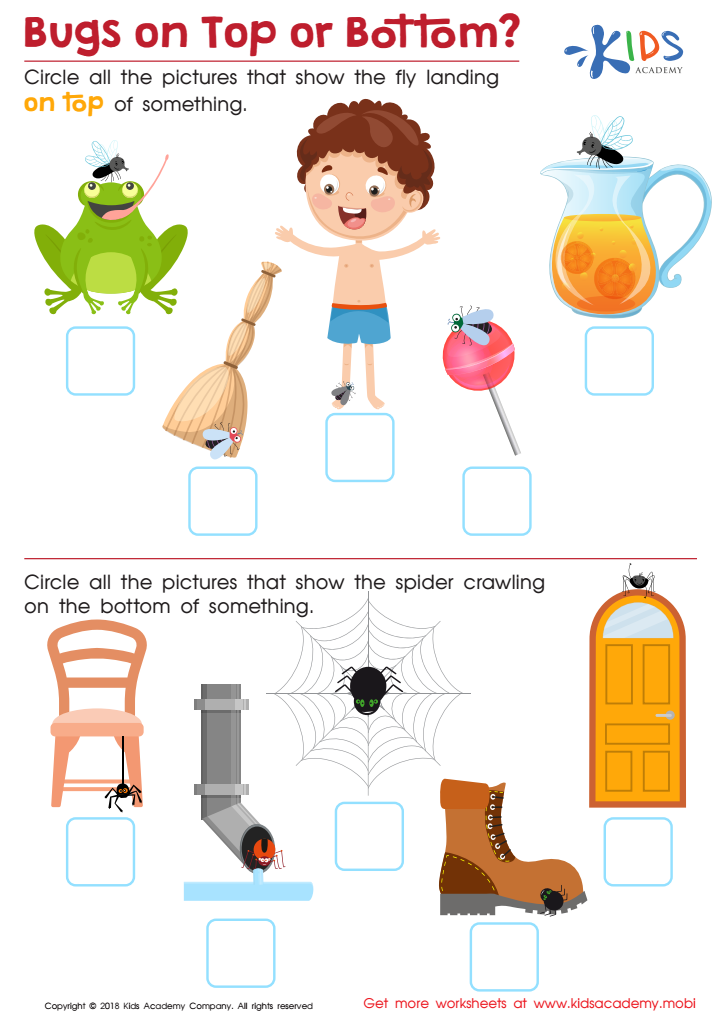
Bugs on Top or Bottom? Worksheet


.jpg)





Understanding directions in early math education for 4-year-olds is crucial for several reasons. At this developmental stage, children are naturally curious and ready to explore their environment. Introducing them to math concepts through clear directions not only enhances their numerical understanding but also builds essential cognitive skills, such as problem-solving and critical thinking.
When parents and teachers emphasize understanding directions in math, they help children develop the ability to follow a sequence, which is foundational for both math and everyday tasks. Mastering directions supports children's literacy as they learn to decode and interpret language, a skill that translates into reading and comprehension abilities. Furthermore, engaging children in directional activities promotes spatial awareness, essential for later concepts such as geometry.
Moreover, a positive early experience with math fosters a growth mindset, instilling confidence and enthusiasm for learning. Parents and teachers who focus on these foundational skills help facilitate a love for math that can last a lifetime, reducing the anxiety often associated with the subject in later years. Ultimately, by prioritizing understanding directions in early math education, they set children on a path for academic success and lifelong learning.








