Categorization skills Normal Sorting Worksheets for 4-Year-Olds
5 filtered results
-
From - To
Help your 4-year-old master essential categorization skills with our expertly designed Normal Sorting Worksheets. Tailored specifically for young learners, these engaging activities make learning fun and intuitive. Children can practice distinguishing objects by color, shape, size, and more, providing a solid foundation for critical thinking and problem-solving. Each worksheet is crafted to boost cognitive development while keeping kids entertained. With vibrant visuals and age-appropriate challenges, our worksheets are perfect for both classroom settings and at-home practice. Give your child the head start they deserve with tools that turn sorting into an exciting educational adventure!
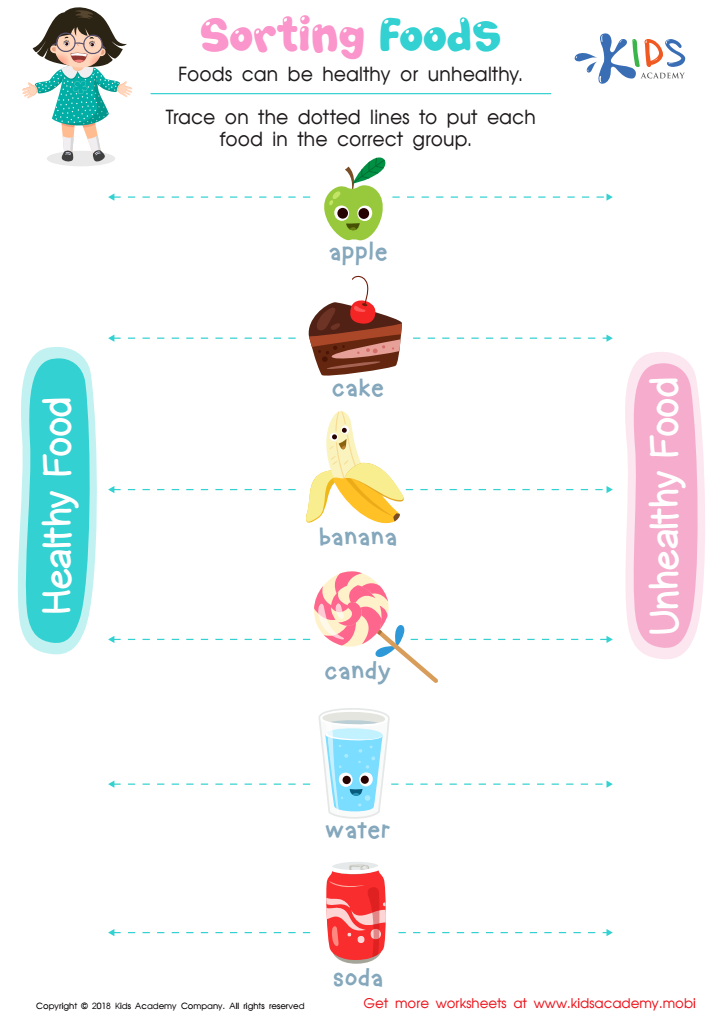
Sorting Food Worksheet
 Assign to My Students
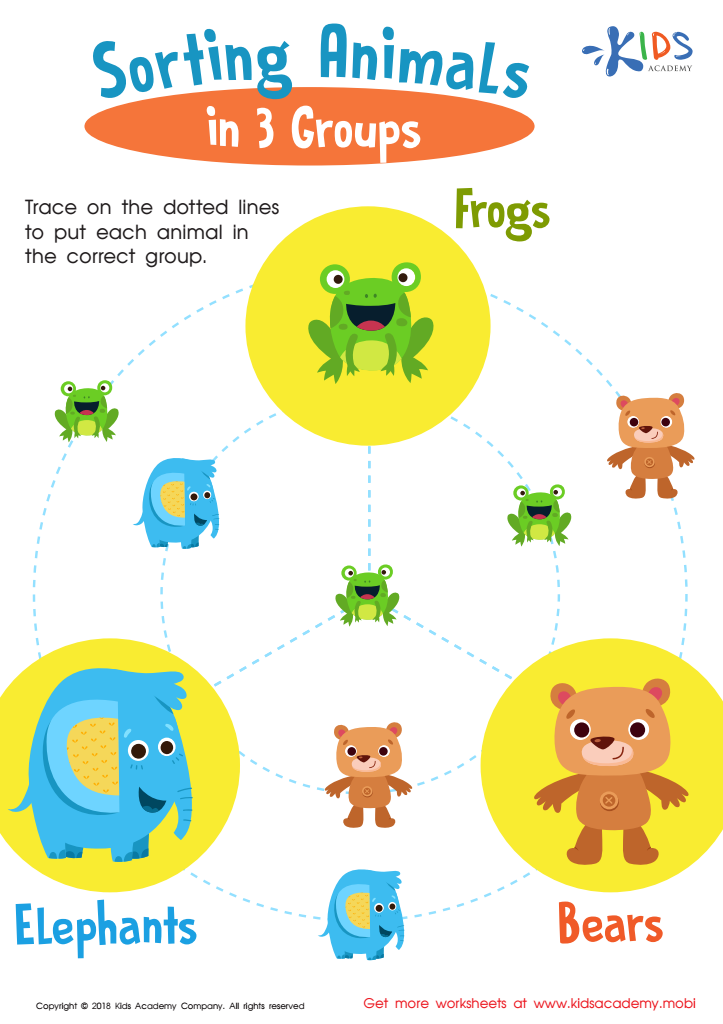
Sorting Animals in 3 Groups Worksheet
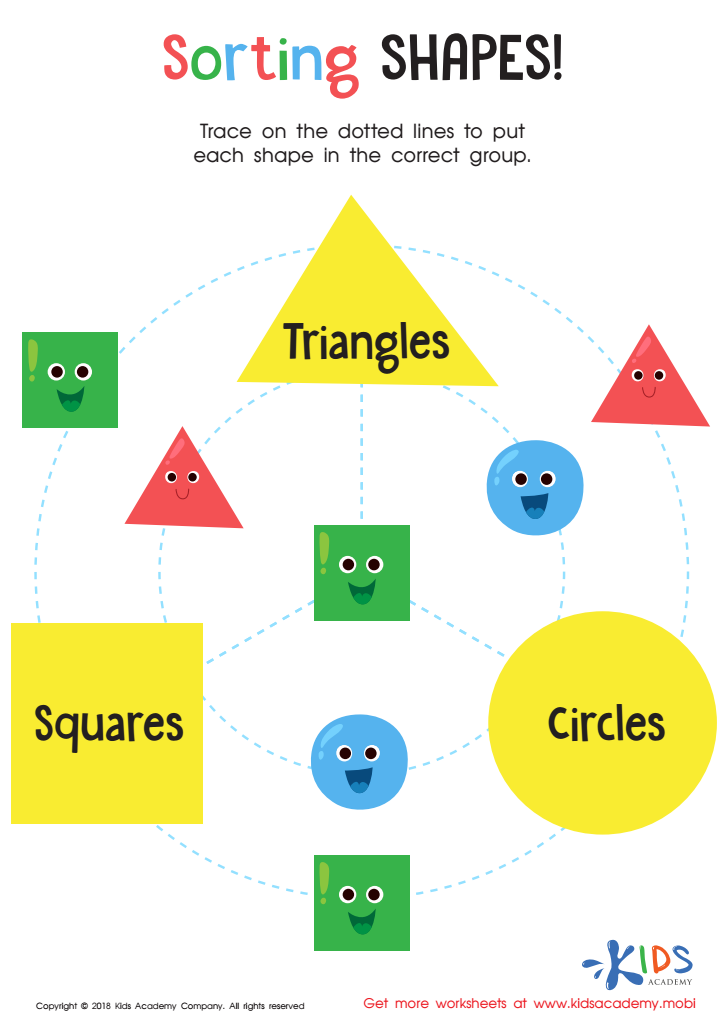
Sorting Shapes - Part 3 Worksheet
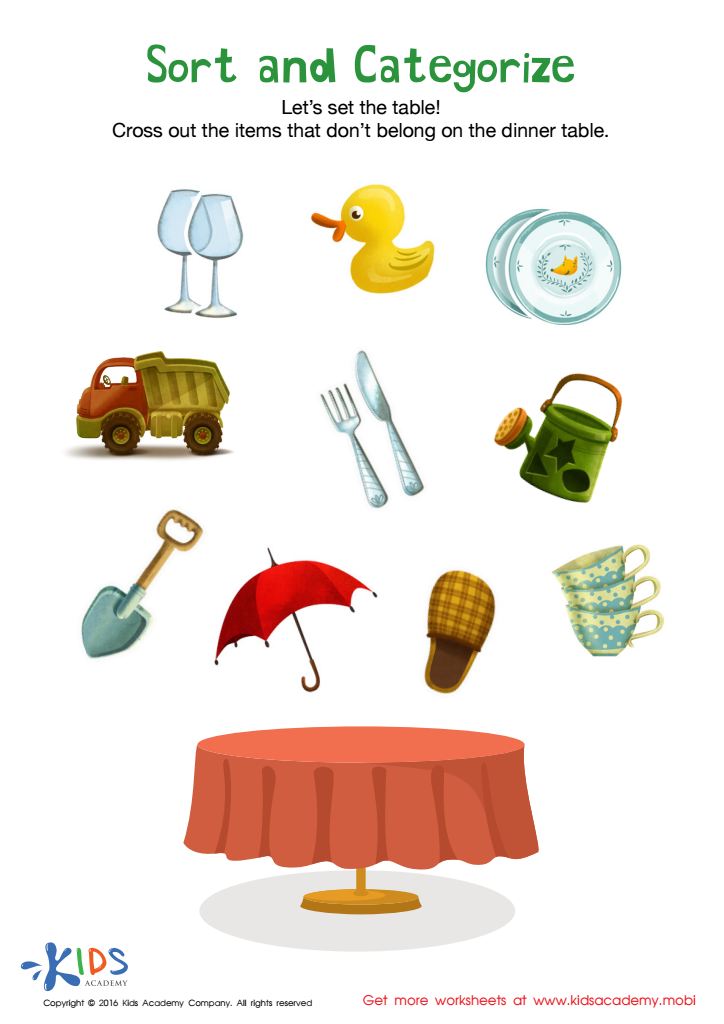
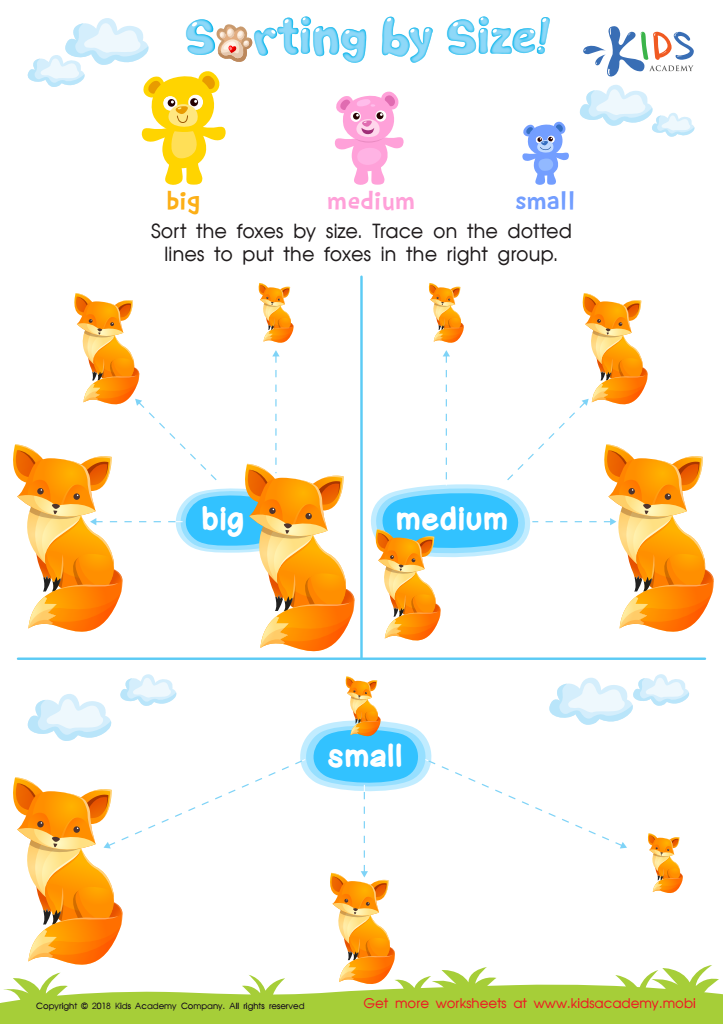
Sorting by Size Worksheet








Categorization skills, particularly normal sorting abilities, are fundamental cognitive skills that parents and teachers should nurture in 4-year-olds. At this developmental stage, children are naturally curious and rapidly absorbing information from their surroundings. Categorization allows them to make sense of this information by grouping objects, ideas, or experiences based on shared characteristics.
Helping children develop categorization skills fosters critical thinking and problem-solving abilities. For instance, when children sort objects by color, shape, or size, they learn to observe details, recognize patterns, and establish relationships between different items. These skills form the foundational blocks for more complex concepts in mathematics and science, such as measurement, comparison, and classification.
Furthermore, categorization aids in vocabulary development and language skills. By grouping objects and labeling categories, children expand their word bank and enhance their ability to communicate effectively. This organized way of thinking also spills over into social skills, aiding them in making connections between new information and their existing knowledge.
In summary, fostering categorization skills in 4-year-olds prepares them for academic success and everyday problem-solving. It supports cognitive development, enhances language and social skills, and encourages an organized approach to learning and understanding the world. Parents and teachers play a crucial role in supporting these skills through engaging activities and playful learning.








