
Fine Motor Skills Normal Sorting Worksheets for 4-Year-Olds
3 filtered results
Difficulty Level
Grade
Age
-
From - To
Subject
Activity
Standards
Our "Fine Motor Skills Normal Sorting Worksheets for 4-Year-Olds" are designed to boost your child's developmental progress through fun and engaging activities. Perfect for enhancing hand-eye coordination, our worksheets encourage young learners to sort objects by size, shape, and color. These exciting exercises support early math skills while strengthening fine motor abilities. Ideal for preschool or home use, each activity is crafted to keep little hands busy and minds sharp. foster early learning success with our expertly designed sorting worksheets, and watch your child's skills flourish as they prepare for the educational journey ahead!
Favorites
With answer key
Interactive
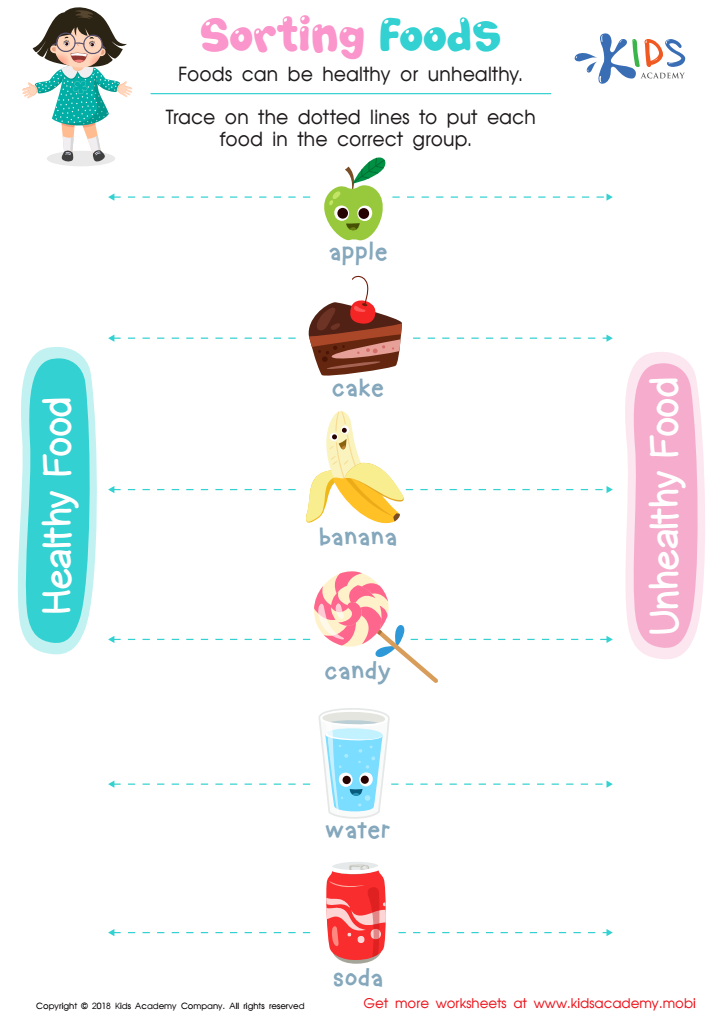
Sorting Food Worksheet
This delightful worksheet boosts critical thinking and fine motor skills. Kids use prior knowledge and pictures to sort foods into healthy and unhealthy groups. Tracing lines support accurate sorting and matching. Enjoy fun and free learning!
 Assign to My Students
Sorting Food Worksheet
Worksheet
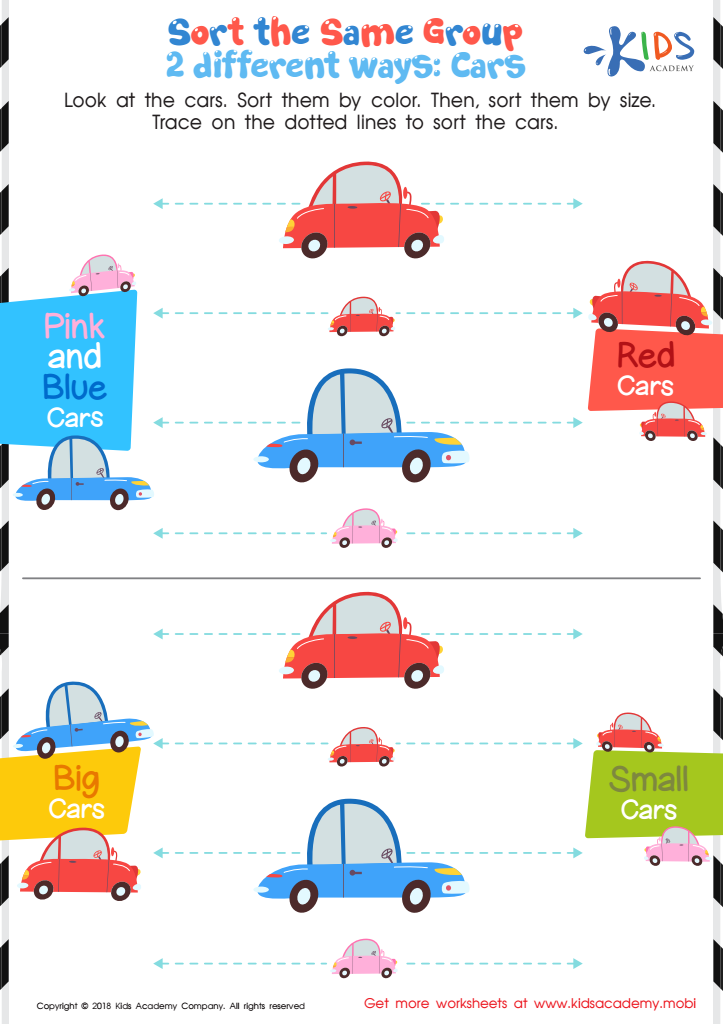
Sort the Same Group 2 Different Ways: Cars Worksheet
Look at the pictures with your child. Can they identify the objects? Ask them to sort the cars first by color and then size. Assist them to trace the dotted lines to sort the cars by color and size. This worksheet lets you easily assess your child's color and size organization skills.
Sort the Same Group 2 Different Ways: Cars Worksheet
Worksheet
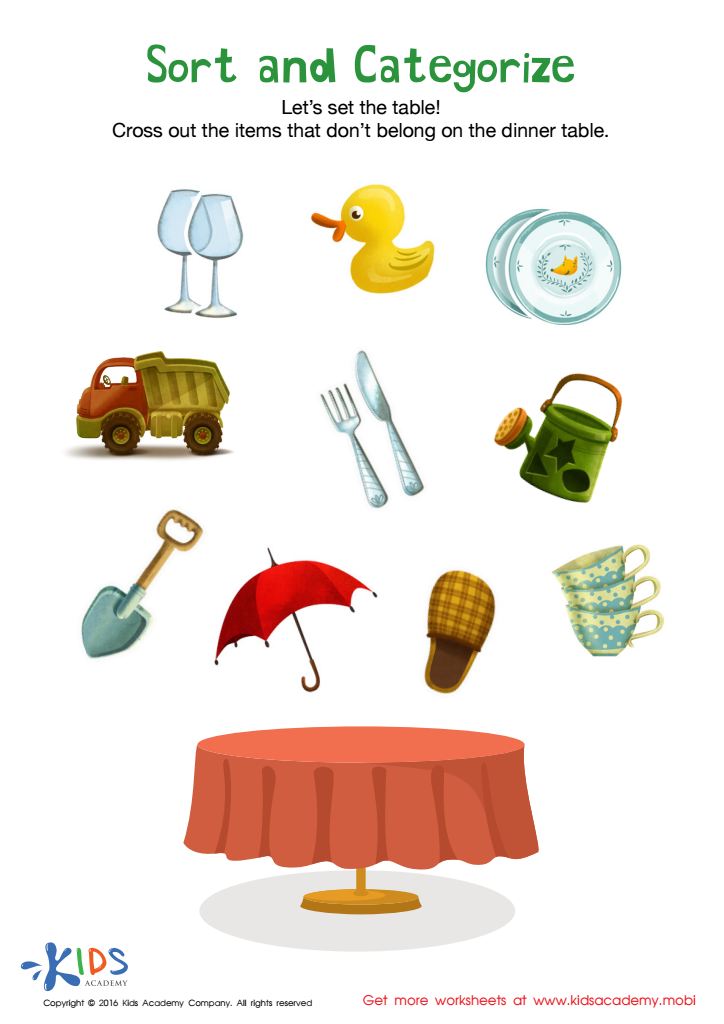
Join Kids Academy for Free
Who is primarily going to use this learning content?








Fine motor skills involve the coordination of small muscles, specifically in the hands and fingers, to perform tasks like writing, buttoning a shirt, or manipulating small objects. For 4-year-olds, developing these skills is crucial because they form the foundation for more advanced activities they will encounter as they grow.
Parents and teachers should care about fine motor skills development because it directly impacts a child's ability to successfully navigate daily activities and academic tasks. For instance, in the classroom, children with well-developed fine motor skills can efficiently hold crayons or pencils, participate in cutting and pasting activities, and manipulate objects, thereby enhancing their learning experiences. These skills also contribute significantly to a child's self-esteem and independence, as they allow the child to dress themselves, feed themselves, and manage personal hygiene tasks more effectively.
Fine motor skills development also has a neurological aspect. By engaging in sorting activities, children stimulate brain regions responsible for coordination and dexterity, which are interlinked with cognitive capacities such as attention, problem-solving, and spatial awareness. Ensuring that children develop these skills helps set the foundation for successful learning and physical coordination, making it a vital area of focus for both parents and teachers during early childhood development.








