
Analytical skills Normal Reading Worksheets for 4-Year-Olds
5 filtered results
Difficulty Level
Grade
Age
-
From - To
Subject
Activity
Standards
Our Analytical Skills Normal Reading Worksheets for 4-Year-Olds are designed to nurture young minds and enhance critical thinking abilities. These engaging and interactive worksheets foster strong foundational reading and analytical skills in preschoolers. With a focus on comprehension, pattern recognition, and logical reasoning, each activity is crafted to captivate young learners and stimulate their intellectual growth. Perfect for parents and educators, our resources provide an enjoyable learning experience that prepares children for future academic success. Explore our collection to help your child develop essential skills through fun, educational exercises. Empower your child’s learning journey today!
Favorites
With answer key
Interactive
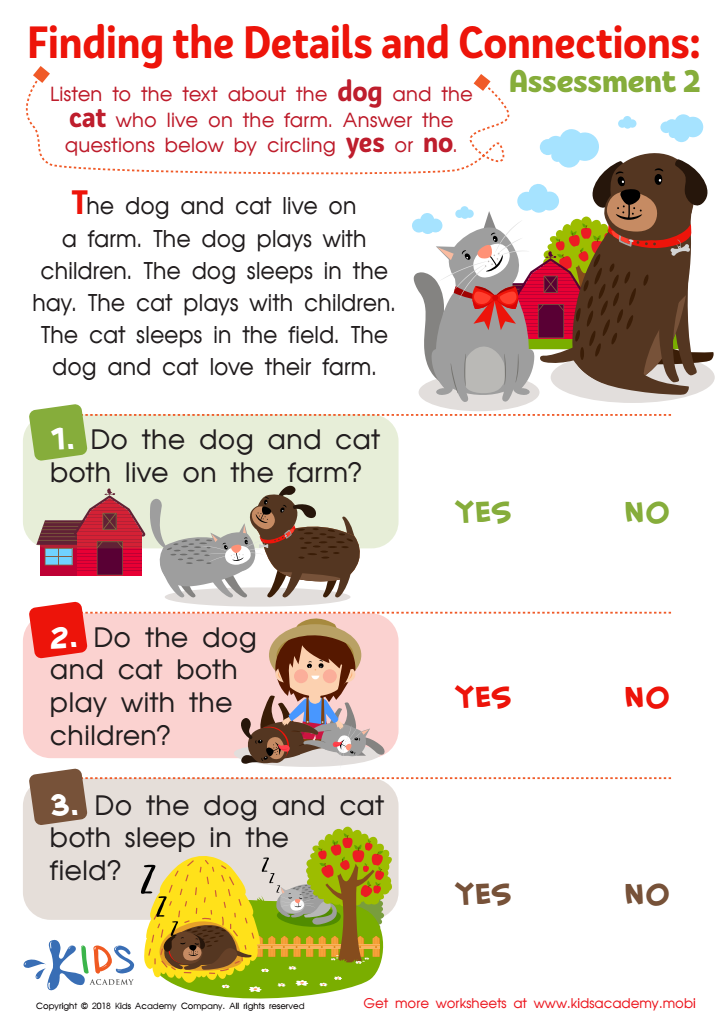
Finding the Details and Connections: Assessment 2 Worksheet
Does your child love animals? If you have pets, they'll relate to the text in this worksheet. Read it aloud to them and help them answer the simple questions by circling yes or no. The story is about a dog and cat living on a farm. Let your child read it aloud to you if they can.
 Assign to My Students
Finding the Details and Connections: Assessment 2 Worksheet
Worksheet
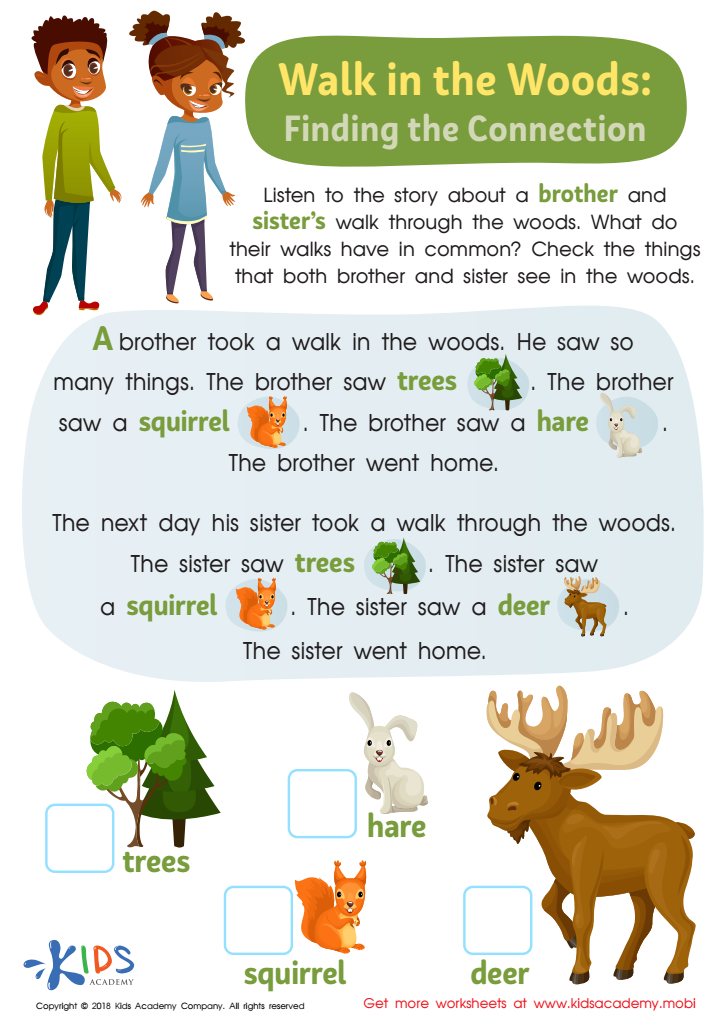
Walk In the Woods: Finding Connections Worksheet
Brother and sister took a walk in the woods to connect with nature and get some exercise. As they went, they noted different things like birds and plants, which they share in this story. Read it to your little ones, and help them check off the items the two saw. It's a great way to learn about nature and enjoy the outdoors.
Walk In the Woods: Finding Connections Worksheet
Worksheet
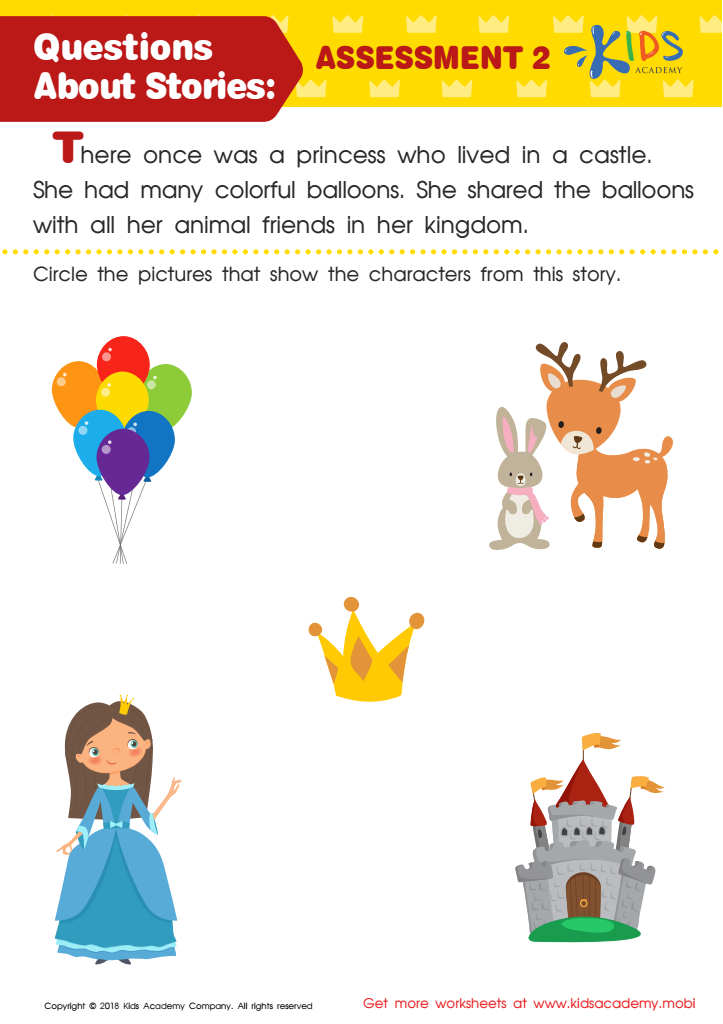
Questions About Stories: Assessment 2 Worksheet
Talk to your child about what a princess is and what activities they associate with that word. Then, read the story to them and help them identify characters in the pictures. Look out for details and ask them questions to ensure they understand.
Questions About Stories: Assessment 2 Worksheet
Worksheet
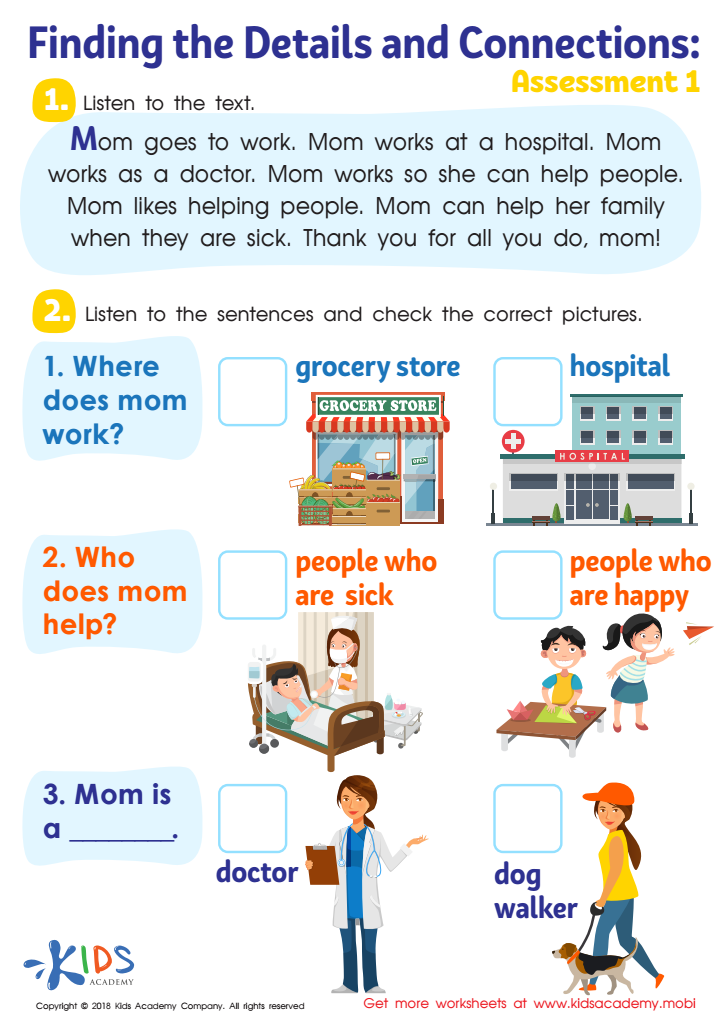
Finding the Details and Connections: Assessment 1 Worksheet
Ask your students what their parents do for a job. Do they know what profession their mom is in and where she works? Professionals have places they go to do their job. In this task, Mom goes to a hospital and is a doctor. Read the text and help them check the right pictures.
Finding the Details and Connections: Assessment 1 Worksheet
Worksheet
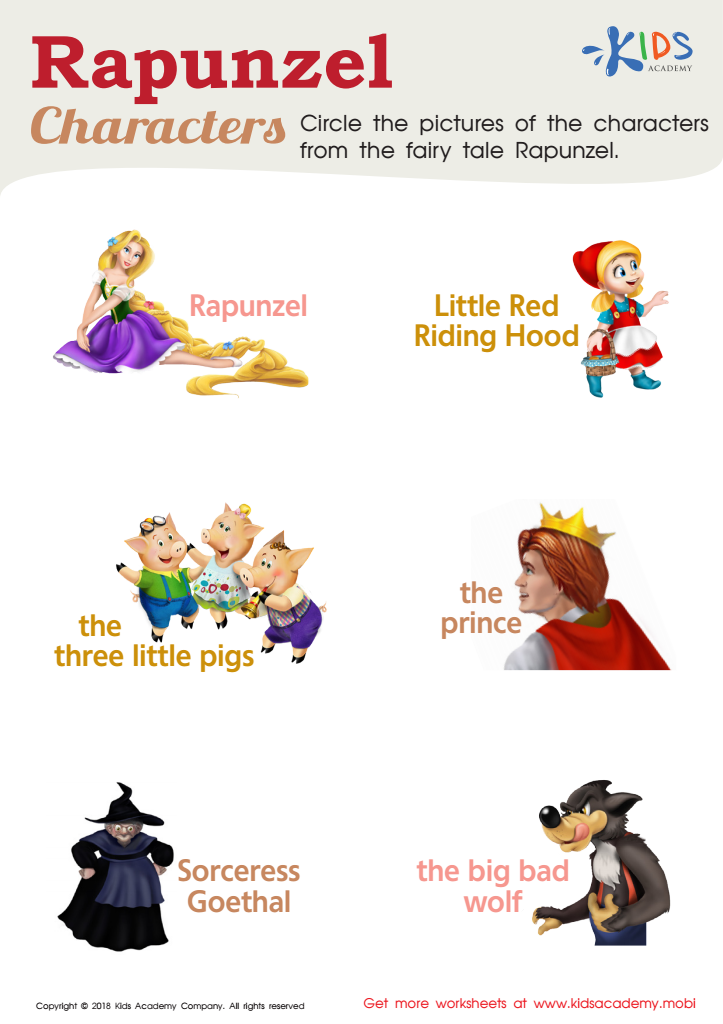
Rapunzel Characters Worksheet
This fun and colourful worksheet is perfect to see what your kids have learned from story time. Test their knowledge with a Rapunzel-themed exercise! Ask them to circle the pictures of the characters from the fairy tale. Helping them to remember the lessons taught in the stories you have read.
Rapunzel Characters Worksheet
Worksheet
Join Kids Academy for Free
Who is primarily going to use this learning content?








Analytical skills development and normal reading progression are crucial for 4-year-olds as they form the foundation for future academic success and overall cognitive growth. Encouraging these skills early sets the groundwork for critical thinking, problem-solving, and comprehension abilities that are needed not just in school, but in everyday life.
Reading, in particular, is a gateway to learning. Through regular exposure to books and stories, young children develop vocabulary, linguistic patterns, and comprehension skills. By nurturing a love for reading, parents and teachers foster imagination and creativity while also building attention span and memory retention.
Analytical skills at this age, though not as complex as those in older children, involve basic tasks like grouping objects by similarities, identifying differences, and following simple sequences. These skills are essential for understanding cause-and-effect relationships, making predictions, and developing logical reasoning.
When parents and teachers invest in developing analytical skills and promoting normal reading habits, they provide children with tools to explore their world more effectively. This balanced growth helps in smoother transitions to higher levels of learning, paving the way for confident, independent thinkers who are well-prepared to tackle academic challenges and life adventures ahead.








