Spatial awareness Normal Reading Worksheets for 4-Year-Olds
3 filtered results
-
From - To
Boost your child's spatial awareness with our engaging Normal Reading Worksheets designed for 4-year-olds! These fun, age-appropriate resources provide young learners with exciting activities that enhance their understanding of space, shapes, and positioning. Through colorful illustrations and interactive exercises, children will develop essential skills such as visual perception, directionality, and the ability to distinguish between sizes and distances. By integrating reading and hands-on activities, our worksheets foster critical thinking and creatively support your child’s learning journey. Perfect for home or classroom use, these worksheets are tailored to make learning enjoyable while instilling a solid foundation in early literacy and spatial relationships.
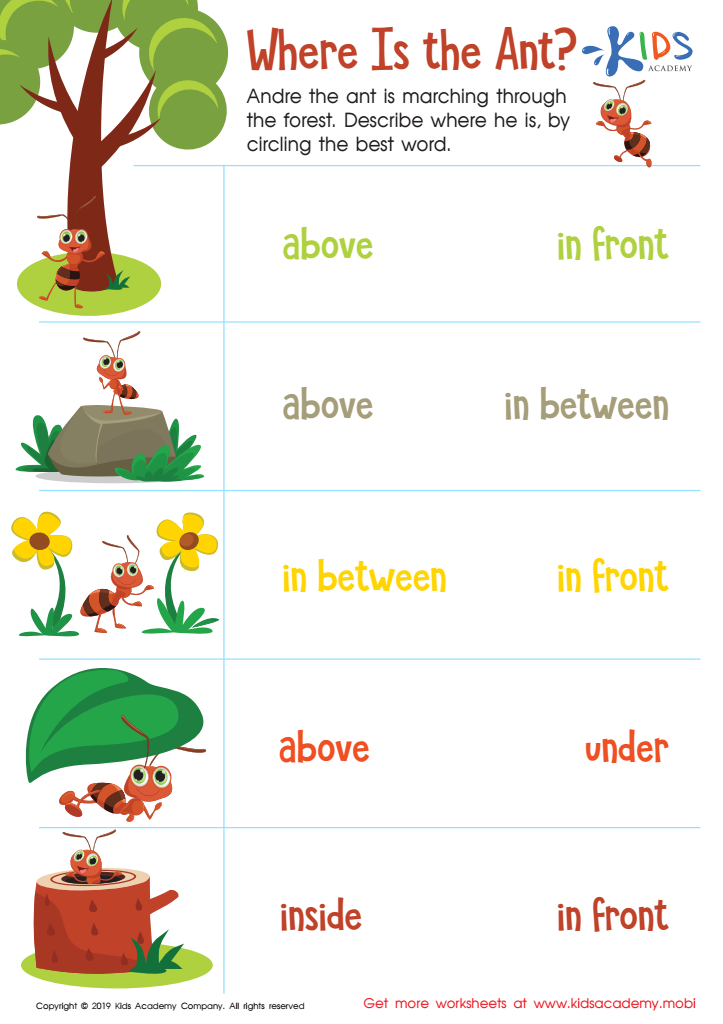
Where Is the Ant? Worksheet
 Assign to My Students
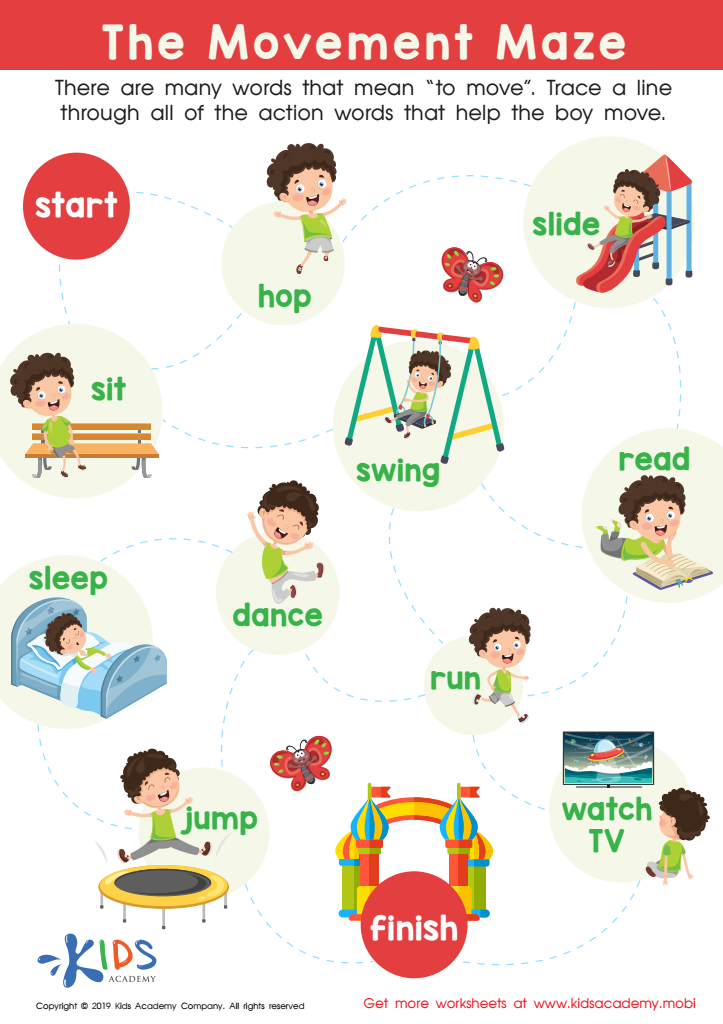
The Movement Maze Worksheet
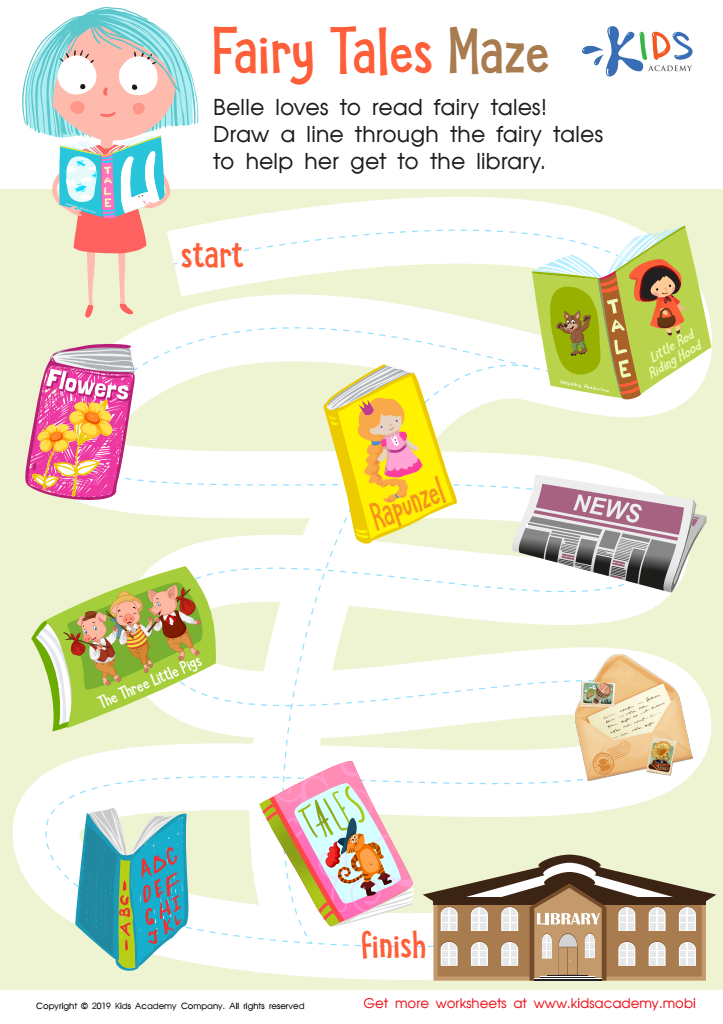
Fairy Tales Maze Worksheet








Spatial awareness is a crucial skill for 4-year-olds that lays the foundation for many cognitive and physical abilities. For parents and teachers, fostering this skill is important because it directly impacts a child's development in several key areas. Children with strong spatial awareness are better at understanding their surroundings, which helps them navigate spaces effectively and build coordination. This can enhance their play experiences, boost confidence in physical activities, and encourage creative exploration.
Additionally, spatial awareness plays a significant role in early mathematics understanding. Concepts like shapes, sizes, and distances are foundational to learning math later on. When children are adept at visualizing and manipulating objects in space, it makes grasping more complex concepts, such as geometry, much easier in their future education.
Moreover, fostering spatial awareness can support language development. As children learn to describe positions, directions, and movements, they expand their vocabulary and communication skills. Activities like puzzles, building blocks, and arts and crafts can be integral in this development. Thus, parents and teachers should actively engage in activities that enhance spatial awareness, as it is essential not only for immediate development but also for long-term academic success.








