Spelling practice Normal Consonant Digraphs Worksheets for Ages 5-6
4 filtered results
Difficulty Level
Grade
Age
-
From - To
Subject
Activity
Standards
Our Spelling Practice Normal Consonant Digraphs Worksheets for Ages 5-6 are designed to strengthen early reading skills. These engaging and fun activities help young learners understand and spell words with common consonant digraphs such as "sh," "ch," "th," and "wh." Tailored specifically for children ages 5-6, these worksheets combine colorful graphics and simple exercises to enhance phonemic awareness and boost confidence in reading and writing. Ideal for both classroom use and home practice, they provide a solid foundation for your child's literacy journey. Download now to make spelling practice an enjoyable learning experience!
Favorites
With answer key
Interactive
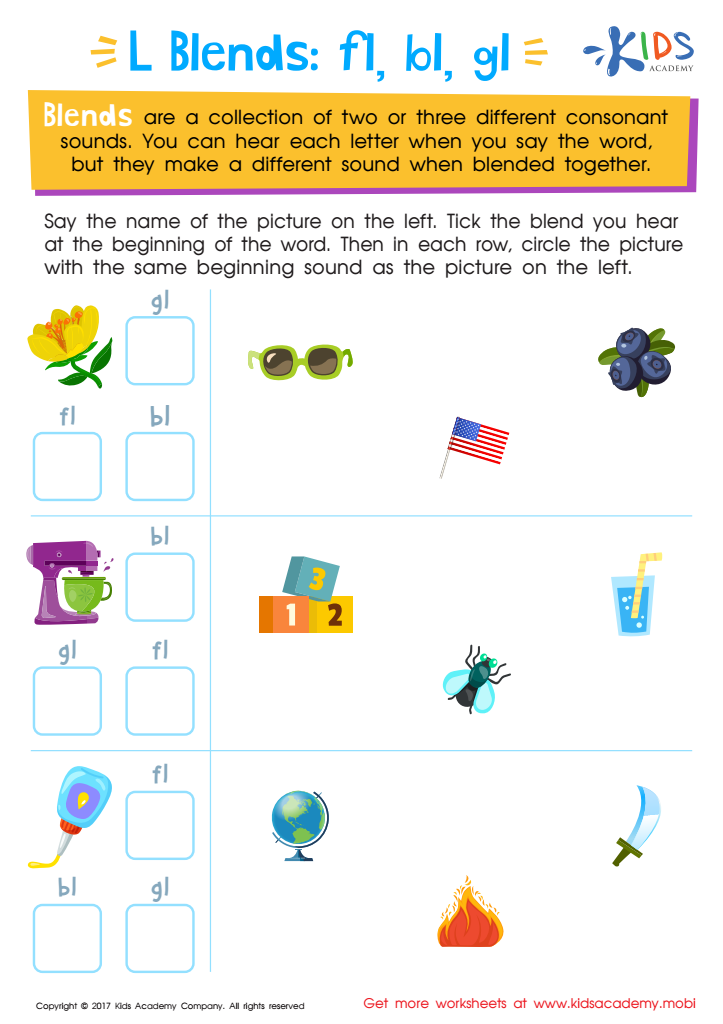
Blending Consonants: "Fl", "Bl" and "Gl" Printable
Help your child master consonant blends Fl, Bl, and Gl with this printable worksheet. Find words associated with the pictures and learn to better understand the difference between consonant blends. Vibrant images motivate and aid in learning. Download now for improved phonics success!
 Assign to My Students
Blending Consonants: "Fl", "Bl" and "Gl" Printable
Worksheet
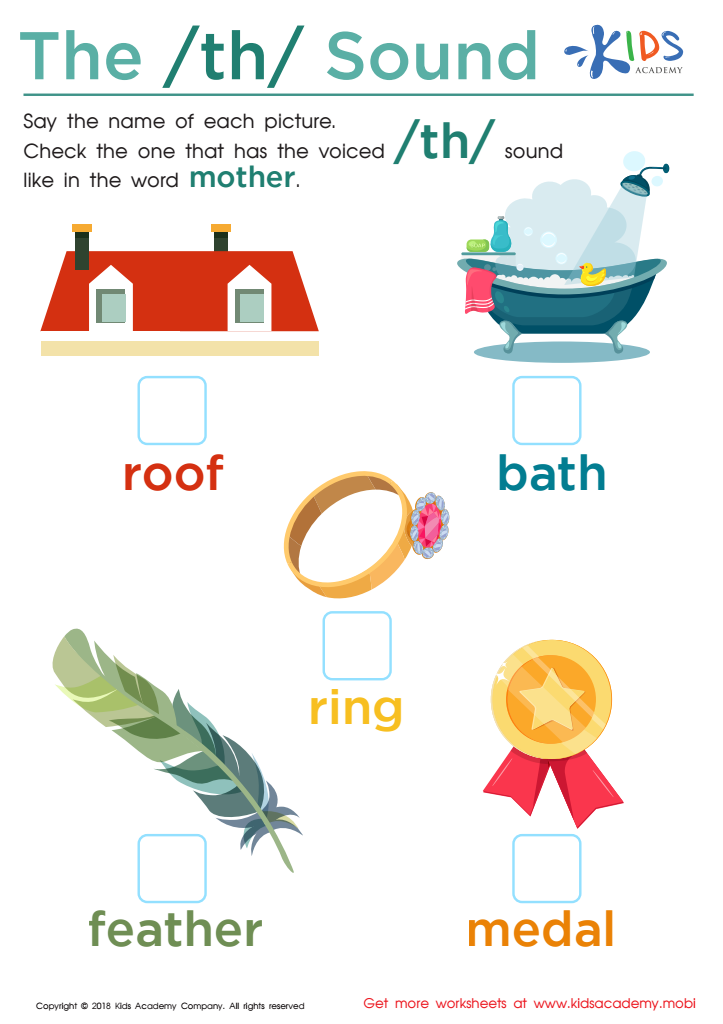
The /th/ Sound Worksheet
Confuse your students no more: have them use this worksheet to understand the /th/ sound and its two variants. With pictures, ask them to say the name of each one. Help them identify the voiced /th/ sound, like in 'mother', by having them say it aloud. Download the pdf to get started.
The /th/ Sound Worksheet
Worksheet
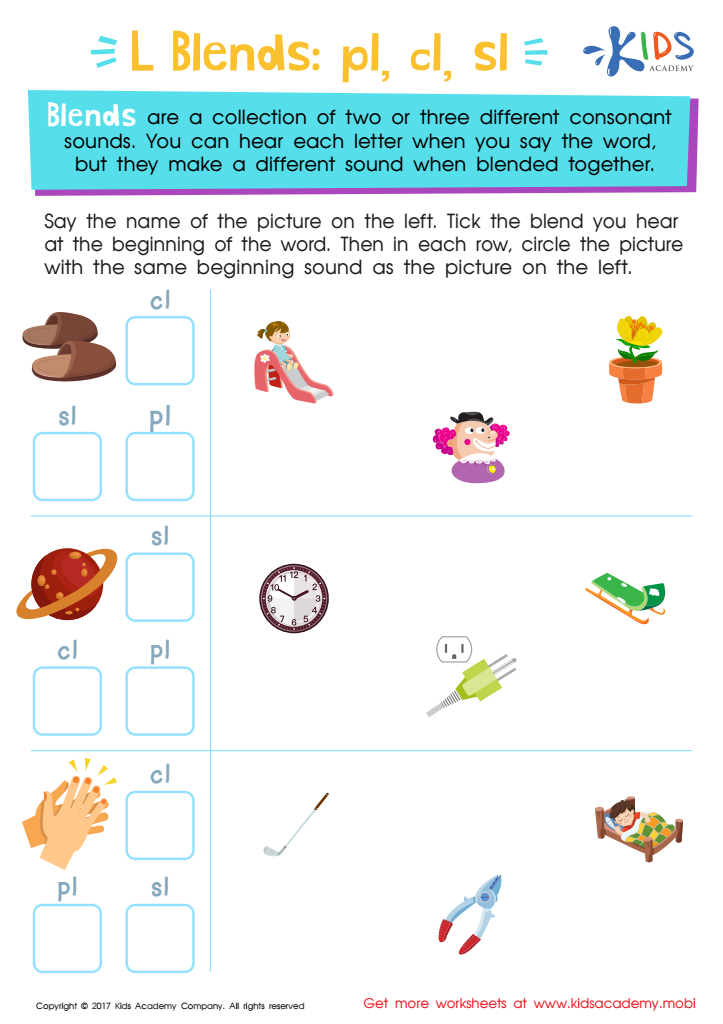
L Blends: "Pl", "Cl" and "Sl" Printable
This printable worksheet will help your child recognize and identify the Pl, Cl, and Sl consonant blends, sound them out, and identify them in print. Improve your child's reading and writing skills with fun and colorful phonics practice!
L Blends: "Pl", "Cl" and "Sl" Printable
Worksheet
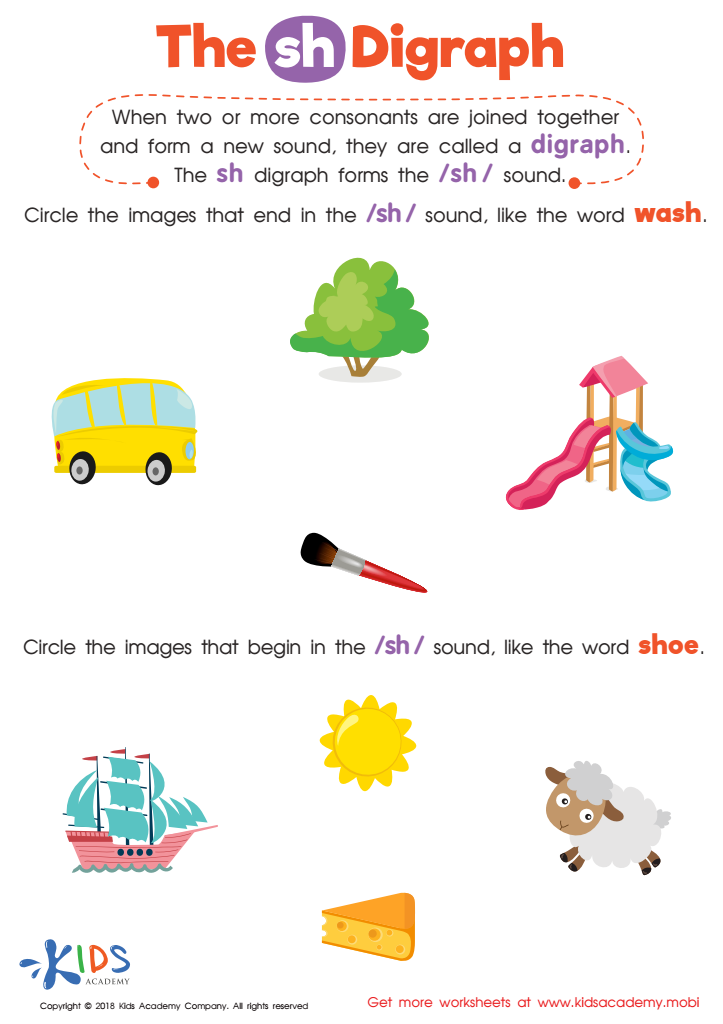
The SH Digraph Worksheet
There are many phonetic sounds, each with its own unique sound. When two or more consonants are combined to create a new sound, it's called a digraph. Example: the sh digraph creates the /sh/ sound. Have kids look at the pictures and say the words aloud. Help them circle the images ending with /sh/, like 'wash'.
The SH Digraph Worksheet
Worksheet
Join Kids Academy for Free
Who is primarily going to use this learning content?


Spelling practice for normal consonant digraphs is essential for young children aged 5-6, as it lays the groundwork for reading and writing fluency. Consonant digraphs are combinations of two letters that produce one sound, such as "ch," "th," "sh," and "wh." Understanding these digraphs helps children decode words more efficiently and accurately, which is crucial for developing literacy skills.
Early exposure to and practice with these digraphs enable children to recognize them quickly within words, thus improving their reading speed and comprehension. This is particularly important as they transition from recognizing individual letters to understanding words and sentences. When children practice spelling digraphs, they also enhance their phonemic awareness, the ability to hear, identify, and manipulate individual sounds in spoken words. This skill is a strong predictor of successful reading achievement.
Moreover, competency in spelling and recognizing digraphs boosts children’s writing abilities. They become more confident in their spelling, which translates into more willing and proficient writers. Parents and teachers who prioritize digraph practice help children build a solid foundation in literacy that supports their academic growth and cultivates a lifelong love of reading and writing. Ignoring this fundamental aspect may lead to struggles in later literacy development, making early practice indispensable.