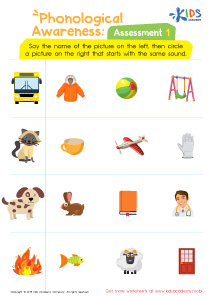
Vocabulary enhancement Normal Consonants Worksheets for Ages 5-6
5 filtered results
-
From - To
Boost your child's vocabulary with our "Normal Consonants Worksheets" designed specifically for ages 5-6! These engaging worksheets help young learners master consonant sounds while introducing new words to expand their language skills. Each activity is designed to stimulate phonetic recognition and enhance vocabulary in a playful manner. Perfect for use at home or in the classroom, these worksheets include tracing, matching, and fill-in-the-blank exercises. Watch your little one gain confidence in reading and speaking as they explore the world of consonants and build a rich vocabulary foundation. Start their literacy journey today with fun, interactive learning experiences!
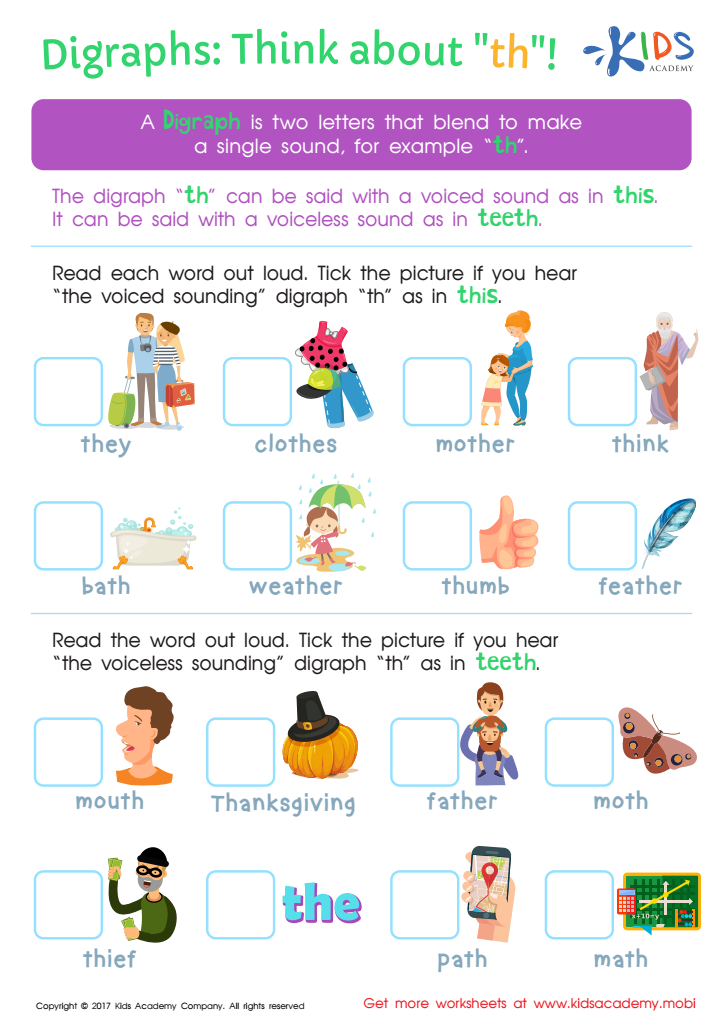
Digraphs: Think About "th" Worksheet
 Assign to My Students
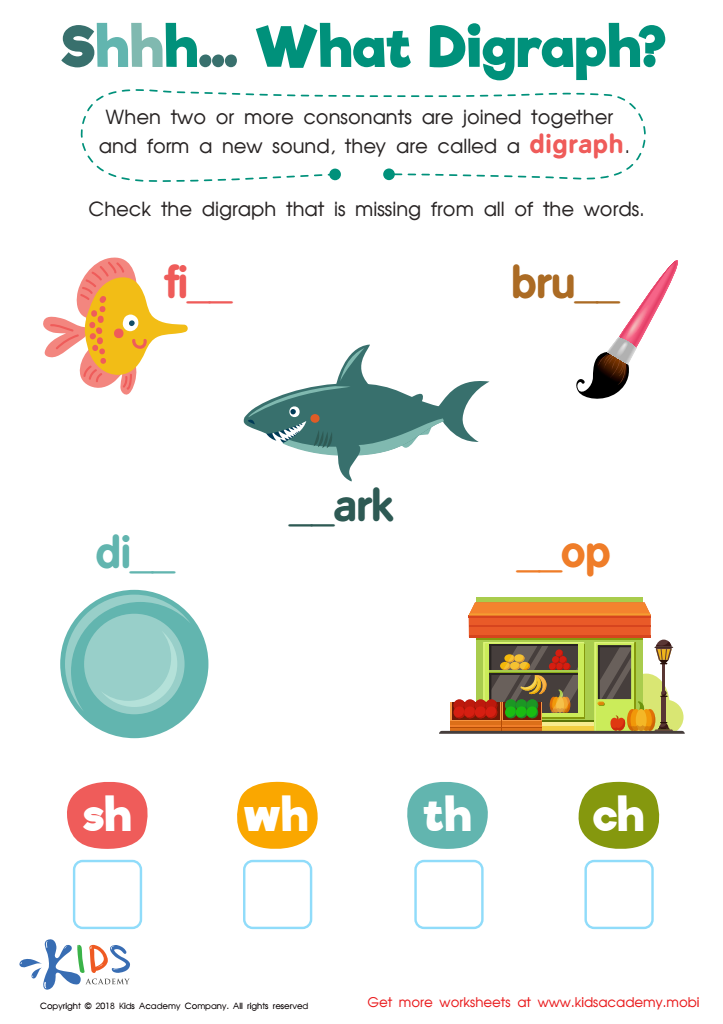
Shhh... What Digraph? Worksheet
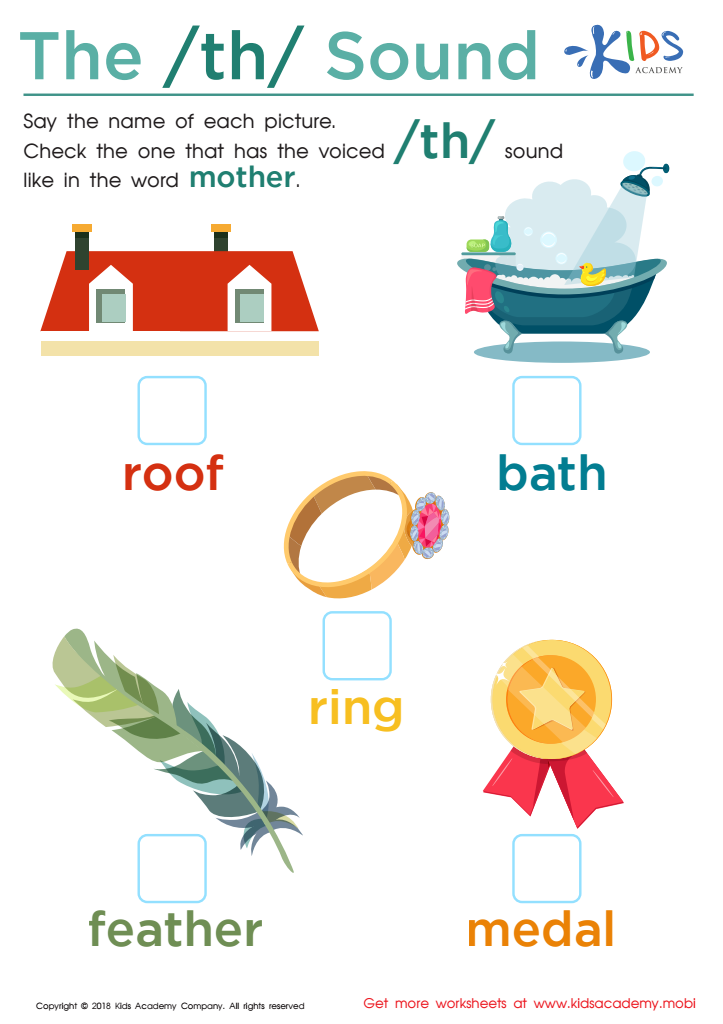
The /th/ Sound Worksheet
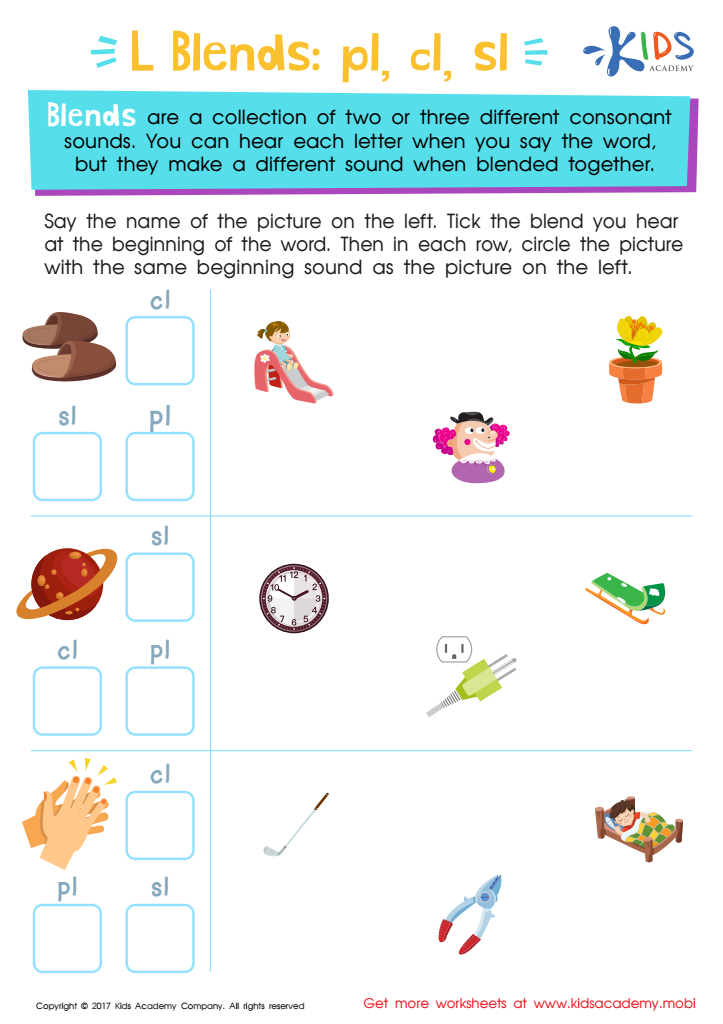
L Blends: "Pl", "Cl" and "Sl" Printable
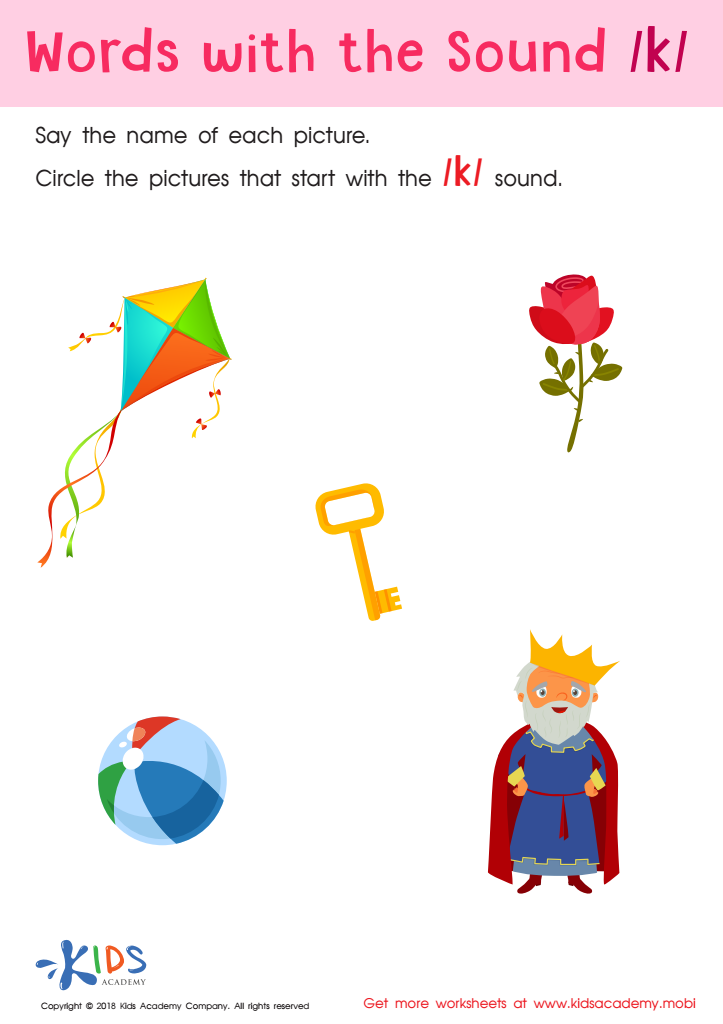
Words with sound k Reading Worksheet



Vocabulary enhancement, particularly around normal consonants, is crucial for children aged 5-6 for several reasons. This stage of development is essential for establishing foundational language skills that children will build on as they grow. At this age, children are rapidly expanding their vocabulary through play, reading, and conversation—contexts where consonants play a vital role in creating clear and distinct sounds.
Incorporating normal consonants into vocabulary activities aids in phonemic awareness, allowing children to distinguish between different sounds and syllables. This skill is fundamental for reading and spelling, as children begin to recognize patterns within words. Furthermore, enhanced vocabulary empowers children to express their thoughts and feelings more effectively, fostering better communication skills and confidence in social interactions.
When parents and teachers prioritize vocabulary enhancement focusing on consonants, they not only support language development but also contribute to academic success and cognitive growth. This practice encourages a love for language, setting the stage for lifelong learning. Engaging with robust vocabulary also enhances comprehension skills critical for future reading and writing endeavors. Ultimately, nurturing vocabulary development in young learners leads to better literacy outcomes and enriched educational experiences.