Lowercase identification Normal Alphabet Worksheets for Ages 5-6
4 filtered results
-
From - To
Enhance your child's literacy with our engaging Lowercase Identification Normal Alphabet Worksheets, designed for ages 5-6. These worksheets help young learners recognize and identify lowercase letters through fun and interactive activities. Perfect for classroom or at-home practice, our expertly crafted sheets support your child's journey to reading success. With creative exercises that keep kids motivated, they’ll master lowercase letters with ease. Whether tracing, matching, or coloring, our worksheets offer a comprehensive approach to learning the alphabet. Foster a love for reading and build foundational skills with our Lowercase Identification Worksheets for early learners. Perfect for teachers and parents alike.
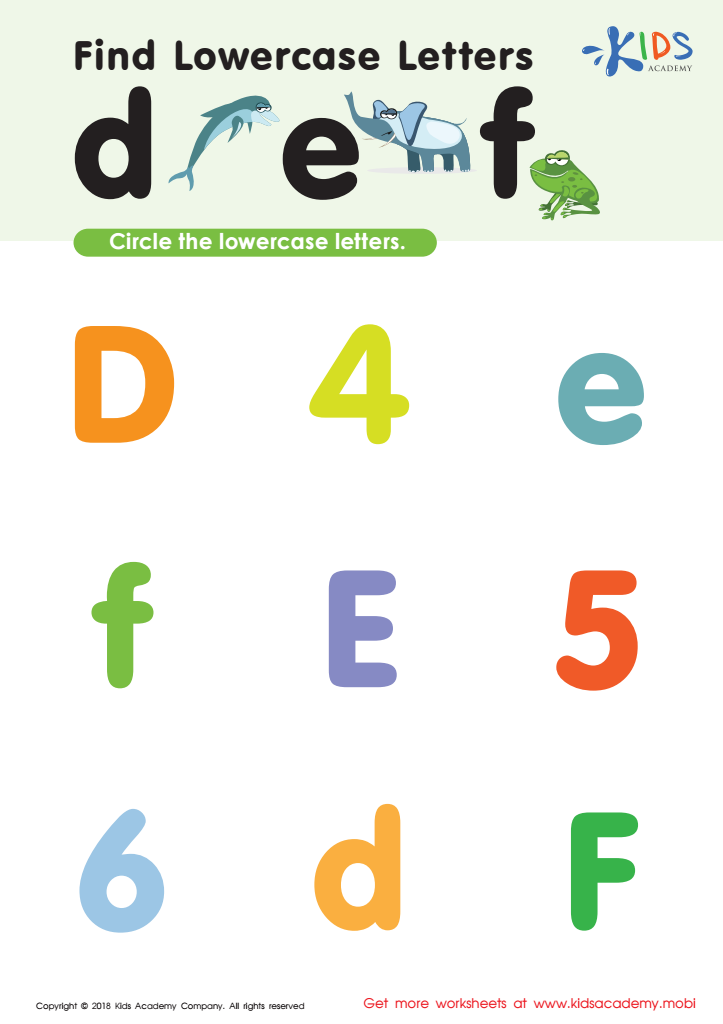
Find Lowercase Letters d e f Worksheet
 Assign to My Students
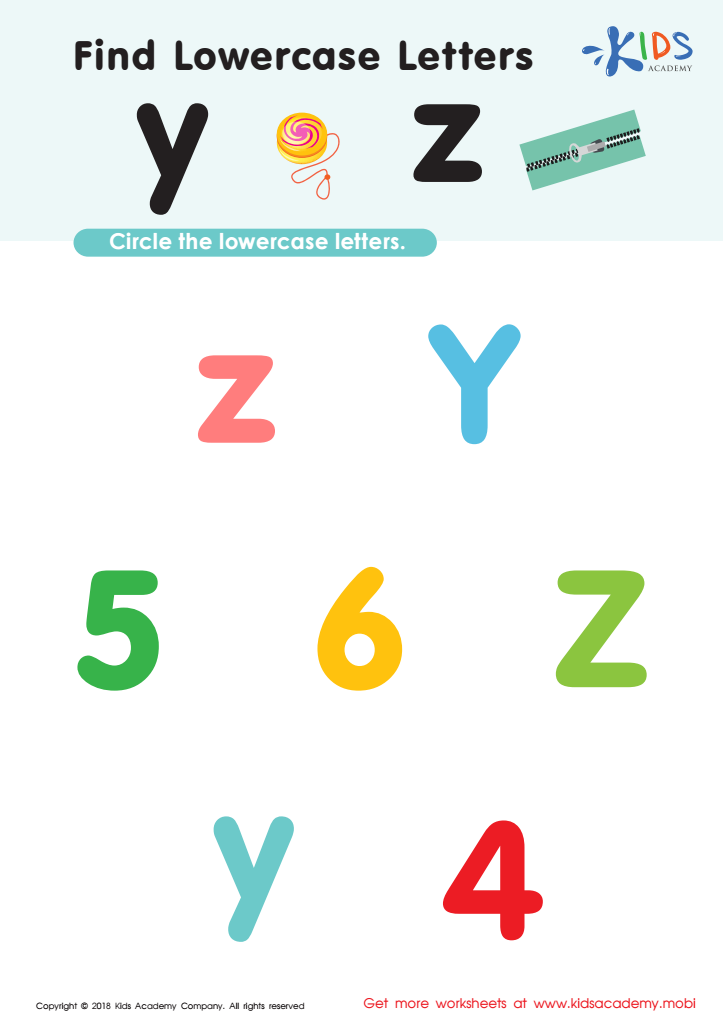
Find Lowercase Letters y z Worksheet

Find lowercase letters a b c Worksheet
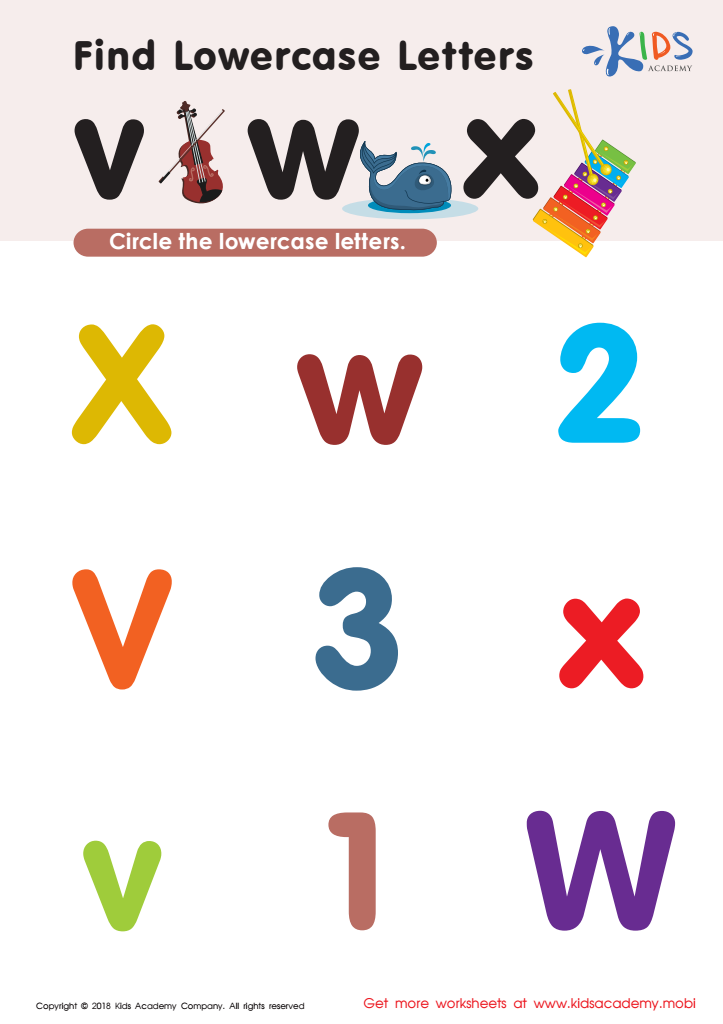
Find Lowercase Letters v w x Worksheet








Caring about lowercase letter identification in the normal alphabet for ages 5-6 is crucial for early literacy development. At this age, children are typically beginning kindergarten or first grade, where foundational skills for reading and writing are laid. Lowercase letters comprise the majority of the print children will encounter both in books and in everyday reading materials, such as signs, labels, and instructions.
Recognizing and fluently identifying lowercase letters help develop phonemic awareness—understanding that letters represent sounds—which is fundamental for decoding words. This skill supports not just reading fluency but also spelling and writing ability. For instance, mixing up letters like 'b' and 'd' can lead to literacy challenges down the road.
Additionally, mastery of lowercase letters builds confidence. Children who can effortlessly recognize these letters are more likely to engage with texts independently, fostering a love for reading and learning. Teachers and parents play a key role by providing tailored activities, from letter-matching games to guided reading sessions, facilitating this critical step in literacy. Neglecting this skill can cause children to fall behind, making subsequent academic milestones harder to achieve.
By prioritizing the identification of lowercase letters, adults aid in creating a robust foundation for a child's educational journey, enhancing both their current and future academic success.







